We love spontaneous people and we find them inspiring and full of life. While we like the free expression of positive emotions, we are weary of impulsive people. Impulsivity is a tendency to act on a whim, without thinking or consideration of the consequences. None of us were born to think before acting. This is something that is acquired through experience and this is something that differentiates us from the animal kingdom as they only act through learned impulses. Going to the other extreme and only being ruled by our thinking brain is just as harmful as we appear to others as a cold heartless machine. The ideal is a healthy cooperation between the mind and the heart. In this mode, the spontaneous heart energy flows without obstruction and we use our awareness to channel it appropriately given the external environment. The most harmful forms of impulsive behaviors have already been covered in our description of pathological and neurotic defense mechanisms such as addictions. We are going here over less harmful but still childish behaviors:
Acting out
Passive aggressive behaviors
Venting
Gossiping
Endless chatter
Forgetfulness
Hurtful words
Acting out
Acting out is the direct expression of pulsions or raw internal emotions without any filters. Children who have not learned to regulate emotions are expected to act out and have temper tantrums from time to time. Acting out is seen as anti-social as it only focuses on the external expression of the internal toxic emotions for the preservation of the self without any consideration to the people around. When we act out our anger, we may hurt other people and regret it later. Acting out is unconscious and takes no consideration of others. Expressing emotions, even strong emotions may be perfectly acceptable and even desirable in certain situations. While this may be counter intuitive, acting out is still, in most cases, better than repression which has a negative impact on both ourselves and our social environment. It is critical for the sanity of the people who are unable to regulate emotions such as PBPD to act them out because otherwise their toxic emotions would make them sick. Acting out our pulsions is not however conducive to self-awareness. Whether we act out the difficult emotion into rage, yelling, crying or an addiction, the action takes the better of us and we typically recover our senses after the fact. We wake up with self-disappointment and guilt about the actions we have just engaged in. There are some therapy modalities such as gestalt therapy or breathwork that attempt to develop self-awareness when acting out. This can be done with the right therapeutic container with great benefits. It helps release the toxic repressed emotions with keeping full awareness during the release process. Learning to regulate emotions requires a certain level of self-control however too much control will make us repress our feelings and hinder the healing process. It is a fine balance to achieve and which comes with experience. It is about expressing these emotions in a way that is conscious of our environment.
Passive aggressive behaviors
Aggression or rebuttal is considered antisocial and undesirable, so when aggressive or violent impulses are experienced, people tend to avoid them as much as possible. However, the remaining energy driving such aggression may prove to be more difficult to contain, and may manifest in other forms, known as passive aggression. A passive aggressive person may be uncooperative in carrying out their duties or other tasks, may deliberately ignore someone when spoken to and might adopt a negative view of their situation, such as their job, and of those around them. It is very common in intimate relationships. A spouse is acting irritated. When asked if she is doing all right, she responds angrily “I am fine”. She may be afraid to have an argument or another useless conversation, terrified to be vulnerable and lose control or not be able to resist hitting her husband’s head with a frying pan! The passive aggressive people typically feel very powerless so it is important to create a safe container to allow them to express freely their raw emotions without consequences. The passive aggressive person sends a mixed message. S/he desperately wants help while rejecting anyone willing to help them. They are very frustrating to deal with as you can never win with passive aggressive people. They oscillate between powerlessness and anger. Anger is a vibrational improvement over powerlessness. However instead of channeling it for positive change, they go back to feeling like a victim hence perpetuating a vicious circle. A while back, I moved to another country with my wife. We decided to move and employ her unemployed ex-husband to safeguard the relationship between her son and father. Once there, he complained he was not making enough money to make a good living and his earning potential was much higher in the USA. Several months later, we had to come back to the USA but he refused to come back as he said he was happy there. Then he demanded that we pay him monthly plane tickets to the USA to see his child as we had taken him away from him. Eventually his girlfriend had to come back to the USA so he went back with her, but swearing to himself never to follow us again.
Venting
Venting is a coping mechanism that allows a person to rationalize and validate their own fears, concerns ,worries, dreams and hopes. It is actually beneficial because it helps us release difficult emotions which is detrimental to the human psyche and can even provoke ulcers, depression, high blood pressure, anxiety migraines or fatigue. Someone hurt us so we call someone else to vent about this person and to receive validation on how badly this person behaved. A friend who is attuned or just want to stay on your good side will realize that you are not looking for advice or wisdom so will just validate you. Once you have expressed the negative emotion and you feel better, are you being introspective and asking yourself why you attracted this situation? If not, venting is for you just an immature coping mechanism not to see some unsavory aspects of yourself. The more we are able to be introspective with life events, the less we will need to vent to another person. We are then able to do the venting, the validation, the accountability phase and the learning all within ourselves through meditation. The key is to make the process of venting conscious. There is a very powerful communication technique that is called mirroring in intimate relationships. It allows the venting to become fully conscious through the unconditional presence of the listener so that the “venter” will be invited to come to a place of introspection.
Let me give you an example. John comes home and has just lost his job as an electrician. He confides to his friend “This idiot of a boss just wanted someone to control so he fired me because I was my own person. He can only manage young people who will not challenge him! I think this is because he is so insecure!” Friend “I understand this must be painful to lose your job. You really had some big hope with this company” John “Yes, someone wanted to get my scalp and told the boss they saw me drinking on-site” Friend “That must feel horrible that a colleague would do something like that to you” John “I guess I was not really fitting with the company’s culture. There were mostly young people there with very little experience” Friend “Yes, you felt as an outside there”
Validation goes on for a while, John feels better then the friend tries to move to the accountability phase
Friend “Do you think there may be other reasons why they chose to let you go?” John “I had a hard time getting along with my boss. We could not see eye-to-eye. He is the boss. He can do whatever he wants” Friend “Yes, this is hard when we cannot get along with our supervisor. Work becomes a grudge then” John “I did have a bottle or two on the job but these were very light beers. It really does not impact my ability to do the job though. I guess he had to make an example” Friend “Yes, with all these young people on-site, he could not afford that you could influence them” John “Well, I was a bit too lax with my schedule. I would often visit my girlfriend in the middle of the day. Considering I am paid much more than all these young folks, he probably did not see he was getting his ROI on me” Friend “I understand. The reality of business can be really hard” John “And a couple of times, they did not feel I did a quality job. They hired me as an experienced electrician so they had high expectations that I could not fulfill” Friend “This is very brave of you to see this. I am sure you will do better next time as you gain more experience and get your electrician license”
Gossip
Gossiping is reporting negative stories or rumors about other people, involving details that are not confirmed as being true. Gossip is a combination of venting with displacement. Their self-esteem is too low to be able to share painful details about their lives so they focus on the painful aspects of other people’s lives as a substitution. I know a man who found a brilliant natural product to help his beard not to turn grey by rubbing his facial hair with an enzyme which takes the oxygen out of his hair pigment thus enabling his beard to keep its natural color. His ex-wife makes fun of him to anyone that would listen to her. The reality is that she is terrified of aging and she feels very ashamed with the transformation of her body. The combined revenue for the celebrity gossip industry — anchored by sites like TMZ and Radar Online, which often pay several thousand dollars for inside information — tops more than $3 billion per year in the USA, according to The New York Times. It is a big market because it allows millions of people to project their own shame, personal failures and insecurities onto other people. I used to be married with a YouTube star and I observed that there were a number of people who spent countless hours in gossiping about her in the most absurd way. In their conscious mind, they felt they were helping the world by reducing my ex-wife’s “harmful influence” but actually they were just projecting how they truly felt about themselves. Discrimination is healthy while gossiping is not. When we feel someone, an organization or a situation is toxic, discrimination helps us to turn our attention away from it. Gossiping does the opposite as it sucks our energy in. Gossiping is actually a form of reaction formation as we often secretly admire the very people we criticize.
Endless chatter
There are people we call chatterbox. They talk all the time about everything and everyone with very little substance. They cannot handle silence between people. It is almost impossible to have a conversation with them. First, it is difficult enough to find that second of silence when we can start speaking. Secondly, we feel they do not listen to us as they will just continue on their own train of thought independently of what we say. These people feel incredibly lonely but they are blocking the inner experience of loneliness through constant chatter. They are typically married to people who never say a word and like to keep everything to themselves. They both feel very disconnected with the outside world but with opposite coping mechanisms. Chatterboxes live in their own bubble and do not realize that people are just waiting for an opportunity to end the conversation but are too polite to do so. Their continuous chatting is a distraction to their own insecurities and every painful experience they have repressed. This condition can degenerate with the person constantly talking to him/herself. This is common with homeless people on the street or older people living alone. This is how they cope with the intensity of their loneliness and fear of abandonment.
Forgetfulness
Some people may be surprised to see forgetfulness as a defense mechanism, but it is one that I often find in my coaching clients. That is why I strongly believe that having a tidy and organized environment is one of the first steps to gain back control over one’s life. Many of us disconnect from this physical reality to cope with our emotional traumas. We get lost in thoughts and spend a lot of our time unaware, lost in thinking fantasies. As a result, we lose our keys, misplace or leave our belongings everywhere. When I was 23, I was renting a room in a house. The landlord’s pet peeve was finding the toilet lid up and I kept forgetting about it. It really made him angry so I even put a sign in the toilet to remind me. Despite this, I would still forget it from time to time! He thought I was doing it on purpose and got very irritated with me, but I was not. It was an unconscious coping mechanism for my resistance in being in my body. My professional Silicon Valley career was very instrumental in grounding my first chakra, through project and people management, attention to details and improving my self-esteem. It actually takes a lot of dedication over many years to overcome forgetfulness and many people never do it. It is a defense mechanism that is very common with New Age people. Regular physical exercise, consistency in putting energy towards goals that involve a physical manifestation, keeping a schedule, keeping our house tidy and welcoming without going overboard, all help tremendously
Hurtful words
Words can often do more damage than a sword and it can be used as a powerful but immature defense mechanism. My puberty started only when I was 16 and I looked like an 11 year-old boy then. This contributed to my low-esteem and I was often put down and even bullied, especially because I had the best grades at school. I wanted to fight back but my classmates were often much bigger and stronger than me so this was not an option. However, I was intuitive enough to know exactly what to say to strike that cord that hurts the most and I used it. My classmates called me cactus as they knew they could get stung by my words if they attacked me. When we have an internal « hurt » little boy, we typically create a protector personality that is a « mean » little boy. If this « mean » little boy attacks an even meaner person, he may get support from people around which may motivate him to stop his hurtful behavior. However, this form of attack, even when it is motivated by self-defense, builds additional resentment from the bully who will feel justified getting back at you in even worse ways. Besides people may not want to associate with us anymore as they start seeing us just as a mean and dangerous person. Hurting someone intentionally unless there is a legitimate reason for self-defense can be seen as a form of self-hatred projected onto others. There are situations however where we need to share some painful truth to our loved ones. There is a good formula to follow to ensure we are not hurting the person out of this immature coping mechanism. But before sharing potentially hurtful words, we need to ask ourselves « 1. Is it true? 2. Is it good or kind? 3. Is it useful or necessary? ». This is the triple filter test from Socrates. If we get a « no » on anyone of these questions, then it is best to keep these words for ourselves. When we have a disagreement with someone, and they go on the attack by saying harmful things, it is best to ignore it. This just tells you how powerless they feel. They want to take back control of the argument by triggering you. In most cases, responding will unnecessarily escalate the argument as they are already triggered and unable to process any feedback, no matter how constructive it may be. Remember that the way people treat you is their karma but the way you respond is yours.
Fear is an automated response to signal us a danger or a threat. It releases chemicals that cause a racing heart, fast breathing and energized muscles, among other things, also known as the fight-or-flight response. It provokes huge energy expenditure to increase our chance for survival. This is an appropriate response when we are running away from a predator but it is unadapted to the perceived threats of our modern life that typically requires clear thinking and awareness. We become consumed with stress when fear takes unnecessary control of our life. Fear is the most primitive defense mechanism and originates in our reptilian brain which allowed our race to survive for millions of years. Fear of heights, snakes or spiders was programmed into our genetics because these situations represented a potential danger. Becoming conscious means trying to understand what lies behind each fear.
Me first
This is a very common coping mechanism for most of us. When we are under pressure, we become more selfish and focus on our own needs to the detriment of other people’s needs. This is driven by the fear of lack and the illusion of separateness. You will see most children acting this way. In a large family, if someone brings some chocolate or candies, there will be always some children taking more than others and some of them will inevitably cry, complaining that they did not get their share. While this behavior is understandable with children, it is unfortunately well too common with adults. In the USA, on Black Friday, the day after Thanksgiving, people could push each other to get the best sale items. In survival situations, this behavior is amplified. For example, a kapo or prisoner functionary was a prisoner in a Nazi concentration camp who was assigned by the SS guards to supervise forced labor. The kapo would often be even more brutal than their SS supervisors towards other prisoners in exchange of better food, better clothing, absence of physical abuse or a private room. This was the way for the Nazis to turn victims against victims, and it was sadly effective. This is also the reason why people lose their mind when money is involved. Salespeople fight over good territories. Business partners embezzle money and end up sinking their own business. Money feels to them a scarce resource and they act unethically to get more of it. At a higher level of consciousness, we are one, so taking from someone is like taking from oneself. A more mature behavior is to allow the most vulnerable population to have priority access. We can witness this behavior when someone gives his seat to the elderly in a bus, with handicap parking spaces, or giving priority to children and women in rescue situation. Intimate relationships that are based on consumerism, basically focused on what we can get instead of what we can give never work. This is why it is so important to only get involved with a partner we truly love where both will be focused on each other’s happiness.
Leaving first out of abandonment fear
Many of us carry abandonment traumas from childhood. It seems counterintuitive that people who are so afraid of loneliness would leave the relationship first. However, someone with an extreme fear of abandonment knows that they will not be able to survive being dumped so they will take the first step as soon as the relationship feels shaky. They will start demonizing their partner so as to detach emotionally, and then leave first. While this course of action still feels very difficult, the person leaving knows that they can survive it because they have done it before. However being discarded feels worse than death to them. This is why the borderline is well known to oscillate between « I hate you » and « don’t leave me ». Their whole mindset is driven by the fear of abandonment. For years, I had a wife who threatened me for divorce. One day, I agreed with her and we separated. Then, she turned it against me that I had abandoned the family and she punished me by using our own children as weapons of war against me. A mature person is able to share authentically his/her relationship concerns and work on it consciously with the other partner. If they cannot come to a meeting of minds, they find a way to split with decency. Along the same lines, a person may feel not good enough for their intimate partner. We have an ego defense mechanism that prevents us from confronting our insecurities as we see ourselves as “less than” our partner. This may mean that our partner is likely to leave us because we are not good enough so we will start criticizing them and bringing them down to a level that we perceive as ours. This quickly feels like an abusive relationship as we want our partner to make us feel better and not worse. For this reason, it is important for intimate partners to have a similar self-esteem.
Fantasy, magical and wishful thinking
Magical thinking is the belief that one’s ideas, thoughts, actions, words, or use of symbols can influence the course of events in the material world. Magical thinking presumes a causal link between one’s inner, personal experience and the external physical world. While our thoughts do impact our reality, the New Age community is taking it to an extreme and holds the naive belief that thoughts are enough in themselves for physical manifestation while forgetting that congruent actions, persistance, willpower, discipline and a conducive environment are even more important. It is another form of denial that originates in the fear of taking action, the fear of taking responsibility and our resistance of getting uncomfortable. A friend of mine has 15 children and needed some financial help to secure accommodation for her family. While some of her siblings have a very successful business and could have easily helped, they responded instead that they would pray for her and her children! I have another friend who is new to spirituality but heard from his New Age mentor that he needed to get uncomfortable to become successful and ensure that he has no backup plan. He quit his job, started going to trips and enjoying many wonderful adventures. He maxed out his credit cards and overdrew his bank account. He then thought to himself that his financial struggle came to him because he was not open to receiving so he started a GoFundme campaign asking for people to take care of his debts. It made a lot of his facebook friends angry, in particular the single mums who have to count every penny to ensure a roof over their head and food for their family.
The Rose-colored glasses syndrome
Optimism and self-confidence are great assets but too much of it can lead us to making fatal mistakes, ignoring or minimizing important obstacles standing on our way. While positive thinking and focusing on the good aspects of people have many benefits, it can become another form of denial when pushed to the extreme. My ex-partner who has a controversial successful career has been working with an associate with this syndrome. He would often communicate with her worst detractors with the naive hope that he could convert them to like her, giving out inadvertently compromising information that may put her in danger. People with this syndrome are trying to avoid uncomfortable feelings of insecurity by turning potentially dangerous situations into a safe fantasy. The paradox is that they are making people around them far more unsafe as a result. They only focus on the best outcome and refuse to consider the worst case situation. They can only see the light but refuse to see the shadow in themselves and others. They failed to understand that all of us are light and shadow, and that shadow with awareness is relatively safe. It is when there is no consciousness of the shadow that it becomes problematic. A person who is unaware of their shadow is unsafe. It takes courage to see reality for what it is, and even more to attempt changing what we were afraid to see.
Panic attack
A panic attack is the abrupt onset of intense fear or discomfort that reaches a peak within minutes and includes some of the following symptoms: pounding heart, sweating, shaking, shortness of breath, confusion, fear of death, powerlessness, and obstruction of rational thinking. A panic attack is an uncontrolled fear that we feel incapable of regulating. Phobia often includes a panic attack. In order to combat a panic attack, we first need to acknowledge the fear and validate it. When I was a teenager, I would get panic attacks before math exams because I associated not having the perfect grade with being unlovable. More recently, I had a panic attack climbing the top peak of Europe as I felt sick and incapable of going down on a very technical path. I was afraid of dying. We have defense mechanisms for a reason. The key is to make them conscious. Here is my personal technique to handle panic attacks:
Recognizing we have a panic attack and accept the body’s reaction to it so that it does not trigger more fears (ex. fear that our heart will stop because it is racing too fast)
Acknowledging the underlying fear (what am I really afraid of?)
Seeing the part of us that is having the panic attack (ex. hurt child in us)
Become conscious and slow down the breath. Connect to a higher aspect of the self
Bringing unconditional love & presence to this traumatized part of ourselves from that higher perspective
Self-talk of reassurance and helpful thoughts until we go back to a normal state
Procrastination
People who procrastinate are using avoidance to cope with emotions, and many of them are non-conscious emotions. We all have a six-year-old running the ship. And the six-year-old is saying, ‘I don’t want to! I don’t feel like it!’ When we resist an action, we need to ask the question what we are really afraid of. The most common resistance is our dislike of discomfort. This is easy to see with any physical exercise routine. With repetition, we can rewire our brain towards the benefits of performing the action instead of the discomfort while we perform the action. This is one of the great benefits of the Wim Hof method. It rewires the brain to associate discomfort with the elevated sense of feeling alive. Self-discipline is a very important part of personal development. Procrastination may come from the fear to fail but that will surely make us fail! It may come from our resistance to authority which is common if we have enmeshment traumas. When we procrastinate, we need to become conscious of the emotions we are trying to avoid and start an internal dialog with them. I like to make deals within my internal parts. Let’s say I want to finish a project but some aspects of me are resisting some of the efforts. I will tell them that once I complete the activity, I will let them have a reward such as watching a movie. As we learned at school, putting work first, and pleasure next is a good life habit. Another covert form of procrastination is to be become very busy doing things we do not need to do in order to avoid anything we are actually supposed to do! Not all procrastination is bad as it may be an indicator that you are resisting an action that you have some very good reasons to perform! You may have a toxic job and it may be time to change it. You may procrastinate seeing someone because this person is abusive to you.
Looking for a savior
This coping mechanism is deeply ingrained since childhood. As we enter this world completely powerless, we need to rely on our primary caregivers to take care of us. This creates the belief that there is someone all powerful out there to ensure our survival. It is terrifying to take responsibility for our life so we always need to idealize an external person or spirit to feel safer. The passage to adulthood requires cutting the umbilical cord with our parents but many people are unable to do it. And when we do, after realizing the limitations of our parents, we often substitute them for another savior. We can discover who we have projected as our savior by asking ourselves who we are reaching out first when we feel desperate and in the midst of fear. It can be a parent, a spouse, a family member, a friend, a doctor, or a therapist. If we have been disappointed with people, we often turn to a spiritual teacher (alive or dead), a deity or our idea of God. While this is healthy to reach out for help in difficult situations, we can observe our own powerlessness in our desperate need for a savior. The truth is that our life is the perfect reflection of who we are, in positive and negative. This is what is so difficult for us to accept, especially if we started out from a difficult family environment. I believe in people’s ability to tap into their own resources and other people’s resources to improve their lives. This is why I am a coach and not a spiritual teacher. I do not want people to idealize me and disempower themselves in the process. I want them to feel that they can overcome obstacles just like I did because I am just like them. I can learn from them just like they can learn from me. Nonhierarchical relationships have so much more potential for growth. My goal as a coach is to make myself eventually unnecessary and ensure that my client has all the tools to heal and create a life that feels good on their own. When I climbed Mont Blanc, the highest peak in Europe, I got very sick close to the summit. I experienced a panic attack as I felt incapable of going back down through the same technical path I had been through. I was able to observe the little boy in me who wanted to be rescued by a helicopter. However, they only send helicopters in France if you have a broken bone and are unable to walk, not in case of sickness. At the end, I had to accept that no one was going to save me. I had to use the strength I had left and the diligent support of my guide to get back down. The walk down the mountain with a 104 degree fever was excruciating but I finally made it, and it reinforced the belief in myself. This is hard to accept but no one is obligated to give us support even when we desperately need it. When we look for help, we need to learn to ask for it without entitlement so that people would like to do something for us from their good heart instead of guilt. This way, it feels good on both ends.
Intellectualization and rationalization
Intellectualization is a defense mechanism by which reasoning is used to block confrontation with an unconscious conflict and its associated emotional stress – where thinking is used to avoid feeling. It involves removing one’s self, emotionally, from a stressful event. Intellectualization may accompany, but is different from, rationalization, the pseudo-rational justification of irrational acts. The person avoids uncomfortable emotions by focusing on facts and logic. The situation is treated as an interesting problem that engages the person on a rational basis, whilst the emotional aspects are completely ignored as being irrelevant. I got involved in a bad car accident during the summer 2015. When I was making a left turn on highway 50 in Lake Tahoe, a drunken driver going 80 mph on a 35 mph zone with no visibility hit us on the side. My daughter fainted during the impact and I had the fear of my life when I saw her unconscious body in the back of the minivan. At the end, we all had some bruises, some PTSD for my daughter but no serious injury. I completely shut off my emotions at this point. I just went to get a car rental, drove my friends back to the AirBnB, drove to the Reno hospital where my daughter had been sent by helicopter, and then picked up my ex-wife at the Reno airport. When I called my girlfriend that same evening to let her know what happened, I appeared to her as a sociopath as there was no emotion when I was relating the accident. She got scared of me but I was incapable to show any emotions at that time. It was only the following day when I called the insurance company, and started describing the accident that I crashed on the phone with tears in my eyes. Many people in cults use intellectualization and rationalization to explain and justify abuse from the leadership with absolutely no emotions. Intellectualization and rationalization are more common in men than women because men are more head-centered and women more heart-centered in general. During the group healing workshops that I facilitate, I would have workshop attendees sometimes describe the most horrific abuse (i.e. rape or beating) with no emotion and even sometimes giggling! One woman who was victim of incest even said that no one has ever loved her as much as her dad did. In this case, I put them through a process to reconnect consciously with the raw negative emotions that they have buried to avoid the pain. In this case, negative emotions are our friends as they are the bridge that calls the body to start the process of healing the traumatic experience. People not experiencing them feel scary to us as they seem they lost their humanity.
While pathological and neurotic defense mechanisms are in the realm of mental illness, immature defense and coping mechanisms are considered “normal” while not optimal. The fact is that 98% of us still have a hurt inner child that is still running the show. We call these coping mechanisms immature because we expect children to display these behaviors. When they are observed in grown-up adults, we may raise our eyebrows and recognize them as a weakness or an eccentricity. We would however never put them in the category of mental illness, or requiring therapeutic intervention as they are so common in every day life. When I meditated on that topic, I found 23 of them so I split them in 4 separate categories to make this blog series more digestible:
Projection-based
Fear-based
Impulsion-based
Ego-based
Projection-based immature coping mechanisms
Projection is a defense mechanism where a person projects his/her impulses, feelings, habits, and/or traits onto someone else and begins to identify his own traits in that ‘someone else’. Projection is so common that it is everywhere. We see in others what we resist to see in ourselves. Most judgments have some level of projection. The closer the relationship, the more likely the projection is, and this is why there are so many projections in intimate relationships. When we receive constructive feedback, it is healthy to see to what extent the person is right about their observation so that we may learn and grow from it. If we do not understand their critique then we can ask questions until we are able to see what they saw in us. This is why brutal personal honesty is so important in this work. However, it is important to see what projection may be in their feedback too. There is no need to share back what we observed unless we feel the person will be able to receive it and learn from it. I talked sbout the philosophical aspect of projection in a previous article.
Projective identification
Projective identification is a type of projection that involves both people. The one person does not use the other merely as a hook to hang projections on. He/she strives to find in the other, or to induce the other to become willingly, the very embodiment of projection. Throughout our relationship, I had a partner who kept repeating a number of complaints she had against me. First, she said that I had duped her into the relationship, promising her a dream that never came to fruition. I accepted this feedback because I was so much in love with her that I displayed unconsciously (and in a codependent way) what she wanted to see to win her over. Also, there were a number of unfortunate hardships that came our way. However, I got to realize that her insistence on being “duped” was projective identification. She suffered from severe separation anxiety and needed her partner to be with her all the time, always focusing on her, basically becoming an object in her reality. She did not know how to function otherwise but carried deep shame about this aspect of herself so felt that she had no other way than “duping” her partners to become her crutch. Additionally, she kept accusing me of putting my needs over hers. I am clear now that it was projective identification. As a recovering codependent, I was learning about my authentic needs and I was starting to set healthy boundaries. In her perspective, her needs were most important than mine so they had to come first. I was not allowed to have needs that would conflict with hers. She was not interested in an equal partnership and she carried some shame about it so projected it on me. She also complained that I had not put any energy into being a stepparent. While I made some efforts and committed to spend one day a week with him, my relationship with her son was not ideal because he felt her mum preferred to spend time with me rather than him (while this came from her separation anxiety) so he saw me as a rival. Also my own trauma in missing my own children lost through parental alienation created a difficult emotional dynamic to attach to my partner’s son. There was also a level of projective identification because she perceived my children as the biggest threat to our relationship so she felt a lot of guilt for not being able to support me through this ordeal. Generally speaking, narcissists will have a lot of projective identifications on codependents who gladly accept all the faults because of their low esteem. Narcissists carry too much shame to see these flaws within themselves so need to project them externally.
Tanking
The concept of emotional tanking may be a bit complex to understand at first. When two people are in an intimate relationship, they are closely connected emotionally. We can visualize that each one of them is represented by a tank with emotions inside connected together by a pipe. So if one of them is repressing emotions, the pressure will be pushed back to the partner who is more emotional, empathic and less repressed. This pattern is typical with repressed brain-centered men married with an emotional woman. Let’s imagine the man is having difficulty with his supervisor and is afraid to lose his job. He does not want his wife to worry so says nothing. She notices something is not quite right so she asks him if everything is all right. He responds he is fine and starts watching TV. All his repressed anxiety « tanks » his empathic wife who suddenly feels very anxious without understanding why. She starts crying feeling sorry for herself. The man gets frustrated thinking « I have enough problems at work and now my wife is acting neurotic for no reason ! ». He asks her with an irritated voice « what’s wrong now ? » which does not help his wife’s state. He is not realizing that his wife is perfectly mirroring his repressed emotions, but because he is unwilling to see this aspect of himself, he is scolding his wife for something he created in the first place. Anyone married to an empath needs to be aware of the concept of tanking. When I was married to Teal, I made that mistake many times. I was trying to protect her from my children custody court case because this was making her very anxious but I repressed my own nervousness in the process which would erupt in her unexpectedly. This is another (selfish) reason why it is so important that we care for our loved ones’ state whether it is our spouse or children. If they are not doing well, they will tank us, especially if we are empathic.
Deflection
In general, deflection means that we are passing something over to someone else in an attempt to draw the attention away from ourselves. I have written about my unfortunate bad habit of deflecting in a previous article. We deflect when we feel ashamed so our ego will deflect the shame back typically to the person who made us uncomfortable in the first place. Because we understand well the insecurities of our partner, it is easy for us to trigger their shame, and get them on the defensive so that we stop being in the spotlight. Our biggest ego fear resides in seeing our own shadows. In order to resist deflection, we need to remember that when our shame is triggered, we have an opportunity for personal growth so we are actually winning. We learn to sit with our emotion, and we take advantage of the trigger to start the process of healing. If our partner is supportive, we do it with them otherwise we isolate to take care of it on our own. If we feel there was an element of projection in our partner that triggered our shame, we let 24 hours pass and find a suitable moment to share our observation consciously with them in a way that does not trigger their shame and benefit their own inner growth. Deflection is often responsible for the quick escalation of argument between people. Taking time for self-reflection will neutralize this unhealthy habit and will require our letting go of the need to be right. For example, let’s say you are at a party and you spend most of the evening talking a pretty girl rather than being with your partner. Your partner then tells you “I really did not feel we were a couple tonight. You were all over this girl” and you respond “What are talking about? I saw how John could not stop following you all evening. Is there something going on between the two of you? Also, the dress you wore is way too provocative!”. When the deflector cannot find an argument, he can always use your own reaction against you. So in this situation, he could also say “Why are you so negative all the time? I am really tired of your constant jealousy. I feel I am suffocating!”
Labeling
While useful in communication for our thinking process, labeling can become a coping mechanism to avoid feeling some unpleasant emotions triggered by other people. In cases of parental alienation, the alienating parent labels the targeted parent as bad, dangerous, irresponsible, hurtful and unreliable so as to encourage the children to abandon and hurt him/her. Because of morality and personal values, a person has to be made bad before we can hurt them. This is a well-known fact in the world of politics. The nazis called the Slavic people underman and the Jews filthy contagious rats so as to dehumanize their opponents before exterminating them. The far right French government of Vichy that was an ally of the nazis during the second World War treated the French resistance as terrorists. In the aftermath of 9/11, the US government made up a story that Saddam Hussein had weapons of mass destruction ready to use against the US and that he had ties with al-Qaeda terrorists to justify their invasion of Irak to the American public. However the real motive was to keep control over Middle East oil and preserve the dollar as the world’s reserve currency. These are extreme examples but labeling creates distance between us and the person we label and prevents connection at a basic human level. When we label someone, we shield ourselves from the uncomfortable reflection they provide to us. It is another way to avoid seeing our shadow. It is another attempt by the mind to shut itself from feeling. We can label someone as young to imply they are too inexperienced for us to learn anything from them. We can label someone as irresponsible and lazy so that we do not feel the guilt that we are not helping them. We can also use labels to put people on a pedestal whether they are a celebrity, a successful businessperson, or a spiritual teacher. We idealize them and we cease to see them as a person too. We use the connection to boost our self-esteem by association or to extract valuable information from them. This is why celebrities avoid associating with fans as they feel objectified. Only equal partnerships with a balance of giving and receiving feel nurturing. So we use labeling to connect and disconnect from people independently of how we truly feel about them. Instead we can make an effort to feel the essence of anyone or anything we come into contact whether it is a prince, a beggar, a child, an animal, a tree or even a crystal.
Individuals who score high on neuroticism are more likely than average to be moody and to experience such feelings as anxiety, worry, depressed mood, fear, anger, frustration, envy, jealousy, guilt, and loneliness. People who are neurotic respond worse to life pressures and are more likely to interpret ordinary situations as threatening and minor frustrations as hopelessly difficult.
Neurotic defense mechanisms are actually fairly common in adults, as they offer quick relief with the serious disadvantage of negatively impacting intimate relationships, work and quality of life.
Somatization or conversion
Because of the mind body connection, mental and emotional issues may be expressed in the physical body. Conversion or somatization is a defense mechanism whereby the anxiety caused by repressed impulses and feelings are ‘converted’ into a physical complaint. It is the transformation of negative feelings towards others or oneself into a physical ailment. It is the attempt for the body to express the real emotional issue in order to bring it to conscious awareness for resolution. Psychosomatic diseases fall into that category. I have discussed this topic in-depth in a previous article. Children who are deeply enmeshed with a mother struggling with anxiety issues fall automatically sick when the mother is too stressed. This way, she comes to the rescue of the ailing child who fills her inner void. When I was 13, I started developing stomachaches, nausea symptoms and high anxiety before math exams though I was a top student. My mother brought me to various doctors who would prescribe me with aspirin or simply said it would get better with time. In reality, I had suffered severe abandonment traumas when I was 9, and for various reasons, my subconscious mind believed that I needed perfect math grades not to be abandoned again. This was too much pressure to “stomach” for a teenager. In the software company I was running in the Silicon Valley, I used to manage a bright CTO who had problems with authority because of unresolved trauma with his father. A couple of times every year, we would have disagreements that would quickly escalate. He would get very upset, then fall sick and things would calm down a couple of days later. This pattern must have happened over a dozen times. Because he could not afford losing his job, he would convert or somatize his negative feelings towards his superior into an illness. For this reason, it is important to listen to our body to early identify the process of somatization which would give us a clue on what we need to work on emotionally. There is a lot of valuable information on the Internet about the spiritual meaning of any disease or ailment. Read it when you are having a physical symptom and feel how this resonates with you to identify the emotional source of the ailment. Then perform a soul retrieval process to release and heal the emotions linked to the painful memory. If you are consistent and diligent doing this, you will hardly ever get sick. According to Dr Bruce Lipton, up to 90% of all doctor visits are directly related to stress. Through meditation and inner listening, we can work through the difficult emotions consciously so that they do not manifest physically. In case of somatization, a skilled therapist or life coach can contribute much more to healing than a family doctor.
Tics and Tourette syndrome
Tics are rapid movements or sounds that are repeated over and over for no reason. A person with a tic cannot control the movement or sounds. Examples of common tics include throat clearing, eye blinking, arm jerking, shoulder shrugging or sniffing. Tics often get worse when a person feels stressed, tired, anxious, or excited which confirms that they are psychosomatic. This is a sub category of somatization as a defense mechanism. The body expresses the thoughts and feelings that are unacceptable for the mind to see.
Displacement
Displacement occurs when a person represses emotions or impulses that they feel towards another person. Because they feel that it is irrational, socially unacceptable or too risky to demonstrate such feelings, the psyche prevents them from being converted into actions. However, the feelings are instead displaced towards a person or animal whom it is easier to express such sentiments for, and unfortunately it is typically someone more vulnerable. When I was 10 years old, after my parents had separated, I lived alone with my father. Once, he came home early in the evening as I was watching TV. He probably had a bad day and displaced it all on me. He started by turning off the TV, which elicited protest from me, which led into spanking and crying alone in my bedroom. Unfortunately, we all have been both the persecutor and the recipient of displacement with our loved ones. This is very common with married couples. After a hard day at work, we are likely to bring back the negativity back home, which creates inevitably an argument with our spouse. Animals are also common victims of displacement and the media abounds with stories of animal cruelty. Children who are cruel towards animals are often the ones who are abused by their primary caregivers, and this is how the cycle of abuse is passed on.
Dissociation
When the world around us appears to be unbearable, we may use dissociation as a defense mechanism to momentarily lose our connection to the world around us. We would feel separated from the outside world, as though we exist in another realm. We may enter a state of daydreaming, staring into space and letting our mind wander. When we are dissociated, we are highly suggestible and this fact is well too known by mind control cult trainers. When there is dissociation, the mind fragments as a way of self-preservation. The traumatic memories are compartmentalized into a separate fragment so that the front personality may continue to function. With repeated traumas, the front personality may lose conscious awareness of the other abused personalities that get more and more repressed. PTSD (Post Traumatic Stress Disorder) originates from dissociation. Repeated exposure to dangerous situations will lead to complex PTSD and BPD (Borderline Personality Disorder). In most extreme cases, the victim will develop DID (Dissociative Identity Disorder) or multiple front personalities that have no conscious awareness of each other. Recovering the traumatic memories through journaling or with a skilled and compassionate therapist, doing parts work are the most effective ways to reintegrate the personality.
Hoarding and excessive cleanliness
When individuals feel excessively powerless towards relationships and other people, they will move their attention from people to objects to regain a sense of control. Manic cleaners will compensate their internal chaos and powerlessness towards people by ensuring extreme control over the objects in their environment. On the opposite, the hoarders are creating layers of stuff to protect themselves from the perceived hostile environment in order to recreate a false sense of security. Hoarders are coping with their inner worthlessness by keeping all objects that are seen as worthless to other people. It is their desperate attempt not to feel disposable to other people. They identify with the junk that they keep. To overcome this disorder, they need to feel consciously the excruciating pain of worthlessness and powerlessness experienced towards other people that originated from their childhood. There are some famous hoarders. Nicolas Cage has a collection of rare stuffed birds, lizards, snakes, an octopus, a sixty-seven million year old dinosaur skull, and a collection of shrunken heads. Angelina Jolie started collecting knives at age fourteen. As a teenager, her interest in them veered towards self-destruction. She would use the knives she collected to self-harm, and has also been known to involve them while having sex. We need to remember that for a cutter, self harm gives a sense of release hence safety, which is counterintuitive. We are all hoarders to some various degrees and we will have a tendency to hoard items that make us feel safe. Collectors are refined hoarders, and the many rich people hoard money for the same reason: safety.
Hypochondriasis
Hypochondriasis is the excessive preoccupation or worry about having a serious illness. By going from doctor to doctor in search of what is wrong with them, they avoid taking responsibility for the emotional dynamic that created the ailment in the first place. This is their way to avoid the painful buried emotions. They suffer from a deep sense of powerlessness, and they see themselves as a victim in a threatening world. They feel a great sense of relief when a medical professional can label their ailment. They have projected the omniscience and omnipotence of their parents onto health professionals. Their idealization of the doctors as the ultimate authority translates metaphorically as their resistance to see their parents’ imperfection in order to avoid taking responsibility for their own life. Making doctors or parents wrong would provoke too much anxiety as they feel incapable of overcoming life challenges on their own. I have a brother who is a hypochondriac. He is in fact resisting to see his mother’s shadows as he is too afraid to detach from her since he sees her as his only genuine support. By making what is wrong about them external, they do not have to face the shame of creating the ailment. Their low self-esteem would not be able to bear it. The heavily subsidized French health care system is making it easier for this disorder to develop among all social classes of the population while it is a luxury in the USA because of the prohibitive cost of healthcare.
Sociopathy
Because of repeated emotional abuse or neglect, sociopaths have lost the capacity for empathy. They have lost the ability to feel. Their heart has been completely walled off and they are unable to feel the effect they have on other people. Many of them want to be a good person however but it is completely driven by their mind. They can perceive but do not feel. By shutting down their heart, they avoid the painful feelings in order to get on with their life. They do not understand why people have such strong reactions towards them while they meant no harm. Their lack of attunement causes them to hurt people unintentionally. They are unwillingly toxic. Because of this, they do not trust themselves and many turn into codependents (the ones that want to be good). Because they have disconnected from their heart, they do not have a core so they are unreliable, and they will throw you under the bus if someone more influential comes along. When people lash at them, they would typically deflect back to avoid facing the shame of their own emotional condition. It is difficult to heal sociopathy because the sociopath would first need to feel what is wrong with them but they do not feel anything. Typically, it takes some external tragedy to start cracking their walls and to rehabilitate their heart. Shamanic medicine can be extremely effective to help them feel again. One of my primary caregivers was sociopathic. He would often forget my birthday or if he remembered, he would make a mistake on my age when I was a kid. He would give me the wrong type of presents (free branded stuff he would get from his company), have no picture of me in his apartment while his new wife had pictures of their son (my younger half brother) everywhere or make me sleep on a couch while a bed with clean linens was available. I would get upset but he could not understand why.
Reaction formation
With reaction formation, we convert the unconscious wishes or impulses that are perceived to be dangerous into their opposites and we display a behavior that is completely the opposite of what we really want or feel. We take the opposite belief because the true belief causes anxiety. For example, a man may experience feelings of love towards a married woman. Because the fulfillment of his desires would contradict social norms regarding acceptable behavior, a reaction formation occurs – the man may experience feelings of dislike towards her – the opposite of the original feelings. In the same way, a person who has been socialized to believe that intimate same-sex relationships are wrong or sinful, but is attracted to members of the same sex would show unusual animosity towards the people s/he is sexually attracted to, i.e. the LGBT community. In Victor Hugo’s novel Notre Dame De Paris, the priest Frollo experiences reaction formation towards Esmeralda. He is madly in love with her which is not acceptable for a man of God so he hangs her to death.
Shoulding and musting
There are some people who cannot help giving constant free advice, correcting others or have more rules and regulations than the army, navy and air force combined! They are impossible to be around. Shoulding and musting is their own way to cope with their own inadequacy, core shame and lack of self-love. They constantly see what other people do wrong in order to feel better about themselves because of their poor self-image. They focus on others’ faults so that they do not have to see their own shadows. This behavior isolates them from other people so they end up reliving the abandonment trauma and the feelings of worthlessness that they had buried. Many so-called spiritual guides fall into that category and they cannot help but fix everyone around them constantly. A friend of mine has a husband who loves skiing. Yet, he cannot help giving ski lessons to his wife and daughter always emphasizing what they are doing wrong on the slopes. As a result, they do not want to join him anymore in his favorite activity and he fell into a depression, feeling rejected and unloved. As shoulding and musting are a form of projection, they need to face their own inadequacy and the childhood traumas that originated from it.
Regression
It is the temporary reversion to an earlier stage of development. Regression functions as form of retreat, enabling a person to psychologically go back in time to a period when the person felt safer. A child may begin to suck their thumb again or wet the bed after the separation of his parents. I believe I started my puberty very late because aspects of me did not want to grow up after my parents’ divorce. One of my partners’ child was stuck on the anal phase though he was 8 years old. This was his attempt to be back as a baby when he used to spend so much time with mum. Besides, stress of adult life and the related anxiety may lead us to seek comfort in things which we associate with more secure, happier times. Comfort food is the food we were given as a child and it is soothing to have it when we are depressed. It brings back memories of safety and happiness. We may be drawn to eat the same candies we used to have as a kid, or watch the old movies and cartoons of our childhood. I have a friend who has been through a bad break-up and meets friends every week to play Dungeons & Dragons. When done consciously, regression may be healthy, provide good feelings and can even be a form of inner child work.
Repression
Repression is perhaps the most significant of defense mechanisms in that repressed feelings and impulses can lead to the use of many other mechanisms. Repression blocks many unpleasant feelings that could cause too much anxiety for the conscious mind. However forgetting about a problem does not solve the problem. In the same way, the buried emotions keep influencing us in dramatic ways through the law of mirroring. Our society has the same fear towards negative emotions so the anti-depressant market size is $16B. It is critical that we learn to accept the discomfort of unpleasant feelings and emotions and learn from them. They point us to emotional aspects in us that require healing just like the pain of a physical injury is conducive to healing. For many of us, repression has become second nature so the toxic emotions can poison us from within, and can be the cause of auto-immune diseases and even cancer. In this situation, the use of shamanic medicine can be a life saver. After losing my children to parental alienation, I had accumulated a lot of toxic shame, I felt horrible and stuck. When I took Ayahuasca at that time, I purged intensely and cried for over 10 hours. This was a very difficult journey but it healed me profoundly and probably averted a serious disease. Meditation is a more natural and less drastic way to scan the painful emotions that want to come to the surface. It is important to embrace them and work with them consciously to stay healthy. They have a lot to teach us. We are light and shadow, and integration means accepting and loving both of these aspects.
Phobia
Phobia are an extreme or irrational fear of or aversion to something. It may come from a traumatic memory or may be simply a transgenerational trauma. Adolf Hitler was the product of an incestual and pedophile relationship between his father Alois Hitler and Klara his mother who started to be sexually abused by Alois at age 9. Adolf’s little mouth also served as a servile, frightened female orifice for his violent father. It is then not surprising that as an adult, the supreme ruler of Germany, Adolf was afraid to sleep alone at night, and suffered a mouth washing compulsion. He was so sickened by the thought of putting flesh in his mouth that he became a vegetarian. I have acrophobia (fear of heights) but I believe this was passed on from my mother to me. I have worked on it for many years in order to climb a number of high mountains in the world. Because the fear is so deeply rooted in the subconscious, it is difficult to control and heal a phobia. I had a partner who would feel extremely anxious when it was very windy. As a child, she would be cruelly abused by a family acquaintance every time it was windy. Her perpetrator was in the same way abused by his own father when it was very windy. Other common phobia are aerophobia (fear of flying), arachnophobia (fear of spiders), ophidiophobia (fear of snakes), cynophobia (fear of dogs), astraphobia (fear of lighting), trypanophobia (fear of injections), agoraphobia (fear of getting trapped) or mysophobia (fear of germs). One of my former partners had trypophobia, which is is the aversion to the sight of irregular patterns or clusters of small holes, or bumps. After doing some soul retrieval work with her, we realized it came from repressed memories of seeing animal corpses decomposing in her traumatic childhood. Phobias often come with repression and displacement too. In American psychiatrist Scott Peck’s bestseller People of the Lie: The Hope for Healing Human Evil, there is a heavily enmeshed daughter with her mother who has arachnophobia. The daughter feels subconsciously that she is being eaten alive by her mother.
Catastrophizing
Catastrophizing is an irrational thought a lot of us have in believing that something is far worse than it actually is. Catastrophizing can generally take two different forms: making a catastrophe out of a current situation, and imagining making a catastrophe out of a future situation. There are many reasons why we may be affected with this condition. Bad things happened to us in the past so we are afraid they may happen again, the most extreme case being PTSD (Posttraumatic Stress Disorder). Because of childhood traumas, we may have the core belief that we are bad so bad things should happen to us. People suffering from BPD are catastrophizing because they suffer from disorganized attachment, meaning that they were abused by the same people they had to bond with. As a result, they always live on the edge and never feel a sense of safety. To heal from that condition, we need to create an internal part that can reassure us, and through repetition, as the doom scenario does not occur, the catastrophizer within us will have less and less control. If your partner suffers from this condition, make sure to always have your cell phone with you, and update her/him often not to worry them unnecessarily.
Apathic withdrawal
Apathic withdrawal is a direct consequence of repression. We put ourselves to sleep so that the painful emotions would not surface. The repressed emotions poison our internal emotional world and we become depressed as a result, lacking vitality, enthusiasm and interest in life. We may spend over 10 hours a day sleeping and spending the rest of the time eating or watching TV. Apathy is one of the most powerless states we can experience, and to get out of it, we need to make space first for raw negative emotions such as anger, grief, fear, guilt or sadness before contemplating experiencing positive emotions. Over medicated people often have this condition as the anti-depressants are repressing their toxic emotions that need instead to be released consciously. To step out from this condition, it is important to perform activity that we really love or feel some sense of inspiration. We need to stretch ourselves but not to the point of breaking. Being in a supportive environment with people that genuinely appreciate us can make a world of difference too. Many husbands or wives have a minor form of this coping mechanism as they start feeling very tired, sometimes to the point of falling asleep, when a difficult argument erupts with their spouse.
Life as a human being is tough, and we are often given more than we can handle. When under stress, our psyche is determined to help us stay safe so that we may survive and overcome challenges coming our way. There is a large variety of common defense mechanisms that we employ to protect the ego, and they operate at an unconscious level to help ward off unpleasant feelings. Our defense mechanisms are another way we cope with anxieties. In psychoanalysis terms, coping mechanisms arise because we feel threatened, or because our id or superego (in psychoanalytic terms) becomes too demanding. Some psychologists differentiate between defense and coping mechanisms. According to them, a defense mechanism is unconscious and automatic, while a coping mechanism is a conscious attempt from the psyche to deal with a difficult situation.
Ego-defense
mechanisms are natural and normal. We will always be using them when external
situations that feel threatening and outside our control arise. As we grow
older and hopefully wiser, our goal is to respond with more mature and adequate
defense mechanisms.
On the other hand, because of past traumas, and
unhealed aspects of ourselves, we are often displaying defense mechanisms that
are not adapted to our external reality. In this situation, most of the focus
has to be on releasing and healing the past traumas to minimize and eventually
eliminate the trigger of the defense mechanism.
Finally, our lack of self-love, personal honesty, and self-awareness are responsible for many other maladapted defense mechanisms. The ego is terrified to see its shadows and will do anything to avoid seeing the truth about itself.
Initially, before changing anything, we need to
develop an awareness of the coping mechanisms we use and observe our psyche
without judgment. Eventually, through self-observation, we will be able to
respond with better-adapted defense mechanisms to enjoy a happier and more
fulfilling life.
Not all defense or coping mechanisms are created equal. We can categorize them in four main categories:
Pathological: There is a loss of contact with reality. We are in the realm of noticeable mental illness and irrationality. There is potential danger, harm or abuse for the individual and the people surrounding him/her.
Neurotic: Fairly common in adults, it offers short-term advantages in coping, but can often cause serious long-term problems in relationships, work and in enjoying life over the long run.
Immature: Acceptable with adolescents, they are unfortunately far too common with adults who have not developed their emotional intelligence and self-awareness. They are maladapted to the environment and the external reality.
Mature: They are only found with adults with high EQ, and they optimize success in life and relationships. They are respectful of others. They promote personal integration, resilience, creativity, learning and wisdom.
Part I – Pathological defense mechanisms
Delusional projection, paranoia, grandiosity
This is often found in schizophrenia. The person lives in her/his own imaginary reality and is suffering from grossly frank delusions about external reality, often of persecutory nature. It is often found in cult leaders who have adopted a grandiose idea of the self, and are looking for weak followers to adopt their insane beliefs. For example, using my own personal experience, Robert Burton from the Fellowship of Friends believed he was an angel trapped in a human body. During dinner, he would often leave an empty space for his « buddy » Leonardo Da Vinci whom he saw as his divine father. I have another acquaintance who sees himself fighting evil forces with the Son of God. According to him, he constantly fights antichrists, vampires, demons and hundreds of thousands of Chinese, American and Nazi soldiers but he feels relieved having 100,000 pages of prayers to help him (his own words). I also had a former girlfriend who was convinced I was attacking her psychically after we broke up.
Splitting
Splitting, also called black-and-white thinking or all-or-nothing thinking, is the failure in a person’s thinking to bring together the dichotomy of both positive and negative qualities of the self and others into a cohesive, realistic whole. It is quite common in romantic relationships where the object of love often turns into an object of hate. People suffering from borderline personality disorder will have a tendency to see their partner, as all good at the start of the relationship, or all bad, typically after the relationship is over to deal with their fear of abandonment. Brad Pitt was Angelina Jolie’s soul mate but after they separated, she could only see a child abuser in him. The person using splitting carries an enormous amount of shame and has low self-esteem. As a result, they are unable to see their own shadow and will project it back to the former lover or close friend. Splitting is also one of the marks of parental alienation. The alienating parent’s weak ego can only identify with the positive aspects of being a protector so s/he will turn the children into victims in order to make the targeted parent a dangerous perpetrator. Splitting is a defense mechanism that helps to attach to someone, detach from someone and deal with the anxiety related to rejection and abandonment as we are wired to run away from the bad and dangerous person, and bond with the nice and safe person.
Extreme projection
People are so afraid of their own physical, moral, or psychological deficiency that they project it onto another individual or a group. This is also known as scapegoating. Adolf Hitler was a repressed homosexual for most of his life but he arrested over 100,000 of his fellow gay and lesbian German subjects on the basis of their sexual orientation. The most homophobic people are often homosexual themselves. This type of defense mechanism where we project onto others what we do not want to see in ourselves is also called reaction formation. Sometimes, multiple defense mechanisms are at play at the same time. In family systems, parents will project their good parts onto the golden child while projecting their shadows onto the identified patient, who serves as a scapegoat for the whole family. One of my former girlfriends, who survived horrendous abuse in her childhood, started seeing me towards the end of our relationship as her childhood abuser and a dangerous psychopath. By the same token, the most jealous people are often the ones having affairs on the side.
Denial
It is the refusal to accept external reality because it is too threatening. We ignore anxiety-provoking thoughts by stating they are invalid. In the BBC documentary The Secret Swami, Isaac Tigrett, the founder of Hard Rock Café, stated that he believed that there was truth to the rumors of Sathya Sai Baba’s actions of pedophilia and sexual abuse towards thousands of his young male followers. But he also stated that such behavior would not change his faith in Sai Baba as he had to preserve his self image and his relationship with the guru he had donated over $100 million. All cult members rely heavily on denial to turn the other way when confronted with overwhelming evidence of the deviance of their guru. Children raised with an abusive parent also resort to denial to make this parent safe to feel safe themselves. I had an acquaintance who was sexually abused by her father all of her childhood and she still believed that no one in this world had loved her more than her father. In 2015, 12 years after the infamous invasion of Irak, still half of Republicans believed that weapons of mass destruction were found in Irak.
Addiction
Addiction is a psychological and physical inability to stop an activity or consuming a substance, even though it is causing psychological and physical harm. There are various degrees of addictions, and in its light form, it can be considered neurotic but the addiction can unfortunately often take a pathological turn. The most common addictions are alcoholism, smoking, drugs (both illicit and prescription drugs), overeating, gambling, sex, coffee, video games, workaholism and social media. I covered this topic in-depth previously. People, politicians and institutions often fail to realize that the addiction is only a symptom or a coping mechanism and not the core issue. As a consequence, in order to heal, we need to look and heal the emotional dynamic that the addiction is trying to block. Addiction to smoking is often linked to premature weaning, which resulted in poor self-image. Substance abuse is usually connected with the fear of being alone, and feeling disconnected with people. Genuine healing can take time so going to a less harmful coping mechanism can help tremendously too. Many alcoholics who were destroying their lives and those around them have turned to dogmatic religions (ex. Born Again Christian). This still represents a big improvement in their quality of life.
Self harm
hand with fresh and old scars of self destroyer
Nonsuicidal
self-injury, often simply called self-injury, is the act of deliberately
harming your own body, such as cutting or burning yourself. It is typically not
meant as a suicide attempt but rather a drastic way to cope with extreme
emotional pain, intense anger and frustration. One can only fathom the degree
of emotional pain one must experience to feel release or even pleasure in
self-mutilation. Unfortunately, while self-injury may bring a momentary sense
of calm and a release of tension, it’s usually followed by the shame provoked
by this behavior and the return of painful emotions. Teal Swan who used to be a
cutter as a way to cope from a very traumatic childhood is one of the rare few
who dared to talk about this taboo subject.
Stockholm syndrome
Harmless victims feel so powerless in the hands of their perpetrators that they develop a psychological alliance with their abuser as a survival strategy. As they see their perpetrator as all-powerful, there is nowhere to hide. Unconditional compliance feels unconsciously the only way to stay alive. Patty Hearst, the granddaughter of publisher William Randolph Hearst, was taken and held hostage by the Symbionese Liberation Army, “an urban guerilla group”, in 1974. She was recorded denouncing her family as well as the police under her new name, “Tania”, and was later seen working with the SLA to rob banks in San Francisco. She publicly asserted her sympathetic feelings towards the SLA and their pursuits as well. It took years of therapy for satanic ritual abuse poster child Teal Swan before she could acknowledge that her abuser was not her real father. A lighter and more common form of the Stockholm syndrome will get people with abusive parents to select similarly abusive partners in their adult life. Their wires have been crossed, as they had to create the association danger=love to survive their early life of mistreatment.
Excessive control, dominance, jealousy and possession
A person may feel so powerless from within, that they may compensate by exercising absolute control over other human beings, and sometimes animals. The most common form is the jealous husband or wife who gets into rage if their spouse speaks with someone of the opposite gender. They have an innate need to control all aspects of their spouses’ life. This control can also be seen in cases of parental alienation where the alienating parent is exercising full emotional control of their children, who have become their narcissistic objects. The same behaviors can be witnessed in the workplace where an authoritative boss is dictating the life of their employees for his/her personal benefit rather than advancing the company vision. Harvey Weinstein used his position in the movie business to sexually assault hundreds of young actresses such as Salma Hayek, Angelina Jolie or Gwyneth Paltrow. Cult leaders fall into the same category as they take full control of their disciples’ life for their personal benefit. In the David Berg’s cult Children of God, women were nothing short of slaves. In addition of raising children, taking care of the household, cooking, cleaning, they had to give themselves willingly to the elders (“sexual sharing”) and at night, they had to enroll new members prostituting themselves if required (“flirty fishing”). Dictators have the most negative impact with this pathological coping mechanism as they exercise absolute control over entire states. Colonel Muammar al-Gaddafi who was Libya’s supreme leader for 34 years was one of these despicable human beings, but there are so many more today creating hell for their subjects. Actually, there are 50 countries in the world with autocratic government and this contributes to billions of people’s misery.
Demonicpossession
This is a more controversial defense mechanism that I am listing here however I have personally witnessed it on numerous occasions. Demonic possession has both terrified and fascinated humankind since the beginning of time, and this is why so many movies have been inspired by it. Under very severe stress or abuse, the front personalities may vacate the body, leaving an empty shell for demonic entities to take over. It is a defense mechanism, because it is a desperate attempt to survive by exiting the current reality. Unfortunately, when the front personalities come back into the body, they typically have to face, with indescribable shame, the horrible actions committed by the dark entities in their absence. Actually, many serial killers say that they were possessed by a demon that takes control of them when they are about to commit their heinous crimes. This type of personality dissociation is well known of satanic cults that use torture and the most extreme of sexual and physical abuse to insert demonic entities in children to transform them into obedient mind-controlled slaves. I became more aware of this sad reality as I fell in love with a woman that had been abused by a satanic cult all of her childhood.
Psychopathy
Similar to a sociopath, a psychopath has lost all ability for empathy because of repeated and extreme childhood traumas. Whereas a sociopath is still striving to be a good and a moral person from their mind, the psychopath is immoral and has given up on restraining his dark pulsions. He has typically formed some insane dogma to justify his deviant actions. An example of this can be found in the book Mein Kampf that Hitler wrote before he took control of Germany. Because the psychopath has fully disconnected from his heart, he is also fully disconnected from other people and sees them as separate of himself. This is the basis of Satanic cults where exploitation and vampirism are seen as a way to get stronger and more powerful. In this gloomy view of the universe, energy is limited and each one of us is alone so needs to use others as objects for personal gratification. Psychopaths have very deep buried traumas within them but they have completely shut down so as not to feel them. They only feel alive when they torture, abuse and brutalize their victims to mirror the internal aspects of them that are in hell. The more horror they perform, the more they disconnect emotionally to cope with the little left of their conscience and the more deviant they get. A tragic dismal path of destruction surrounds them.
Even after many years of struggles in codependent and abusive relationships, it is possible to mature into a conscious relationship. Once the lessons have been learned, we finally see light at the end of the tunnel. Intimate relationships have been a source of torment, despair, frustration and powerlessness. They now become the most beautiful part of our life. Our life deepens and we get to experience the purity of the love within our heart through the most magnificent mirror of romantic connection. What does this relationship feel like?
1.
Personal Work
Because
of the law of attraction, the partner we love is the mirror of who we are,
mostly the unexpressed aspects. Therefore, the better person we become, the
better partner we will attract. A beautiful and enjoyable romantic partnership
can only be the mirror of genuine self-love. For this reason, inner work is and
will continue to be the biggest factor in attracting, loving and keeping this
special person.
In a conscious relationship, we remember that our partner is a mirror. When they trigger us, we remember they are helping us to become aware of unsavory aspects we have repressed. We enjoy the good times, and we go into introspection during the challenging times to learn and become a better version of ourselves. If we think the behavior of our loved one has nothing to do with us, then we will not have strong reactions. We can either be supportive or feel indifferent, and lose interest. But if we are triggered, then we can be assured that it is about us. With experience, we learn to discriminate more and more accurately what is our stuff, and what is their stuff when a conflict arises. And we learn to discuss it in a vulnerable way to increase self-awareness and intimacy.
We learn to be alone while not feeling lonely. We do not need someone to complete ourselves. We do not need to marry someone to relive our childhood traumas. We are no longer afraid to be abandoned or betrayed. We understand that love is within us and not outside. So even if a breakup occurs, we know for certain that after we have grieved, the love within us will manifest an even better partner than before. This works as automatically as a sick body will eventually get healthy because health is our natural state of balance as we follow our inner guidance and get enough rest. We are able to make the best decisions for the relationship and ourselves because we are not driven anymore by the fear of ending up alone.
The people in a relationship are more important than the relationship itself. While it is wonderful to enjoy longevity in a relationship, we understand that there is no guarantee. As human beings, we keep changing and growing and sometimes people grow in different directions. It does not make anyone wrong, though the process of uncoupling can be so painful. We can only share happiness with our beloved if we are happy ourselves. To keep sacrificing oneself is not sustainable. We need to put our self first with the sincere hope that our partner will want to stick around, and we understand that they need to put them self first too. We understand the fragility of romantic love, as it requires so many conditions to truly blossom. For this reason, we never take it for granted and revel in every moment of deep intimacy. Sometimes, we love our partner so much that we understand that it is best for us to step away if we see that we are limiting their growth.
As we accept the free will of our partner, we are able to experience a new form of love that is not possessive. We do not feel threatened by the growth of our partner, thinking they may leave if they outgrow us. On the opposite side, we want them to reach their full potential. We understand that the love can only get better as each partner commits to becoming the best they can be. We want to experience two hearts that choose to love each other in complete freedom, a love that is genuinely unconditional. We accept that our partner may say no to us at times. It could be no to joining on an activity, no to sex, no to help us out, no to an external commitment and we trust them that they have taken our best interest in consideration. We work on our own abandonment or self-esteem issues or insecurities when this happens without attempting to manipulate them.
We
commit to know ourselves and to be authentic. We commit to own both our light
and shadow. Unless we know who we are, we appear unpredictable and unsafe to
our partner. As we acquire self-knowledge, we understand our core needs and we
are able to communicate effectively about them. We are honest, we act with
integrity and we have healthy boundaries. When we have a conflicting need, we
find a creative way for both partners to get their needs met.
The
more we own our shadow, the more we can create a container for our partner’s
shadow so that we can both bring more of ourselves into the relationship for
deeper intimacy. The more we own our shadow, the less likely it is for any
shame to disrupt the relationship. The more we own our shadow, the better we
can support our partner’s emotional healing without judgment.
2.
Building a life together
While
the commitment to self comes first as it is the healthy foundation for anything
we bring into our life, a relationship takes nurturing and commitment. A
romantic partnership is like a beautiful flower that needs its daily intake of
nutrients, good soil, sun, and water. An intimate connection is the co-creation
of two individuals. It is a third entity in addition of the two individuals,
not an entity that is supposed to overthrow the same individuals that brought
it to life in the first place.
Take
it Slow. It takes time to know a person. People have a tendency to move too
fast together after having sex. Sexual chemistry may be irresistible at first
but it will eventually wane off as incompatibilities surface. Sexual attraction
is an indicator of the potential of a relationship for personal growth, while
compatibility is the best indicator for longevity. Genuine trust is built
slowly through repetition. Taking any step back in a committed relationship is
very damaging so it is better to advance slowly but surely. Only commit when
you are ready to do it, but then be consistent.
Become an expert on other person. We tend to forget it but the main reason to be in a relationship is to love and to be loved, to experience joy and happiness. Therefore, the better we know our partner, the easier it is for us to make them feel loved. It is critical to know their love language, how they feel appreciated, what opens their heart, how they feel cared for. The more you bring joy into their lives, the more your partner will feel inspired to reciprocate if s/he is not narcissistic. Be curious and keep asking questions to know your partner better every day. We should give at least five times more compliments than constructive feedback on how our partner’s behavior is affecting us negatively.
In
its lower form, sex can be used for control and a way to release negativity.
However, when used consciously, the benefits are immense. The regular mixing of
Yin & Yang sexual energy of two lovers is excellent to their health. Sex
can become a sacred ritual when the energy from the genitals gets refined in
each subsequent chakra to eventually open the crown chakra. It allows the
lovers to experience ego death in a divine embrace. It opens the door to some
of the highest pleasures we are able to experience on this earth. It promotes
playfulness and intimacy. It brings heaven on earth.
Many
of us make the mistake of loving romantic partners for their potential and not
for what they are today. While people can change, this is a long process so
this type of expectation puts unnecessary stress onto the relationship. To
truly love someone is to love his or her shortcomings. This makes it a safe
place for our partner to grow without shame. We are able to see and love the
whole person, without idealizing or demonizing him or her.
A
conscious intimate relationship is the experience of togetherness without
losing oneself in the process. It is the merging of freedom with responsibility
and commitment.
We
give without expecting anything in return. Unless absolutely necessary, we only
do things for our partner when it comes from our heart to keep the relationship
pure and unconditional. And by doing so, we raise our vibration and we move our
center of gravity from the ego to the heart, to experience life at a much
higher level.
We focus on creating joy and happiness for our partner. More and more, their bliss becomes our own, and their smile reflects the delight of our heart. We have no need to claim our value because it is already there as we wonder at the love in their eyes.
We strive to be sensitive towards our partner and we extend the same concern to our close ones. We ensure to be on the same page, and if we are not, we at least become aware that we are not. We are patient and understanding in solving our differences.
Self-improvement means encouraging and feeding the highest aspects within us, and starving the unsavory ones. We need to have the same commitment towards our partner. When a shadow aspect manifests but we do not feel our partner could take the constructive feedback, just ignore this aspect in silence. But under no circumstance should we feed their shadow otherwise it will come back to bite us. I once had a partner who had megalomaniac tendencies. I would be encouraging but never to the point where her ego could take the better of her. Unfortunately, she had a manager that was in love with her, and would continuously put her on a pedestal. He used her shadow to make her leave me so that he could get married with her. However, he is now the one who has to deal with the monster he has created.
3.
Communication
There
cannot be a relationship without communication. Communication can be verbal and
non verbal. Communication is what harmonizes the uniqueness of two individuals
so that a third entity, the relationship, may be created. The quality of your
relationship is first determined by the quality of your communication.
Communication is the invisible thread that makes the dance of relationships
possible.
When
our partner talks to us, we figure out the best course of action. Do they just
need to vent? Do they need their pain to be validated? Do they need to be felt,
seen and understood through active listening? Do they need to feel protected
and loved? Are they actually looking for advice? (rarely) Do they want to
explore a philosophical subject? (rarely)
We
strive towards achieving the best balance in sharing our problems and worries.
We share vulnerably what troubles us for deeper intimacy, however we are
careful not to overwhelm our partner with our challenges. We develop a sense of
how much our partner is able to handle without being dragged down. If they get
triggered, they will make our state worse and not better anyway. We accept the
fact that our partner has limitations just as we have limitations. We put our
individual problems into the right container, as we understand our partner is
sacred and should not be the recipient of our own dysfunction. We make it a
priority to share the positive aspects of life over the struggles. We develop a
habit to see the glass half full rather than half empty without living in
denial.
In
the medical profession, the Hippocratic oath teaches us to abstain from all
intentional wrongdoing and harm. I believe the same applies to intimate
relationships. While it is impossible never to hurt an intimate partner that is
so close to us, we commit never to do it intentionally. And if we do hurt them,
we become introspective so as to understand on how not to do it anymore. On the opposite, we commit to do everything
in our power to bring more joy and happiness into their life.
Kindness
is the antidote for shame. Kindness promotes safety in the relationship. When
communication and interaction with our beloved is infused with kindness, we
relax. We need less time alone to recharge because we are able to do it even
more effectively in their quiet presence. Kindness allows an intimate
relationship to become a refuge.
Authenticity
comes with responsibility. We become aware how speaking our truth or acting
from our authentic self may negatively impact our partner. We anticipate their
reaction so that we can best communicate about our needs while minimizing
negative impact for them. For example, if you have an urge to climb the
Himalayas, you do it in a way that will guarantee your safety and at a time
when your spouse can have extra support at home with the children.
Please be careful with what you are committing to because a broken promise can permanently damage the trust in the relationship. Trust is the foundation of intimate relationships. It takes one hundred consistent positive actions to earn trust but one failed promise can demolish everything. So be aware of your limitations. I recently saw a young couple where the woman was struggling with sexual inhibition because of a traumatic past of sexual objectification. We realized that she needed more space for her sexual healing so the young man committed never to initiate sex anymore and that he would leave it entirely to her. This idea came from a noble aspect of him however he was unaware of other parts of him that were unable to hold this promise. As a result, I suggested that they schedule sex once a week intentionally and leave the rest to her. This way, he will not be completely starved sexually and he could more easily create the space she needed for her sexual healing.
A
relationship agreement is a wonderful way to clarify in writing how a couple
can maximize happiness for each other. It brings focus and consistency in their
efforts to nurture the relationship. It needs to be light and flexible for
spontaneous love but precise enough to foster commitment. I encourage the
couple to write an update of the relationship agreement every year as people
keep changing and evolving. It should however never be used as an instrument of
control, but as a gentle reminder for the partners’ dedication to love each
other in the best way possible.
4.
Conflict resolution
Shame is like a hot potato. We throw it at each other because we are afraid to get burnt. Arguments escalate the same way as we throw back and forth the burning shame to each other. Here is an example. The husband arrives late from a long day at work and a business dinner with clients. Wife says “The kids were acting crazy tonight. I am exhausted. I hate living with an absent husband. You are never here with us”. The husband feels ashamed. It triggers his self-worth issues so he responds “Well, there needs to be someone here to pay for the mortgage, and your weekly visit to the hairdresser”. Now this triggers the wife’s insecurities that she is not good enough, and she feels guilty to take care of herself so she goes into a fit of rage. Owning the shame is what breaks this circle. The husband could have simply responded “Yes, I feel bad that I let you down tonight again. I understand you need a caring husband on your side to raise our beautiful children. I am sorry”. Then she may vent a little bit more her frustration but there is no more escalation. This couple can come close again.When we need to give feedback on something that is bothering us in the relationship, we have to learn to do it in a vulnerable way and by taking full responsibility for our feelings. “I cannot stand my life with an absent husband. You are never here with us” becomes “I am struggling with the fact that you are so busy at work. I feel I am distancing myself from you because we do not spend enough time connecting with each other”. “You are such a nagging bitch” becomes “I am starting to struggle with my self-worth because I feel I cannot make you happy no matter hard I try. I am starving for appreciation and connection”. “You are so selfish and only thinking of yourself when you have sex with me” becomes “I felt very alone and objectified when we had sex last night. I am starving for a deeper connection between us. I want to feel that we care as much for each others pleasure as we do our own”. This approach mitigates shame and allows for the beginning of a conscious discussion instead of an argument.
A relationship is fragile, and has potential dangers from outside (life circumstances and other relationships) or inside (incompatibilities). The couple cannot be naïve about them and instead should develop full awareness of what is menacing their union. Some of these negative external influences could be: toxic in-laws, friends not in support of the relationship, difficult stepchildren brainwashed by a jealous ex, a very demanding boss, health or financial issues, or civil unrest. Relationship threats related to various incompatibilities are even more challenging, and it takes conscious communication and a lot of flexibility not to affect the relationship negatively. While most of the time together should be focused on positive aspects, it is critical to acknowledge what could have a negative impact and not sweep it under the rug. Love is precious but it is so fragile. Awareness will advert many dangers.
I am often asked the question on what to do when both partners get triggered at the same time. Ideally, both partners should isolate in a separate room to figure out their personal trigger. It can take the form of journaling, meditation or another healing modality. In this case, the partners are incapable of being a helpful container so it is best to do the work alone. Then they can come back together later and share what they have learned in a vulnerable way after they have calmed down. However, someone with an anxious attachment style may feel even more triggered if his or her partner disappears when a conflict occurs. In this case, I recommend they stay in the same room together as they work separately in silence with their own triggers.
It is a paradox but to be able to handle conflicts successfully, we should not be afraid of conflicts. If we give in because we are afraid of our partner’s negative emotions whether it is rage or despair, we are abandoning ourselves. Nothing gets solved this way, and we keep repeating the same unconscious patterns over and over again. It is natural to be afraid but a conscious relationship demands that we do not act from a place of fear. We acknowledge the fear but we continue to act from our highest truth, no matter what the consequences are. If our partner is not able to love us enough to handle our authentic truth, then we need to accept the fact that we may be better off with a different partner. Many teachers have said that fear and not hate is the opposite of love. Let’s learn to embrace conflict rather than running away from it. Let’s bring as much conscious awareness as possible during the conflict so that we can learn from our disputes.
It is natural to have preferences in the way our partner looks or behaves. We can express our personal preferences however we should never use any form of manipulation such as intimidation or blackmail to control our partner’s behavior or looks. We need to respect their free will and wait for them to take this action from their own volition. Let’s say your girlfriend does not shave her underarms and you find this unattractive. You may express your preference however if she is genuinely attached to her armpit hair, you should let it go. If this is a reason for you to break up with her, then she is definitely better off without you as it shows you are unable to love her the way she is.
Rather
than seeing a relationship trigger as a curse, we need to rewire ourselves to
see it as an opportunity. A trigger can be seen as a long and strong rope to
recover lost and buried aspects within us. They can teach us invaluable
lessons, promote self-knowledge and personal healing like nothing else. They
bring to our awareness existing problems that need to be addressed. They help
us improve our communication. If tackled properly, they help us deepen the
intimacy with our partner.
Conclusion
Intimate
relationships are challenging but there is nothing else that has the potential
to bring us as much happiness, growth and wisdom. A conscious relationship is
the ultimate reward of many years of trying, failing and learning to love. This
is why many forms of art have been obsessed with romantic love and intimate
partnership. It is the most beautiful reminder on this earth of the rapture of
divine love. Never give up on the dream to love and to be loved.
We were born dependent. First, we were one with our mother in her womb. Then birth separated us from her. We had to start breathing on our own. As we grow up, we learn to move on our own, to feed ourselves, to make our own decisions and live our own destiny. Little by little, we are learning autonomy however we still long for the primordial desire of fusion with our own mother. Our parents did the best they could but they passed onto us their own deficiencies so we arrive to adulthood in a state of incompleteness. Love acts as a powerful spell because we feel incomplete and we are desperately looking for a better half to fill our void.
Falling in love is the subconscious drive towards completeness. Without this incentive, most of us will simply not have the courage to work on our shadows (mostly transgenerational). This is why intimate relationships are so difficult but also so rewarding. Shadow, more than light, is the foundation for the powerful attraction between lovers. Because we are all so afraid to change, nature gave us the perk of sex to incentivize us towards evolution. Nature gave us the ability to experience the ecstasy of integration at a physical level so that we may want to experience it at an emotional, mental and spiritual level.
I
re-read recently the story of Orpheus. He was a demi-God, a legendary musician,
poet, and prophet in ancient Greek religion. Even he could not bear the loss of
his wife Eurydice. After he failed to retrieve her from the kingdom of Hades,
he wandered randomly as a hermit and inconsolable, he fell prey to the Thracian
Maenads. Romantic love is by far the most fulfilling experience here on earth,
but it is also the most fragile. It is dependent on the free will of another
human being because without genuine reciprocity, it is not a relationship. Even
when both lovers are connected, many external events or people may disrupt
their passion: parents, status or financial issues, visa issues, ex partners or
children, illness. When it is not something external, even if they love each
other very much, they may face incompatibilities that they may be unable to
solve such as a different attachment style, power struggles, ineffective
communication, different vision for life or preferences, or children conflict for recomposed families.
And even when everything aligns, death may take away one of the lovers leaving
the other one in utter despair.
Until
we are able to love ourselves and experience autonomy, we are limited to be in
codependent relationships. These relationships will still help us to grow and
develop but a great deal of suffering is typically associated with them. The
great attraction between the lovers is proportional to their own lack and
incompleteness. These relationships have amazing potential as the partners commit
to grow and to do their inner work. But they will feel miserable if they resist
their own expansion. They both need to realize their own incompleteness with
humility, and support each other personal growth.
From
my personal experience, I would like to describe the characteristics of such
relationships.
At
the base of the dysfunction is always the lack of SELF-LOVE. Because we
do not love ourselves, we feel dependent on our romantic partner to experience
love. This weak sense of self will manifest in the following forms:
Inability or unwillingness to give space
Even the most compatible partners will have some areas where they diverge. They may not like the same type of food, enjoy different set of activities or may want spend time with different people. People who are insecure will interpret mistakenly the unwillingness to join in an activity as a sign that they are unlovable so they will put pressure on the partner to stick together even if this means that one of them will miss out on something important for him/her. This will build resentment on both sides. Other times, we may not be in an emotional state to provide adequate support to our loved one. In this case, it is best to recommend that they see a good friend or a therapist. Unfortunately, the partner will interpret this as rejection or abandonment. Of course, giving space should be more the exception than the rule otherwise there may not be enough compatibility to hold the relationship together. At the same time, it is natural for conflicting needs to arise in the course of a relationship; so giving space to each others to meet these needs separately will release considerable pressure.
Distrust
We
all have weaknesses so we cannot be trusted in all areas. If you do not trust
your partner to take the garbage out every Monday night because he is often
distracted, then it is fine to give him a gentle reminder because history has
proven that he is likely to forget. However, if we cannot trust our partner in
aspects that are fundamental to us in the relationship, we should either work
on our trust issues or exit the relationship. Without this underlying trust,
there cannot be a relationship. Here are some examples of what could be a deal
breaker for a couple but it varies from relationship to relationship and I
highly recommend that the lovers discuss them clearly before fully committing
to each other: sexual infidelity, emotional infidelity, physical or emotional
abuse, circumcision of the children, caring for aging parents or stepchildren,
providing financial support, regular sexual intercourse, emotional intimacy
& affection. What may be a deal breaker for one couple may be insignificant
for another so communication is key. The first step however is to know your own
boundaries and love yourself enough not to violate them, even if this means
letting go of the relationship. We can only trust our partner if we can trust
ourselves.
Projecting a false persona
Because
we believe we are unlovable, we create a false persona in order to get that love
we are desperately starving for. This however is a recipe for disaster. This is
very common with men. Where they are in
the courting mode, they perform lots of actions that they would simply not do
in an established relationship: offering thoughtful gifts, organizing
breathtaking dates, spending more money than they can afford on their beloved,
being ultra gentle and considerate. Then, once their object of desire gets
attached to their false persona, they relax and a less attractive personality
surfaces. Inevitably, the lady feels duped and this is not a healthy foundation
for a relationship. Being yourself from the start will limit the number of
dates you may be able to get however what is important is the quality of the
relationship and not the quantity. Here are some examples of not so innocent
white lies. We may pretend we like some
activities or food we dislike, or we exaggerate our wealth, success or sexual
performance. It is just a question of time for your mate to know you
intimately. If she or he fell in love with a false persona, she or he will
surely leave once she or he discovers your true self because this is not what
she or he signed up for. Ensure to only display behaviors or attentions in your
courting phase that are sustainable over the long run not to disappoint your
loved one down the road.
Over reliance on the relationship for important needs
A
mistake that many men providers do after getting married is to rely solely on
their wife to organize their social life while all their energy is focused on
work. If for any reason, their wife leaves them or even dies; they are left
alone or completely unable to take care of themselves emotionally. The same
applies for financial needs if one partner gets used to a certain lifestyle
with the inability to earn money on their own. Too much dependency creates
insecurity and a tendency to compromise oneself for the benefit of the
relationship because we feel incapable of sustaining ourselves outside the
relationship. It is healthy to be attached to someone special and it is natural
to grieve when this person disappears from our life but we need to know that we
have the ability, resourcefulness and the resilience to bounce back given
enough time to heal. This certainty takes self-love. Unfortunately, life is
unpredictable and tragedy can strike inadvertently. A certain level of
dependency is healthy in a relationship so that both partners can focus on
their strengths however not to a point where a person is unable to function at
all without their other half. Where there is too much dependency, breakups end
up being much more difficult than necessary and the abandoned partner may
become revengeful and obsessed with terrible consequences.
Fixing the other person
People
with lower self-esteem may feel ashamed about who they are but do not have the
strength to face it. It is less dreadful to keep focusing on other people’s
flaws and keep fixing them. As they focus on their partner’s weaknesses, they
get distracted so that they may not see their own flaws. They resent aspects of
themselves but their ego cannot admit it. So they keep projecting their
deficiencies onto others. They find compliant tormented souls that are well too
aware of their imperfection and actually enjoy the constant reproaches because
this reminds them of their early abusive family environment where they were
repeatedly put down. Constant nagging is a relationship killer. We have to put
at least ten times more pressure on ourselves for positive change than our
partner. Let us inspire them with our own example. And when we share
constructive feedback, it is best to address it vulnerably in the first person
(i.e. I feel unloved and taken for granted when you make plans without
including me)
Constant self-promotion
People
who believe something is wrong with them have an ego that needs to hide and
repress their perceived imperfections at any cost. They do not believe their
value can speak for itself so they use every opportunity to express how good
they are, how much they are doing for the other person, how successful they
are, how much money they have, how educated they are, how good of a parent they
are, how good of a cook they are, etc… When you are certain of your own value,
you are happy just being and there is no need for self-advocacy. And if people
are unable to see your value unless you are claiming it, you may have an
inflated sense of self or it may be time to renew your circle of friends.
In
the second category of characteristics of codependent relationships, we do not
trust the universe to bring someone even more special after we complete the
healing of a painful breakup. So we resort to manipulation to keep our partner
chained to us at any cost and there are many forms of CONTROL we can exercise:
Deprecation
If
we keep denigrating or criticizing our partner, it will lower their
self-esteem. They will lose their self-confidence and they will not believe
that anyone else will be able to love and appreciate them. They should just be
comforted that we stick around for them. This is one of the favorite tools used
by narcissists. The recipient of such abuse needs to remember that if there is
genuine love & attraction, there is mutuality so one partner is not
entitled to feel superior. It is likely that the two partners are replaying the
abuse of their childhood whether as a victim or a perpetrator, which are two
sides of the same coin.
Jealousy
This is one of the indications of possessive love. While it is natural to have sensible expectations on one’s partner, jealousy is the irrational fear of losing the object of love of which we have become dependent. So we need to limit them (as well as their well-being and personal growth) when we should be the ones working on our limited beliefs and insecurities. We forbid them to interact or even to appreciate beauty from people of the opposite gender. We punish them emotionally through stonewalling, anger or withdrawing affection when our jealousy is triggered.
Power play and emotional blackmail
Every partner in a relationship typically has assets that are desired by their significant other. It may be money, beauty, sex, fame or skills. It is natural for lovers to benefit each other as long as giving comes from the heart. Manipulation comes from our transactional mind. This is the type of actions that the transactional mind will take. We purchase a nice bag for our wife before we ask her to go to a wild bachelor party in Las Vegas with our best friend. We give her a nice massage to get sex afterwards. We buy her beautiful flowers because she is suspecting that we are having an affair with a colleague. We let our husband have sex with us so that he will stop stonewalling us. It is best to express one’s needs and concerns directly instead of resorting to manipulation. When the relationship stops feeling fair, we can communicate about it in a vulnerable way rather than punishing them without any explanation. They will probably not understand, and it will make things worse. When we do something in a transactional way, it would feel off from our partner’s perspective. She or he would feel objectified and then resentful. We will then feel unloved, confused or rejected, not understanding why our partner is always dissatisfied. It is a no win situation.
Peer pressure
We are wired to accept as truth what the majority thinks. A manipulator will often draw family members, colleagues or friends that are already loyal to them to prove a point and show they are right. Someone who is sincere will be patient with their loved ones and use logic to share their perspective, or draw from experts’ neutral opinions. For this reason, a couple should be weary to live with family or community members especially if they will automatically side with one party in case of a conflict.
A good
relationship takes maturity, experience and SELF-AWARENESS. Here are
some of the difficulties that couples may face unintentionally because of their
lack of wisdom and personal development
Projection
Our intimate partner is our closest mirror. As such, we often interact with the person in the mirror, which is ourselves, instead of our lover. If we make a list of what annoys us in our partner, we will find undoubtedly aspects of us that we have repressed and judged severely. A lot of the attraction we feel for our partner comes from the fact that they express naturally what we have repressed in us. Unfortunately, instead of bringing these aspects back to the conscious mind for positive manifestation, we irrevocably repress or shame these aspects in them, reproducing in them our own fragmentation. Never forget that your intimate partner is for the most part your repressed self, and as such they have invaluable lessons to share with you if you can pay close attention.
Needs’ conflict
We
may have a tendency to impose our needs over our partner’s needs or on the
opposite, put their needs before our own. Both approaches are not sustainable.
People can only repress their important needs for so long. First, it takes a
commitment for spouses to understand their important needs and communicate them
clearly to each other. Then they should creatively think on how to meet all of
their needs creatively. Partners are intimately connected so dissatisfaction in
one will immediately surface in the relationship to impact the other. By helping your
significant other to get their genuine needs met, you are helping yourself to
enjoy a more harmonious relationship. And an affectionate relationship will
dramatically improve your quality of life and personal happiness.
Double standards
“Do
as I say but not as I do” is the opposite of positive inspiration. It does not
work with children and works even less with our partners. In a relationship,
double standards can be allowed and will not build resentment only if both
partners are consciously aware of them, and it feels fair to them. There are
some double standards that may be customary, such as a woman waxing but not her
husband. It may be accepted for one spouse not to contribute in cleaning the
household if they are the one that brings in all the income. All these
agreements have to be made consciously and not assumed because this is the way
we were raised. There are some other double standards that may be more
problematic. In recomposed families, one spouse may want a lot of focus and
attention on his/her own children while feeling very uneasy around his/her
partner’s children. They may want to be
the center of attention of his/her partner while providing little care for
him/her. Or they may want all of their social time to be spent with his/her
friends and not their significant other’s comrades. This is the fastest way to
lose credibility. The Golden Rule of treating others as oneself is found in
many religions and cultures for a reason.
Idealization followed by demonization
This is unfortunately common to so many relationships. At the beginning of a relationship, we can only see the positive in our beloved but give it a couple of years, and we can only see the negative. Then the break-up happens, and we make them literal monsters. People do not change that much and chances are that the person we adored is the same one that we now detest. We just applied a different filter. We shifted from the awareness of our own inner greatness revealed by this person to the projection of our own ugliness. The person you love is just as imperfect as you are. If you were with them, it means they were your match for the time being so demonizing them is nothing different than criticizing yourself. It is best to acknowledge with humility and truth their qualities and shortcomings, and realize that they have a lot to say about you too. Let all feelings of disappointment, anger, sadness and betrayal run inside of you because this is important for your healing, but once these emotions have run their course, strive for objectivity and truth. Forgive them in order to find peace within yourself.
Expectations
Expectation is the other relationship killer. As an example, we have had a long day and we expect our spouse to take care of us when we come home. It is likely that your spouse will have had the same hard day and has the same expectation. This inevitably will lead to a dispute. We always need to come back to the relationship with the intent of giving. If we are unable and we need to receive, let’s express it authentically and vulnerably. Let your partner have the freedom to not support you if they are too drained and not in the right state of mind to do it. As a general rule, you should have 10 times more expectations of yourself than your partner. This will help you receive with gratitude all the little things they do to improve your life.
It is now easy to see why these types of relationships are the source of so much struggle and suffering. Love feels like a curse. Our loved one drives us insane but we cannot live without them. We are so afraid to be abandoned, or of their emotional reactions that we make a lot of compromises that hurt our personal integrity. As life’s pressures increase with children, financial & professional challenges, or illness, the dysfunctions in the relationship appear even more clearly. The relationship acts as a magnifying glass for our traumas, and our own shortcomings. The only solution is to be introspective, evolve, improve and grow in self-love and self-awareness. Then we will be able to transform our relationship or attract a new one that feels good.
Mythology and neurosis have a common essence.
The myths are a symbolic expression of the unconscious universal dramas. As
such, they reveal many secrets into our psyche. Mythology is a projection of
the collective unconscious and these archetypes manifest even more strongly
when their awareness is limited.
The Oedipus complex is a concept of psychoanalytic theory from Freud. It is inspired by the Athenian tragedy, Oedipus the King, by Sophocles. Oedipus could not escape his fate of marrying his mother and killing his father. When expressed in a healthy way, the child’s hatred for the opposite-sex parent and unconscious sexual desire for the same-sex parent urge the young adult to leave his parents’ nest to start his own life, and look for a compatible mate to start a family. The son leaves his father’s home that has become too restrictive for his own development, and finds a woman that shares many attributes of his own mother in order to heal his own childhood traumas. The father represents what is being rejected while the mother represents what is desired.
While mothers are just as affected by parental
alienation as fathers, for the illustration of this article, I will refer the
mother as the alienator, and the father as the targeted parent. There are many
ways a case of parental alienation seems to evoke the Oedipus complex
literally:
When the father is alienated, the son is used as a weapon of war
by the mother to psychologically kill the father in the children’s mind
After the father has been eliminated from the family structure,
the son becomes the new de facto husband of the mother. The son is heavily
enmeshed and is asked to fill the void left by the father
Oedipus father, king Laius, attracted misfortune to him and his
family because of his dark previous deeds against Chrysippus. King Laius is
also the one ordering the killing of his own son Oedipus. The targeted parent’s
tragedy can always be traced to unresolved traumas of his own past and this is
what he needs to heal to change the alienation dynamics. He cannot see himself
only as a victim but needs to take responsibility for his part in the
alienation
Oedipus becomes obsessed in finding the killer of King Laius (before
he realized that was him) whom he replaced as the new king because the Oracle
said this unsolved murder is responsible for a plague in Thebes. In the same
way, the alienated child’s life is plagued by self-hatred as he was forced to
reject his father from his life. He does not realize that many of his
psychological and intimate problems are directly related to the alienation of
his own father.
In the Oedipus play, Jocasta eventually commits suicide after
realizing the horror of incest by marrying her own son, the killer of her
husband. Alienators are often very tormented as they eventually realize the
psychological damage they have done to their children out of revenge
When Oedipus eventually learns that he is his wife’s son, he
enters a fury and wants to cut his mother’s womb with a sword. This symbolizes
the rage of the alienated child towards his mother when he finally realizes how
he has been manipulated for so many years
When Oedipus becomes aware of the tragedy of his fate, he makes
himself blind by piercing his eyes with golden pins. The alienated son is also
torn by guilt about his own actions, in particular his harsh rejection of his
father and his blind enmeshment with his mother. Seeing the truth may be so
brutal that he may decide instead to shut down his conscience.
Oedipus’s sons Eteocles and Polynices end up fighting for power
and killing each other. His daughter Antigone commits suicide. The alienated
child carries with him the psychological damage coming from years of
alienation. As an adult, he is likely to experience similar unfortunate events
in his own family life because of transgenerational trauma
The
light of awareness has however the power to lift away the curse of parental
alienation. As they mature, the alienated children have the ability to see the
truth of their childhood, accept the limitations of their parents and start the
process of forgiving them. Then, they will be able to break the cycle of abuse
and abandonment to give their own children a life that is not plagued by
intimacy issues.
There
have been a lot of studies that have attempted to show that mental illness is
genetic. For example, two percent of the population is bipolar. However; the
probability of a person being bipolar raises to fifteen percent if they have
one parent that is bipolar and to fifty percent if they have two parents that
have this condition. I have facilitated hundreds of healing sessions.
Therefore; I can explain why we get this correlation. From my perspective, this
is not about genes but about the psychological condition of the people raising
us.
The
first important thing to understand is that, as a child, we are all wired to
bond with our primary caretakers, typically our biological parents. This
bonding is critical to our survival and our primitive brain has instinctively
learned this behavior through many thousands of generations. In ancient times,
children that erred away from the protection of their parents would be eaten by
predators and their genes would be lost. So naturally bonding between parents
and children became instinctive to improve survival rates. In order to attach
to their parents and feel safe, children need to make their parents right,
perfect and good even when there are far from being exemplary. This is how all
transgenerational trauma get passed from one generation to the next.
Let’s say someone had some severe spankings from his father when he was a child and continued to have a good relationship with him throughout his adulthood. Unless there was conscious work done around these punishments, this person had to make his dad right as a child to continue bonding with his father even despite the fact he was beating him. Therefore he started developing beliefs such as “Dad is right punishing me because I am bad” or “Dad beats me because he loves me and is making me a better person this way”. These beliefs get subconsciously anchored in the inner child and will resurface in adulthood. Such a person will have a high tendency to reproduce the same physical punishments on his children because his inner child still believes that loving someone means beating them at times. They could also attract violent partners because deep in their subconscious mind, beating equal love. Or they may simply suffer from low self-esteem because they had to make themselves bad to keep dad good.
One of my clients was raised by an unstable borderline narcissist mother. She would give him severe beatings even after he became physically stronger than her and could have easily defended himself. He learned to always stay in control, de-escalate arguments and never express anger to sooth her neurosis. His mother was very sexual and flirted often with him when he was a teenager. He felt very ashamed with his sexual attraction towards her and buried those feelings too. As a result, he has been married twice to severely borderline women. The first one committed suicide and the second one left him for another man after destroying his life emotionally and financially. His inner child had to make mum perfect and good so he had to make her erratic behaviors, her rages, her constant dramas and her collapses as something good or even sexy! This is why he has been attracted to women like his mother all his life. When the scary and dangerous behavior is displayed in a potential mate, he feels irresistibly attracted. This is why we say falling in love and not jumping in love. Sexual attraction is more driven by shadow than conscious compatibility.
One
of my other clients was abandoned by his mother when he was 9. His mother felt
unloved in her marriage, met a new romantic partner, and wanted to give a
chance to the promise of love. He had been deeply hurt by his mother’s sudden
disappearance but he had to justify his mother’s behavior because he had to
continue to love her. Later in life, he got married and had children. When his
own daughter turned 9, he also broke up his marriage, fell in love with another
woman and moved out of the state. He actually did not see anything wrong with
his behavior because his mother did this to him, and his mother could not have
done anything possibly wrong. So he passed on his own abandonment traumas to
his children because he subconsciously had to make his mum right and good.
Actually his mother had been herself abandoned by her own mother as a young
child too.
When
I was in Africa, I provided healing to a number of people who had been
abandoned by their parents and given away to an aunt. This is actually common
practice in some parts of Africa as children are often seen as objects or
helpers. This old custom is not frowned upon, but does considerable
psychological damage because these children believe there was something wrong
with them to be given away. They wonder why they were given away instead of
their biological brothers and sisters. These abandoned children have to make
this harmful practice normal or even beneficial to keep a good image of their
parents. Consequently, they have a tendency to repeat the same pattern with
their own children. This is how unhealthy behaviors get passed from generation
to generation. This is why 80% of juvenile sex offenders have themselves been
victims of sexual abuse. Horrors such as incest also get passed through the
family line in the same way. Incest victims are more likely to enable the same
dysfunction with their own husband later in life. By failing to protect their
own children from sexual abuse from their partner, they are making dad right
again. This sick behavior comes from the unconscious need from the child to
bond with parents at all cost. Unfortunately, these aspects get frozen in time
and stay at a very immature level of development. They cycle of abuse then continue.
When
we are abused by someone we need to love, we fragment and we bury the traumatic
event into our subconscious so that our conscious mind can just remember a
good, protective and flawless parent. The mind then files the traumatic
subconscious memories in the same category as
love/fusion/safety/connection/affection because they are the values we
associate with a loving parent. The mind not only buries all the traumatic
memories but also all emotions that come with them. Fear, grief, anger, despair
and many negative emotions get buried at the same time. Instead of being
released with the body for healing purpose, these discordant vibrations go deep
within our psyche to poison it.
Some other times, the conscious mind is not able to accept or justify the abuse anymore, so it will go the opposite way and demonize the formerly loved caretaker. The child becomes obsessed in not being like the abusive parent. He rejects all good aspects of him too. From all good, the parent becomes all bad. All aspects of the parent within the growing child become then repressed but they still exist in his subconscious mind. Self-hatred and denial develop within the individual. As a result, she or he is even more a match to attract romantic partners or co-workers displaying the same attribute as the rejected parent. The law of attraction always reflects the individual inner world whether it is conscious or not.
One
of my other clients had a father that was a womanizer. This was a source of
distress for his mother and him, and from the time he was a teenager, he cut
all contact with his father and he judged his behavior very severely. He was
very righteous and became a successful pastor in a church. He was a model in
the community and led an exemplary life with his wife and two children. As he
was a gifted orator, he attracted a lot of attention from the churchgoers. Ten
years into the marriage, he felt however that his sexual life was unexciting
and unfulfilling, and that he was missing out. He could feel the sexual energy
of these young women looking at him like he was the eighth wonder of the world.
The pull to experience adultery was getting stronger and stronger, and he felt
more and more confused and haunted by the devil. One day, the temptation became
too great and he had an affair with another married woman that attended his
sermon regularly. He felt very tormented as a result. By being obsessed about
not being like his father, he had actually made these aspects control him.
When
we hate a parent, it is like hating oneself because we had to internalize them
at an earlier age to deal with the abuse. So we create a war within oneself and
in a war, there is never a winner, only losers. We cannot kill these internal
aspects without hurting ourselves. These aspects still needed to be expressed
but because we made them unacceptable, they had to hide deep in our
subconscious. Because of this, we are only able to experience them through
projections, just like this righteous pastor who would judge infidelity so
severely.
There
is a better way and it is neither in idealization or demonization of our
primary caretakers. Truth will set us free. This truth lies in accepting that
we will always love our parents and when we have the courage to see their
flaws, limitations and good qualities for what they are, without judgment, we
will be liberated. When the truth of our past gets revealed, our conscience
grows. We then allow the same aspects within us to surface in our conscious
mind for integration. For example; if your father is a sociopath, it is likely
that you would have aspects of you that are very insensitive and shut down. If
you are able to see and observe these sociopathic behaviors in your father with
compassion, then you are able to have the same awareness about your own insensitive
behaviors and make the choice not to act upon it. This is why awareness is
everything in the process of integration and healing. These aspects of
ourselves may be repurposed and used consciously. For example, there are some
situations in life when we need to think and not feel (ie when dealing with
toxic people or situations). This would be a good time to bring our sociopathic
part. A romantic dinner is not a good place for it! Alternatively, we can
recover the pain that we felt being raised with our aloof father. By doing so,
we are able to develop more awareness to make people around us feel more
supported, cherished and nurtured. Every part of us, even the most hurt and
undeveloped, can grow and increase in vibration if we have the courage to objectively
see our flaws and how they impact others.
Before
we can reach this state of objectivity with our parents, it is critical that we
allow ourselves to feel all the emotions about them that we have repressed
since our early childhood, whether they are feelings of rage, hate, envy, pity
or fear. We express all these raw feelings to ourselves through meditation or
to a skilled therapist. Through this process, we become aware of them, and the
light of consciousness will automatically transform them into higher emotions
such as sadness, acceptance or even gratitude. However, this process cannot be
rushed and we need to stay authentic about how we truly feel. If we are able to
see our parents’ imperfection with compassion, it means we have made our own
generation more conscious, which is expected of us. It shows us the progress we
have already made. We also want our children to go further than us. One of the
most important things we need to do on this earth is to transform the
transgenerational trauma that came from our family line. This is what will
bring us the most happiness, joy and inner peace.
Someone
who is not at peace with his parents cannot be at peace him/herself. It does
not mean we need to have frequent interactions with them, because in some
situations, it would not be self-loving if we have toxic parents. Peace is
above the polarity of adoration and detestation. It sits in the middle. It can
make space for both perspectives without judgment with full awareness. It is
simply interested in the truth. There are many extraordinary people that had
very abusive parents. Just like the lotus, which grows from mud, our soul grows
from life struggles and we have the power within us to transform the most
unsavory into the most sacred.
From
the difficulties of our childhood, we learn important lessons that we can share
with our children and our community to make this world a better place. We can
extract the most wisdom from the most painful life situations. When we suffer,
we cannot stay stagnant and it has the potential to accelerate our growth as
long as we do not get broken in the process. We need to see transgenerational
weaknesses as unexpressed potential. A sex addict can become the most amazing
lover, violence can be channeled into athleticism or a desire for peace, the
perpetrator or the victim can become protectors. We need to accept that we were
co-created by our ancestry (earth/matter) and God (heaven/spirit). To become
whole, we cannot reject one or the other; we need to integrate both together.
Healing our ancestry is to transcend the polarities that we inherited from our
genealogy in terms of abuse, abandonment or neglect. It is to recognize that
all these parts exist within us and stop judging them. Through the miracle of
unconditional love and presence, they can start growing again and mature.
Eventually inner torment will make way to a lasting inner peace.
Most
of us spend the first half of our life very heavily influenced by the
transgenerational traumas of our family line. As we heal these fragments, we
can start living a more conscious life from our authentic self. We become more
anchored in the present, more sensitive to what actually is, in the moment,
instead of living through the filters of our upbringing. Things begin to flow
naturally and the scope of possibilities expands dramatically as we are not
limited by our ancestral traumas anymore. It is then that life takes on a
completely different dimension, and we are then free to be the expanded,
transformational and joyful beings that we came here to be.
We
live in an unfair world. For the most part, the dice are thrown at birth. If
you are raised in an upper-middle class family in Silicon Valley, your chance
of professional and financial success are a million times higher than if you
were born into a broken family with an alcoholic father in Cameroon. I have
traveled to over 50 countries in the world and I can see how determining the
environment we are raised in is.
All
leaders understand that an organization is far more successful when its members
believe they are treated fairly and that the system is a meritocracy, where
progress is based on ability and talent rather than on class privilege or
wealth. Many good leaders strive to create order from the natural chaos of
life, and ensure that group members are rewarded according to their actual
contribution, themselves included. Unfortunately; many leaders in all branches
of society are only making the pretense of justice through sophisticated
manipulations and dissimulations, while continuing to follow purely selfish
desires. This is why people are more and more disillusioned with politics as
they see more and more clearly through the web of lies of leading political
parties. But this trend is encompassing all fields of society.
I
have had extensive experience with the US legal system and I can only see there
the law of the fittest and not the law of justice. People are being fooled by the
illusion of fairness in the legal system because laws appear to be neutral and
impartial. However, people interpreting the laws are subjective and can easily
fall into diverse manipulation, corruption or weakness of character. Most
people that have had to endure the US legal system realize that the system
itself composed of judges, lawyers and specialists was a more redoubtable
adversary than the foe they intended to protect themselves from. I may sound
harsh with the US legal system but it is actually better than many legal
systems throughout the world that are even far more corrupt.
Following
the same train of thoughts, many people, mostly atheists, are arguing that if
God was omnipotent, omniscient, omnipresent, justice and love as all religions
claim, then why would the world carry so much pain? We can witness so many real
stories where “the good” are abused by “the bad” or where “the cheaters” win
over the principled ones. This goes against everything we read or watched as a
kid. We get to realize we were led to believe in justice so that we could
better manipulated but that it is mostly an illusion.
However;
there are many people that came from horrendous childhood environments and
managed to overcome their challenging background to achieve extraordinary
success. Motivational speakers abound in citing examples from famous people
overcoming early struggles. Though they
are a minority, I personally know people who endured the worst possible
childhood and who were later on able to raise on top of their field. But if we
look at these outliers, these same people had some extraordinary talent that
made possible for them to create new opportunities in their life. So to an
extent, they were gifted with some good cards despite their environment. So
even this argument is more the exception that confirms the rule that we do not
live in a fair environment.
We
make the mistake to equate financial & professional success as the ultimate
goal in life. However, if we dive deeper within, we realize that genuine happiness
is really what we are after. We only want to be successful as far as we think
it is going to make us happy. We all know financially and professionally
successful people that are miserable and ordinary people that live a truly
happy life. So it appears that happiness may be far less dependent on external
situations than we may think.
I
can see in my meditation that behind the background of emotions we got to
experience every day such as excitement, sadness, joy or disappointment, we can
find another dimension of self, the one that is beyond the roles we play
everyday. When we commune with our inner self, and we touch our core, what do
we find there? Peace or torment.
Torment
has many characteristics. It feels like something is missing, that we are out
of integrity, we cannot sit still as a result and we are looking for ways to
distract ourselves. Judgment towards others or self-hatred which is really the
same thing, restlessness, shame, the desire to hide our shameful self by
projecting a new persona, identification with negative emotions, feeling split
and divided, the feeling unworthy of love, alone and disconnected are all
attributes of this state. Actually; many successful people are tormented. Their
professional activity or financial success may be simply a coping mechanism for
hiding their unhealed traumas or not a direct creative expression of their
being.
Peace,
on the opposite, comes with the alignment of our personality with our higher
self. In that state, we feel love effortlessly by the simple act of being
alive. We feel complete, and we may be alone without feeling lonely. We have
desires without compulsive needs. We have faith in our future, and we are
grateful of the lessons learned even if they were painful. We feel guided and
protected. We stay the same authentic person in all situations. We are able to
be fully present. Our activities are a natural and direct expression of our
being and not an escape.
Genuine
and lasting happiness comes mostly from our inner-self and it will determine if
we experience torment or peace. This is where divine justice lies. When life
brings us joy, we can simply rejoice in it but as life brings us suffering, we
have the choice of using this hardship and learning from it. We can then get
more loving, compassionate, pure and wise. The conscious experience of
suffering can help us narrow the gap between our personality and our spirit, to
live a more authentic life and experience inner peace as a result.
One year ago, I lost the woman I loved which compounded the loss of my 2 children 2 years prior. This brought very deep torment to my soul. I struggled with guilt, sadness, betrayal, disappointment, bitterness, discouragement, and depression. I used the very same tools that I am practicing daily on my healing clients, to heal myself. These tools include: inner work, introspection, conscious somatic experience of negative emotions, learning the lessons, surrounding the hurt aspects with unconditional love & presence, taking responsibility and initiating the appropriate actions.
During
the past year, my external situation did not change. However; I am now feeling
very different. I am finally AT PEACE. I realize this is the most important
thing. This makes me believe that divine justice does exist because there is
always a way to make a profit from suffering that comes our way. We are not
choosing suffering consciously (though it can be argued that our higher self
does) but when tragedy strikes, we still have a choice to look for the hidden
gift. The fact that the painful external situation that revealed the inner
struggle or unhealed traumas (the loss of love or children in my case) is not
changing despite a drastic improved inner state is not a contradiction with the
law of attraction because we live in an abundant universe. The law of
attraction needs to respect the free will and the point of attraction of all
parties involved. So, for example, if one has been alienated from his children,
a loving stepchild may appear. Or if the former beloved does not come back to
your life, an even more beautiful love will manifest. This is why it is so
important not to be fixated on the outcome, but instead to follow one’s heart
and surrender to spirit. Human justice may be imperfect so take refuge in
divine justice, and inner peace becomes our ultimate reward. Help yourself, and
God will help you.
I am a big believer in the balance of the physical,
emotional, mental and spiritual aspects of us. Actually, each aspect is
symbolized by one of the four elements. Fire for spiritual (really for the soul
plane as spirit correlates to Ether or the 5th element), water for
emotional, air for mental and earth for physical. Earth is the resultant of
fire, water and air elements working together. The quality of our external
physical manifestations is therefore directly connected to the quality of our
intentions, feelings and thoughts. From my perspective, human beings true
mission is to bring the truth of the higher spiritual spheres into our physical
reality, hence to bring heaven on earth. Many of us deviate from this purpose
as we listen to our ego rather than to our heart.
Many spiritual people deny or reject the physical dimension
while it is the crucible of our spiritual achievements. This is why we say that
actions speak louder than words. On the same token, Mens sana in corpore sano
is a Latin phrase, usually translated as “a sound mind in a sound
body”. The phrase is widely used in sporting and educational contexts to
express the theory that physical exercise is an important or essential part of
mental and psychological well-being. Emotional healing needs to go hand in hand
with physical healing so I got inspired to get myself back in shape. I also
wanted to make a statement for a cause that is close to my heart so I decided
to sign up for my first full marathon in Salt Lake City.
As I was doing some online research on preparing for the marathon, I came across a video with Wim Hof, a Dutchman that ran a full marathon in shorts and sandals in temperatures close to −20 °C (−4 °F) above the arctic circle in Finland. He is an adept of meditation and yoga. A lot of scientific studies have been conducted about him that proved his claims. In one of his videos, he said that “awakening is to be happy, strong, and healthy; the rest is BULLSHIT!” And I could not agree with him more. I subsequently read a book he co-authored with Koen De Jong “The way of the iceman”.
There is a lot of information online about it but basically the Wim Hof method is a combination of breathing exercises and cold training. I am a morning person and this is when I have the most energy. I decided to create my own routine built on these two principles. I would wake-up, put on some motivational workout music, do 3 series of abdominal crunch and push-ups. Then, I would start the Wim Hof breathing exercises that he actually learned from Tibetan Buddhism. I noticed that holding the breath is the part that kicks the primal brain that is responsible for survival and the immune system. While I could only hold my breath for 1 minute initially, I managed to hold it for 3 minutes a month later. Wim Hof is able to hold his breath for about 10 minutes. I noticed that after the third repetition of the breathing exercise, I felt strong and inspired to do anything. The first day I tried it, it was 6 am in Salt Lake City on March 14th under icy condition. I went out with a shirt and shorts. After 2 minutes running, I felt a sense of exhilaration and I took my shirt off and started running bare chest. I felt amazing and so alive. I ran 1.5 mile that first day. The rare people or drivers I came across may have wondered about this crazy guy running naked in freezing Salt Lake City Avenues. I came back home and took a shower, first warm to bring back my body to normal temperature but ended with a cold shower. My torso was red due to the blood circulation but this is actually a healthy sign. Then I would meditate to connect to my heart and plan my day accordingly to live an inspired life. And it happened to be a good day so I got motivated to do it a second day. My body would actually wake me up naturally early, because it was getting already addicted to the high of feeling alive, typically associated with a dopamine or melatonin rush. I kept this strict routine for 7 days in a row. Then I hit a wall. I intuitively felt would get sick if I were to push harder so I took a break.
As I mentioned in previous blogs, we are a multitude within ourselves. If we keep pushing while ignoring the internal parts of us that feel weak, depressed, worthless or unlovable, these parts will eventually rebel which may manifest in illness or accident. These so-called parts are actually very powerful as they are connected to the inner child, the seat of the soul. During the following week, I did a lot of meditation to listen to these hurt and tender parts of my being, which is commonly called inner child work, while giving my body a well-deserved rest. The adult and child selves within me starting to collaborate more effectively, and I created an inner child playlist mostly made to songs of my childhood. Moving forward, during my routine, I would play both playlists so all my inner children and adults could feel included into this process of getting back in shape. The inner adults bring discipline, knowledge, reason, toughness while the inner children bring enthusiasm, joy, kindness and connection to spirit. Once they start working together, true miracles are possible.
I have included my actual detailed jogging training. As you
can see, it alternates cycles of training with periods of rest. And this
routine takes relatively little time, 45 minutes at most.
So I ran a total of 24 miles in total to train for the
marathon (less than the marathon distance), never exceeding 3 miles on any
given morning however all of these runs happened at low temperature (between 20
and 40 degree Fahrenheit) while running bare chest.
One of my training was rather funny and somewhat embarrassing. One of my friends invited me at his cabin in the mountain with over 10 feet of snow. While he started running with me, he quickly returned home. After my regular 20 minute running, I came back but for the life of me, I could not find my way home, as all cabins looked the same. I circled for a while but I was definitely lost. There was also no cell coverage so there is no one I could call. I had to find someone to help me out but the whole neighborhood was empty. There was so much snow that to access any cabin, I would have to plunge into 2 feet of fresh snow well above my knees. There was no street access to the cabins, and most residents there have a snowmobile. There was a small sense of panic but somehow my primal brain had already kicked in due to my new routine and I felt relatively calm and confident. After a few unsuccessful tries, I managed to locate a cabin with people inside. They were definitely surprised to find a naked man asking for hospitality but they were very gracious about it. I called my friend using the WIFI of my unexpected hosts. My friend did not even know his exact address, only the street name as all numbers were covered in snow. I got a map of the residential neighborhood from my new host, and started running again to my friend’s cabin. But after another 25 minutes running in the cold, I still could not find him as it was a rather long street and all cabins looked the same so I had no another choice to return again to my kind hosts. This time, I asked my friend to stay in the street and my compassionate host drove me this time with his snowmobile. And I arrived safely to my friend’s cabin. I was not at all shaken from that experience. We simply laughed, I took a hot shower and then snowboarded the whole day after that. No unnecessary energy had been wasted in fear.
It had snowed the day prior to the Salt Lake City marathon on April 13th. I went to the start a race with shorts and a custom shirt I had designed for my cause, which was now holding my bib. My cold training proved to be very convenient as most runners start the race with lots of layers that they probably had to remove later as it got warmer. I started the race slowly, understanding that I would need the endurance to run approximately 5 hours. I would only play meditation music the first two hours, keeping my workout and inner child playlist for the second part of the race to give me the necessary boosts as things got tougher.
My cardio and my spirit felt great however after only one hour, I felt that my legs were heavy and that my kidneys were strained. I had not trained my legs enough so they would realistically be my limiting factor. After 3 hours, my legs and feet were hurting a lot and I used my playlists to kick in my primal brain. This is a form of NLP technique as the music can now be used to trigger the state. I was then running on heart and will alone. I ran one more hour this way until I reach mile 20. Then my legs abandoned me. I became simply incapable of running so I switched to walking. Walking seemed easy at first as it used different leg muscles, and I found out that I could walk relatively fast. The last two miles were however excruciating and I started limping. I had thoughts of giving up but I could not do it now so close from the finish line. And I finally did cross it after almost 6 hours!
I called my friend Branson and he picked me up. But little did I realize that I had only won half the battle. Recovering from this grueling effort was next. I had to crawl to get to my bedroom as I was incapable of walking anymore. There, I laid on my bed completely disabled so I called Christian to bring me bananas and water. I just did not have enough energy to have a regular meal. For the next 20 hours, I just alternated between sleep and waking time where I would listen an audio program to distract myself. My energy was even too weak to watch a movie on my phone. The hardest part was to crawl to the bathroom to urinate as I had to drink lots of water to support my kidneys’ healing. It was like being sick. The second day of recovery was a bit better. I still could not leave my bed but I could binge on watching movies, and got myself a real meal. During that recovery time, I use a lot of my awareness to be fully present to my body in order to speed up the healing, no matter how much it hurt. The following Monday, my mind was alert and could do some work on the computer though I was limping pretty badly but at least I was mobile again. Tuesday, I was able to go out at night with friends. I gave ample rest to my body during these days, keeping an easy schedule. On Thursday night, I was scheduled to play a tennis league match against the best team of the league, which had won the nationals last year. I had recovered just in time. Just before the match, I did the breathing exercises taught by Wim Hof which I had not done since the marathon. It kicked back my primal brain. I was calm, and determined to win. As expected, I played against a much better player than me but I felt so strong mentally that I ended up winning 6/3 6/4. My opponent lost his composure, as he could not make sense of my resistance on the tennis court to what was supposed to be an easy win for him. I had an overwhelming desire to win while not facing any stress at all. All my teammates were impressed by my win as they were all severely defeated and we ended up losing 4 matches to 1. This single win was however determinant as it kept us on the second position of the league, keeping our chance to qualify for the district tournament.
But the night was not over. My friend Matt called me up and asked me to join him for the 999 ride in Salt Lake City. It is a weekly bike ride that happens at 9 AM at the corner of 900 S and 900 E. So I went biking with over 100 fun people in the streets of Salt Lake City on a beautiful full moon until midnight. I ended up also speaking with a homeless guy to try to help him out, and meet a bunch of interesting people. The night got cooler but I felt great all along. Even after I came home, I still had plenty of energy. Thank you Wim Hof. I can attest from my own personal experience that your stuff works!
However, just like every new information, it is important to
make it your own. We need to experiment just as a scientist would do what works
and does not work. We use our body sensations, feelings and emotions as our
feedback mechanism and inner guidance system. While a teacher such as Wim Hof
can provide valuable information and point us in the right direction, our
progress lies first and foremost within ourselves. It takes personal discipline,
curiosity, introspection, intelligence, proactivity and persistence.
What are you willing to experiment to create a higher
quality of life?
French translation below – Article en Français ci-dessus
Comment j’ai couru un marathon de 42 km sans
jamais m’entraîner sur plus de 5 kilomètres
Je crois en
l’équilibre des aspects physique, émotionnel, mental et spirituel à l’intérieur
de nous. En réalité, chaque aspect est symbolisé par l’un des quatre éléments.
Le feu pour le spirituel (je parle ici du plan de l’âme, car l’esprit est associé
à l’Ether qui est le 5e élément dont les 4 éléments sont issus), l’eau
pour l’émotionnel, l’air pour le mental et la terre pour le physique. La terre
est la résultante de l’action des éléments feu, eau et air travaillant
ensemble. La qualité de nos manifestations physiques externes est donc
directement liée à la qualité de nos intentions, sentiments et pensées. De mon
point de vue, la vraie mission de l’homme consiste à apporter la vérité des
sphères spirituelles supérieures au sein de notre réalité physique, et donc à
amener le paradis sur terre. Beaucoup d’entre nous s’écartent de ce but en
écoutant leur ego plutôt que leur cœur.
De nombreuses personnes
spirituelles nient ou rejettent la dimension physique alors que c’est le
creuset de nos réalisations spirituelles. C’est pourquoi nous disons que les
actions parlent plus fort que les mots. De même, « Mens sana in corpore
sano » est une expression latine, généralement traduite par « Un
esprit sain dans un corps sain ». Cette expression est largement utilisée
dans les contextes sportif et éducatif pour exprimer la théorie selon laquelle
l’exercice physique est un élément important ou essentiel du bien-être mental
et psychologique. La guérison émotionnelle doit aller de pair avec la guérison
physique, et cela m’a inspiré pour me remettre en forme. Je voulais aussi courir
pour la cause de l’aliénation parentale, alors j’ai décidé de m’inscrire à mon
premier marathon à Salt Lake City.
Alors que je
faisais des recherches en ligne pour me préparer marathon, je suis tombé sur
une vidéo de Wim Hof, un Hollandais qui a couru un marathon en short et
sandales à des températures proches de -20 °C juste au-dessus du cercle arctique
en Finlande. C’est un adepte de la méditation et du yoga. De nombreuses études
scientifiques ont été menées à son sujet, qui ont prouvé la véracité de ses
propos. Dans l’une de ses vidéos, il a déclaré que « S’éveiller, c’est
être heureux, fort et en bonne santé ; le reste, ce ne sont que des bêtises !
». Et je ne pouvais pas être plus d’accord avec lui. J’ai, par la suite, lu un
livre qu’il a coécrit avec Koen De Jung : « La voie de l’homme des
glaces ».
Il existe de
nombreuses informations en ligne à son sujet, mais la méthode de Wim Hof
consiste essentiellement en une combinaison d’exercices de respiration et
d’entraînement au froid. Je suis une personne matinale et c’est, à ce moment-là,
que j’ai le plus d’énergie. J’ai donc décidé de créer ma propre routine basée
sur ces deux principes. Chaque matin, au réveil, je mets donc de la musique
motivante, je fais trois séries d’exercices abdominaux et des pompes. Ensuite,
je fais les exercices de respiration de Wim Hof qu’il avait, en fait, appris du
bouddhisme tibétain. J’ai remarqué qu’après les trente hyperventilations,
retenir le souffle est la partie qui déclenche le cerveau primal responsable de
la survie, de la motivation et de l’instinct. Alors que je ne pouvais retenir ma
respiration que pendant une minute au début, je réussis à présent à retenir mon
souffle pendant trois minutes un mois plus tard. Wim Hof est capable de retenir
son souffle pendant environ dix minutes. Après la troisième répétition de
l’exercice de respiration, je me sens fort et je suis impatient de commencer à
courir. Le premier jour où je l’ai fait, j’étais à Salt Lake City le quatorze mars,
à six heures du matin, dans des conditions glaciales. Je ne portais qu’un T-shirt
et un short. Après deux minutes de course, je me suis senti exalté et j’ai
enlevé mon T-shirt pour courir la poitrine nue. Je me sentais fort et vraiment
vivant. J’ai couru deux kilomètres et demi ce premier jour. Les rares personnes
ou conducteurs que j’ai croisés ce matin-là se sont peut-être interrogés sur ce
fou qui courait à moitié nu dans les rues de Salt Lake City à une température
négative. Mon torse et mes jambes étaient rouges à cause de la circulation
sanguine, mais c’est, en fait, un signe de bonne santé. Je suis rentré à la
maison et j’ai pris une douche, tout d’abord chaude pour ramener mon corps à
une température normale, puis j’ai fini par prendre une douche froide. Ensuite,
j’ai médité pour me connecter à mon cœur et j’ai planifié ma journée en suivant
l’inspiration du moment. Et comme ce fut une bonne journée, cela m’a motivé
pour recommencer le jour suivant et ensuite, celui d’après. En fait, mon corps
me réveillait naturellement plus tôt, parce qu’il était déjà accro au sentiment
de se sentir vivant et en bonne santé. J’ai gardé cette routine pendant sept jours
d’affilée. Puis je me suis heurté à un mur. J’avais intuitivement l’impression
de commencer à tomber malade si je venais à trop forcer. J’ai donc pris une
pause pendant une semaine.
Comme je l’ai
mentionné dans mes blogs précédents, nous sommes une multitude en nous-mêmes.
Si nous continuons à forcer en ignorant nos parties internes qui se sentent
faibles, déprimées ou sans valeur, ces parties finiront par se rebeller et
pourraient créer une maladie ou un accident. Ces soi-disant parties sont en
réalité très puissantes, car elles sont connectées à l’enfant intérieur, le
siège de l’âme. Au cours de la semaine suivante, j’ai donc beaucoup médité pour
écouter ces parties de mon être douloureuses et tendres, un processus
communément appelé travail de l’enfant intérieur, tout en donnant à mon corps
un repos bien mérité. L’adulte et l’enfant en moi ont commencé à collaborer
plus efficacement, et j’ai créé une liste de musique pour mon enfant intérieur,
principalement composée de chansons de mon enfance. Par la suite, pendant ma
routine du matin, j’alternais mes deux listes de musique pour que tous mes
enfants et mes adultes intérieurs puissent se sentir impliqués dans ma remise
en forme. Les adultes intérieurs apportent discipline, connaissance, raison,
endurance tandis que les enfants intérieurs apportent enthousiasme, joie,
gentillesse et connexion à l’esprit. Une fois qu’ils travaillent ensemble, de
vrais miracles sont possibles.
J’ai inclus mon
entraînement de jogging détaillé. Comme vous pouvez le constater, il alterne
des cycles d’entraînement avec des périodes de repos. Et cette routine prend
relativement peu de temps, 45 minutes au maximum.
J’ai donc couru trente-huit
kilomètres au total pour m’entraîner pour le marathon (moins que la distance du
marathon), ne dépassant jamais cinq kilomètres chaque matin, mais toutes ces
courses se sont déroulées à basse température (entre -5 et 5 degrés centigrades)
en courant torse nu.
Un de mes entraînement
était plutôt amusant et quelque peu gênant. Un de mes amis m’avait invité à son
chalet dans la montagne avec plus de trois mètres de neige. Alors qu’il avait commencé
à courir avec moi, il est rapidement rentré chez lui. Après mes vingt minutes
de course habituelles, je suis rentré, mais malgré tous mes efforts, je ne parvenais
pas à retrouver mon chemin, car toutes les chalets se ressemblaient. J’ai tourné
en rond pendant un bon moment, mais j’étais vraiment perdu. Il n’y avait pas
non plus de couverture réseau, donc je ne pouvais appeler personne. Je devais
trouver quelqu’un pour m’aider, mais tous les sentiers étaient vides. Il y
avait tellement de neige que pour accéder à un chalet, il me fallait plonger
dans un mètre de neige fraîche bien au-dessus de mes genoux. Les chalets
n’étaient pas accessibles par la rue et la plupart des résidents avaient une
motoneige. J’ai eu alors un léger sentiment de panique, mais mon cerveau primal
avait déjà commencé à fonctionner à cause de ma routine et je me sentais
relativement calme et confiant. Après quelques tentatives infructueuses, j’ai
réussi à localiser un chalet avec des personnes à l’intérieur. Ils étaient
vraiment surpris de trouver un homme nu demandant l’hospitalité, mais ils se
sont montrés très aimables. J’ai appelé mon ami en utilisant le wi-fi de mes sauveurs.
Mon ami ne connaissait même pas son adresse exacte, seulement le nom de la rue,
car tous les numéros étaient recouverts de neige. On m’a donné un plan du
quartier et j’ai recommencé à courir vers le chalet de mon ami. Mais après vingt-cinq
autres minutes supplémentaires de course dans le froid, je ne le retrouvais toujours
pas, car la rue était assez longue et tous les chalets étaient identiques. Je
n’avais donc pas d’autre choix que de retourner vers la maison de mes gentils
hôtes surprises. Cette fois-ci, j’ai demandé à mon ami de rester dans la rue,
et une personne m’a conduit avec sa motoneige. Et finalement, je suis bien rentré
au chalet de mon ami. Je n’étais pas du tout ébranlé par cette expérience. Nous
avons simplement ri, j’ai pris une douche chaude, puis j’ai fait du snowboard
toute la journée. Aucune énergie inutile n’avait été gaspillée dans la peur.
Il avait neigé la
veille du marathon de Salt Lake City le treize avril. Je me suis présenté au
départ avec un short et un T-shirt personnalisé que j’avais conçu pour ma cause
de réunification familiale, recouvert maintenant par mon dossard. Mon
entraînement au froid s’est avéré très utile, car la plupart des coureurs
débutent la course avec beaucoup de survêtements qu’ils doivent généralement enlever
plus tard quand il fait plus chaud. J’ai commencé la course lentement,
comprenant qu’il me faudrait de l’endurance pour courir environ cinq heures. Je
n’ai fait que jouer de la musique de méditation les deux premières heures, afin
de réserver mes musiques d’entraînement pour la deuxième partie de la course,
quand la fatigue allait me rattraper.
Mes poumons et
mon moral étaient hauts, mais après seulement une heure, j’ai senti que mes
jambes s’alourdissaient et que mes reins étaient en suractivité. Je n’avais pas
suffisamment entraîné mes jambes, et elles devenaient donc mon facteur
limitant. Après trois heures de courses, mes jambes et mes pieds me faisaient
très mal, et j’ai utilisé ma musique de motivation pour enclencher mon cerveau
primal. C’est une forme de technique de PNL, car la musique pouvait maintenant
être utilisée pour déclencher l’état. Je courais alors simplement avec la force
du cœur et ma volonté. J’ai couru une heure de plus dans cet état jusqu’à
atteindre le vingtième kilomètre. Puis mes jambes m’ont abandonné. Je suis
devenu incapable de courir davantage, alors je suis passé à la marche. La
marche semblait facile au début, car elle utilisait différents muscles de la
jambe et j’ai découvert que je pouvais marcher relativement vite. Les trois
derniers kilomètres étaient cependant insoutenables et j’ai commencé à boîter.
J’ai pensé abandonner, mais je ne pouvais pas le faire maintenant si près de la
ligne d’arrivée. Et je l’ai finalement traversée après presque 6 heures !
J’ai appelé mon
ami Branson qui est venu me chercher. Je ne réalisais cependant pas que je
n’avais gagné que la moitié de la bataille. Se remettre de cet effort exténuant
était le prochain défi. J’ai dû marcher à quatre pattes afin de rejoindre ma
chambre, incapable de marcher. Je me suis couché sur mon lit, complètement
handicapé et j’ai appelé mon ami Christian pour qu’il m’apporte des bananes et
de l’eau. Je n’avais tout simplement pas assez d’énergie pour prendre un repas
régulier. Pendant les vingt heures qui ont suivi, j’ai simplement alterné les
heures de sommeil et de veille, où j’écoutais un programme audio pour me
distraire. Mon énergie était même trop faible pour regarder un film sur mon
téléphone. La partie la plus difficile était de ramper vers les toilettes, car
je devais boire beaucoup d’eau pour faciliter la guérison de mes reins. J’étais
comme malade. Le deuxième jour de récupération a été un peu mieux. Je ne
pouvais toujours pas quitter mon lit, mais je pouvais regarder des films et prendre
un vrai premier repas. Pendant ce temps de récupération, j’ai utilisé une
grande partie de ma conscience pour être pleinement présent dans mon corps afin
d’accélérer la guérison, peu importe la douleur. Le lendemain, mon esprit était
à nouveau alerte et je pouvais travailler sur mon ordinateur même si je boîtais
encore beaucoup, mais au moins j’étais mobile. Mardi, j’ai pu sortir le soir
avec des amis. J’ai donné beaucoup de repos à mon corps pendant ces jours, en allégeant
mon emploi du temps. Le jeudi soir, je devais disputer un match de tennis
contre la meilleure équipe de la ligue, qui avait remporté les championnats
nationaux l’année dernière. J’avais récupéré juste à temps. Peu avant le match,
j’ai fait les exercices de respiration enseignés par Wim Hof, ce que je n’avais
pas fait depuis le marathon. Cela a réactivé mon cerveau primal. J’étais calme
et déterminé à gagner. Comme prévu, j’ai joué contre un joueur bien meilleur
que moi, mais je me sentais si fort mentalement que j’ai fini par gagner 6/3-6/4.
Mon adversaire a perdu son calme, car il ne réalisait pas ce qui lui arrivait.
J’avais un désir irrésistible de gagner sans être stressé. Tous mes co-équipiers
ont été impressionnés par ma victoire, car ils ont tous été battus à plate
couture, et nous avons perdu quatre matchs contre un.
La nuit n’était toutefois
pas finie. Mon ami Matt m’a appelé et m’a demandé de le rejoindre pour la
balade 999 à Salt Lake City. Alors, je suis allé faire du vélo avec plus de 100
personnes dans les rues de Salt Lake City par une belle nuit de pleine lune
jusqu’à minuit. J’ai parlé également avec un sans-abri pour essayer de l’aider,
et j’ai rencontré tout un groupe de personnes intéressantes. La nuit s’est
refroidie, mais je me sentais bien tout le temps. Même après mon retour à la
maison, j’avais encore beaucoup d’énergie. Merci Wim Hof. Je peux attester par
mon expérience personnelle que vos outils fonctionnent !
Cependant, comme
pour toute nouvelle information, il est important de la personnaliser. Nous
devons expérimenter comme un scientifique, et faire le tri entre ce qui marche
et ne marche pas. Nous écoutons nos sensations physiques, nos sentiments et les
émotions de notre corps, et nous les utilisons comme un système de guidage
interne. Un enseignant tel que Wim Hof peut nous fournir des informations
précieuses et nous orienter dans la bonne direction, mais notre progrès repose
avant tout sur nous-mêmes. Cela demande de la discipline personnelle, de la
curiosité, de l’introspection, de l’intelligence, de la proactivité et de la
persistance.
Que voulez-vous
expérimenter aujourd’hui pour améliorer la qualité de votre vie ?
I was looking to go to the movies recently with a friend, and I noticed that all movie theaters were playing the latest Captain Marvel movie. A reason why this type of movies attracts such big crowds is because most of us have a powerless inner child that we have buried. Super heroes movies are an enjoyable fantasy for our powerless young selves. This is how it works. We come to this plane of existence as a divine child with no limitation, and no negative imprints. But because of our previous karma, our soul may have decided to come into a family and society environment that is challenging (to say the least for some of us). Our soul has not made the decision to punish us because we are bad. It simply wants us to learn love, joy, faith, celebration, compassion or any other higher vibrational states by first experiencing its opposite. Our soul will then select an environment with a negative imprint that we are meant to transform, and our life purpose is typically the opposite vibration of this negative imprint. This is how our inner child finds itself initially in a traumatic environment. From this place of darkness, a new desire is born, and the first split occurs.
As a baby, we are completely dependent on our primary caregivers. If they are not able to meet our physical and emotional needs, there is very little we can do besides crying or being sick to signal them something is not quite right. It is a very powerless state. In order to survive, we need to adapt to our environment and figure out which strategies will help us best meet our needs and feel the love we are desperately starving for. This process is mostly unconscious. It could be crying, developing an ailment, being quiet, being funny, ignoring one’s needs to the benefit of others (common in big families), being angry, becoming the golden child, not bothering the parents and staying alone, and so on, so forth… When we start going to school, the same process occurs but this time with peers and authority figures such as teachers. So by the time we have become adults, we have already created a whole arborescence of different personalities, and aspects of the selves that live within us. They were all born from the same process of desire and splitting. Some of these parts are repressed in the subconscious while others live in the conscious mind. These parts may or may not be conscious of each other. These parts may be physical, emotional, mental or spiritual in nature. As a result, all of us are a multiplicity of personalities.
For example, one part may decide to wake up at 6 AM the next morning to go to the gym and start shedding these extra pounds. Unfortunately, when the alarm clock rings the next morning, there is another part that just wants to rest and it shuts off the alarm clock. As a result, we stay in bed until 7:30 AM, the time to get to work in a hurry. Or while we are at a conference, we find this girl super attractive and we decide to talk to her. She is talking with other people. As we come closer, another inner part of us jumps in. It tells us we do not have the time, that she is not that attractive after all, that she is busy with other people, that she will not be interested in us anyway, that she is probably with another guy. So we change our mind and we do not talk to her. This part was probably connected with a fragile aspect of us that got hurt through rejection. The list is endless and this is why we have so much difficulty manifesting a life that feels good. Our parts are constantly fighting each other, having contradictory opinions, sabotaging each other. Basically, it just feels like the US congress 🙂
If we had a traumatic childhood, our state of multiplicity
and inner division is often a source of intense suffering. We may have
repressed angry, desperate, lonely, suicidal, or bitter parts. They may show up
uninvited under pressure or with our intimate partner. Because we have not done
the work of inner integration, we are like a big overpopulated house where
anarchy reigns. The person in that house with the most energy at a given moment
takes control, but then may be replaced with someone else with completely
different ideas. In that house, everyone is leaving a mess, it is a cacophony
where no one can hear each other, where there is little concern for other house
members and actions are only taken when survival is at stake. There are some good
people there but they feel powerless to get anyone to listen to them.
Whether we are aware of this or not, we have the desire for
better integration and this playground that we call life is simply a perfect
reflection of our inner parts and how they interact with each other. It takes
immense bravery to see that all the close people in our life are a perfect
mirror of our internal parts. How is that possible? How could this
authoritarian boss, this crazy ex wife, these rude teenagers, this friend that
just betrayed us be all a part of me? They are everything what we cannot stand,
and want to push away because they hurt us. Yes, this is why they represent parts
of us that are repressed because they were deemed unacceptable by the conscious
mind. But they keep manifesting in our physical reality to torment us because
they are desperate to come into the light of awareness too. Our soul always
attempts to bring light into darkness, or awareness into unconsciousness so
this is why these hidden aspects keep manifesting externally. This is why
someone on the spiritual path will look inwardly when s/he is triggered. They
know that this is an opportunity to heal by bringing a repressed hurt aspect of
their past into the light of consciousness for integration.
The first important thing to realize is that we can work on our own internal parts with the way we treat people. So working with other people to develop more collaborative, loving, harmonious relationships is doing the same internally with our own inner parts. This is one of the big secrets of life. This is why the quality of our life is first the quality of our relationships. Our relationships never lie and act as the most accurate mirror of our internal world. So the more strongly we feel about a person (whether positive or negative), the closer mirror s/he is. People we dislike represent aspects of us that we repress and people we like or admire represent aspects of us that we want to develop. Someone in your acquaintances may attract a lot of attention, but you may be mostly indifferent to him/her. This means that s/he is not presently mirroring you so you are ignoring it because this is not important for your personal growth. People that used to be very important to our life may disappear naturally as we keep changing and evolving. And because we live in an efficient universe, many of our immediate relationships would be typically close mirrors of our inner parts, and the relationships that do not provide this mirroring would eventually fade away from our life.
There are people working in highly hierarchical and even dictatorial organizations. It means they may have one or more internal parts that are tyrannizing the rest of them. Most healers are wounded healers because they are healing their parts by healing other people. You will actually not find a healer without a traumatic childhood. The judges and lawyers are people with many critical parts that they need to constantly punish or save. The engineer thinks that his parts have a problem and needs fixing. The professions we have chosen are a very good indicator of our inner world. When a professional occupation ceases to be interesting, it means that it has stopped to be a good mirror to our inner world. Life is not what it appears to be. Many professions that are seen as successful and well paid are actually reflective of deep inner torment such as judges and lawyers. A doctor that sees sick people all day long is not in a much better place. This statement should not be perceived as a judgment. In order to be happy, we need to feel we are growing and healing and these environments are very rewarding so some people.
There are often two sides to these professions. From a karmic standpoint, a policeman is often someone who graduated from being a criminal (same as a criminal lawyer), a doctor from being a patient, a psychiatrist from someone with mental health concerns, a spiritual leader from a follower, a victim from being a perpetrator. The soul desires to understand both sides of the perspective. Actually, it is well documented that many of the Nazi officers during WWII developed very serious mental illnesses. As they followed orders and killed their stated enemies, they were killing aspects of them at the same time. Scholars also speculate that Hitler suffered from schizophrenia, borderline personality disorder, syphilis, severe headaches, dizziness, insomnia, monorchism and Parkinson’s disease. So was Hitler the most powerful man on earth in 1941 or the most powerless one?
Let me repeat this very important shortcut for your spiritual
growth. By working on external relationships, we work on ourselves. The hardest
reflection is often our own children. For example, a conservative and righteous
Christian father with a gay son is often indicative of his own homosexual
desires that he had to repress earlier on to fit society model. A fearful ex
wife doing protective gatekeeping with her children may prevent at all cost any
contact between the father and their children. To be a mirror of this
situation, the alienated father may have a strong protector personality that
may have shut down his own hurt traumatized inner children in order to survive
his own childhood. It is interesting to look at the challenges that children
are facing, and how this may just be the reflection of aspects that one or both
parents may have repressed.
Many people want fame but to become a star, one needs to be
or become a reflector. Basically, s/he needs to project a persona that most
people can identify with. A famous person is someone that can mirror the parts
of millions of people. Ideally, this star is able to mirror a positive
potential to inspire people such as Elon Musk, Oprah Winfrey, Roger Federer,
the Dalaï Lama or Jackie Chan. But otherwise, one can become just as famous by
projecting the repressed darker parts of the collective. Roger Stone, Donald
Trump’s political advisor, knew that very well when he said “it’s better to be
infamous than never be famous at all. And, the only thing worse than being
talked about is not being talked about”. Fame, however, is a double-edged
sword. If fame does not come as a natural consequence of who you are as a
person from your core, then it is easy to get lost in the process of being
famous and appealing to the masses. The projections of these millions of people
will destroy the famous person who is desperately looking for that attention to
have a sense of self. This is the paradox: to be famous and stay mentally
healthy at the same time, it is critical to be unattached to fame.
From my perspective, kindness is an underrated quality in
our society however we all know that being kind and helpful makes us feel
better about ourselves even (or especially) when we do not get anything in
exchange. Kindness creates safety, trust, and positive relationships within us
too. Loving-kindness is therefore one of the most effective approach towards
true integration and this is why so many spiritual practices include it. This
is the platform on which the most sustainable collective organizations are
built. It is also the most effective way to share constructive feedback with
someone. If someone feels shamed, judged or criticized, his or her ego will
reject the observation as an attempt for self-preservation. However, it is true
that kindness needs to be balanced with firmness so that other people or inner
parts may not abuse it.
So if life continues to mirror our inner world to help us grow and heal, what is our ultimate destination? As we experience life in an introspective way, we learn to recognize what feels the best. What feels the best simply resonates at a higher frequency. We are naturally compelled to look for higher vibrational experiences, emotions & relationships. There is a hierarchy of emotions and every individual need to feel it, experience it within themselves and build their own graph.
Theory without experience is counter-productive. The more wisdom we acquire, the more we are able to affect our reality in a positive way. When we have nothing more to learn from this hologram-based reality, which means when we have integrated all aspects of the self, shadow and light, our spirit graduates to another world or dimension to continue its progression towards oneness because evolution is infinite. Awakening is nothing else than the integration of all of our parts. First by becoming conscious of them and then making them work harmoniously with each other.
The USA is spending 18% of its GDP or $3.5 trillion in health care every year. This is a confirmation that healing is a key concern of our society and most individuals. As we all know, however, our healthcare system is far from being efficient. While I marvel at organ transplants, our ability to get people to survive the worst accidents and treat infectious diseases, healthcare is still predominantly a reflection of our collective vibration of powerlessness and dis-empowerment. Most people are still looking for this magic pill or that omniscient doctor to save them from their misery. The rapid rise of bariatric surgery (procedures performed on people who have obesity) perfectly illustrates this symptom. People would pay over $20,000 to reduce the size of their stomach with a gastric band before even considering changing their diet, following an exercise plan, examining their childhood traumas or changing their lifestyle. This trend is fortunately changing with more and more people taking control of their health, educating themselves with the ample information available on the Internet and looking at alternative medicine, just in case mainstream approaches prove to be ineffective. Modern medicine continues to treat patients’ bodies as a machine independent of their emotional, mental and spiritual aspects, and therein lies its main failure. As a result, they treat symptoms rather than the root cause of the ailment.
I
have been exposed to emotional, mental and spiritual healing for the last 26
years, and I have developed many healing modalities that have served me
tremendously throughout my life. My healing clients are able to benefit from
this experience. We first need to realize that most diseases have an emotional
component.
As
an example, alternative therapists understand now that:
Stomach issues relate to stress related to our environment
composed of people and situations that we are not able to “stomach” anymore
Constipation indicates our resistance of letting go of past
situations, people or ideas often because of guilt. The primary function of the bowel is to
evacuate what is no longer useful to the body and our mindset can affect this
function.
Back pain is a reflection to a perceived lack of support
Knee issues are a resistance to move forward both physically and
psychologically
Headaches are indicative of over-thinking, over-analysis, judgment
towards self and others. It is an attempt of our mind to control everything
instead of working in harmony with the other aspects of the self for healing
And so on, so forth…
As
we live our life, pollution, toxic food, people or environment, strenuous
activities, radiation, stressful situations, personal tragedies or even
accidents may negatively impact our health. Fortunately, we have everything
within us to regenerate and heal ourselves, mostly through sleep, healthy food,
positive relationships and environments, and an active lifestyle. Health is a
state of balance that we strive towards naturally as we are attuned to
ourselves and let go of resistance.
From
my perspective, there are 6 major causes to all illnesses that we create from
the lighter to the deeper:
Not listening to our physical
needs
Most people get a cold when they push their physical body harder though they are already depleted of energy. With experience, one can notice the early signs of exhaustion, the first sensation of a sore throat and give one’s body the needed rest before sickness comes in. Light ailment is usually just a call for a forced and needed rest. In the same way, we may stay in adverse physical environments (polluted, too cold, too hot, too much stimulation) too long and we disregard the signs when our body tells us to get out. At other times, the body needs to move & exercise, to get good comfort food, light healthy food or to fast and refrain from eating. A reason why health and wellness is such a confusing field with every expert saying something different is because there are no rules. We are different, and we need something different at different times. We live in a society that is predominantly ruled by the mental. This aspect of us always tries to be in control by rules & principles that are often disconnected to our physical reality in the present.
2. Not meeting our emotional needs
What
is true to our physical body is also true to our emotional self. We stay in
toxic relationships or toxic work situations where we swim in harmful negative
emotions. It is then just a matter of time that this emotional corrosion will
eventually manifest physically. We have the fundamental needs to love and to be
loved, to feel worthy, to feel safe, to belong, to be creative and to grow. If
we feel continuously deprived of these core emotional needs, we will develop
psychosomatic diseases. Depression, anxiety, mood disorders, ADHD, sexual
dysfunction, stress disorders, and insomnia are some examples of the many
unfortunate psychological disorders we may develop as a result.2. Repressed emotions
3. Repressed emotions
Life is movement, and emotions are powerful energies circulating in the body. When emotions are unable to move anymore, and cannot find an outlet, they may become poisonous. Every family or work environment has a set of emotions that are unacceptable to express whether it is anger, sadness, fear but also even excitement or joy. In order to be loved and accepted, we therefore repress these emotions. The organ corresponding to the emotion will then get impacted. Chinese medicine is well aware of this fact. For example; repressed anger will create liver imbalance, repressed sadness will affect the lungs, repressed fear will disrupt the kidneys and repressed joy will create heart issues.
4. Poor beliefs about self
We are all familiar with the power of belief and that mind creates reality. Negative core beliefs about the self will create lower-vibration emotions that will eventually take a toll on our physical health. The challenge that we face is that most of our negative self-concept is subconscious, as our ego desperately attempts to hide our dark side from the conscious mind. This is why it takes bravery and introspection for this type of inner work. The most common beliefs I have encountered in my practice are “I am unlovable”, “I am bad/evil/dark”, “I am dangerous” or “I am stupid”.
5. Unhealed past traumas
When our conscious mind is unable to deal with a traumatic situation, it automatically shuts down. Dissociation is a survival mechanism that we have used for millions of years. Unfortunately, we do not fully escape the trauma when we dissociate but a fragmentation of the self occurs. The traumatized aspects get buried deep into the subconscious so that our conscious self can go on with life. Some of the buried emotions are highly toxic without counting the tremendous energy required to keep these traumatic events to come back to the surface. The body will keep fighting subconsciously the traumatic events of the past. For example, I have seen women victim of incest or rape as a child, becoming obese, having adverse skin reactions or become overly masculine depending on the degree that they feel their beauty or femininity got them into trouble. Modern medicine is powerless towards these disorders as there is no pill that exists to heal a past traumatic event.
6. Obsolete coping mechanisms
As
we go through challenging life situations, we develop coping strategies. For
example, we may have developed inner walls or shut down emotionally to deal
with a traumatic childhood. These coping strategies may have helped us survive
a very abusive childhood environment but it is easy to see how it may isolate
us in our adult life. On the same token, we may have developed an addiction
(ex. smoking, drinking, drugs, pornography, gambling, video games, social
media, being a workaholic etc…) every time we come close to a dreadful emotion.
The addiction, which is actually a coping strategy, will eventually have a
negative effect on our health. Another common coping mechanism is to numb our
senses and in this case, hearing or seeing dysfunctions may follow. Our body
always has our best interest in mind so there is always a positive intention in
the disease itself. An autoimmune disease attempts to eliminate poisonous or
discordant aspects of the self not understanding that by doing so, it is
destroying us by the same token. The same is true for cancer. An obese person
is creating extra layers of fat to feel protected against a dangerous
environment when it feels so hard to keep any boundaries. We react to a
perceived threat through freeze, fight, flight or fawn. We may repeat the same
strategy over and over again independently of the environment. For example, an
overuse of the freeze strategy may result in Bell’s palsy.
This
is why so many research studies have shown that meditation can have such a
positive impact on our health. Most disease are created and spread because we
are not attuned to our emotions, feelings or body sensations. Meditation is the
practice to look inward to explore our feelings, emotions, thoughts and
physical sensations. We are always receiving new impressions and we are always
shifting as a result. Our modern life is unfortunately not tailored to this
inner listening. It praises instead the tyranny of the mind over body and
emotions. Eventually, the body revolts or crashes.
Though it may not simple at first, there are ways to reverse this process through the conscious listening of our inner world. All emotions, even negative emotions, are our friends. There are here to move the energy around and restore a state of balance. This is why healthy kids go through so many emotions in a single day, from laughing, to crying, being playful or feeling cranky. If you have suffered loss, the emotions of despair, anger and sadness will help you heal. If your boundaries are violated, the positive side of anger will direct you to take action to ensure your safety. Simply learn to create a safe container to express all emotions during your meditation with full awareness. The state of inner alignment is the most conducive to physical and emotional health, and your feelings will point you in the right direction.
I
have not been sick for over a year, and I have not had a discomfort that lasted
for more than a couple of hours while 2018 has been a very challenging year
marked by personal tragedy. I can tell you from my personal experience that one
can heal from everything. I have some simple principles that have been critical
to my healing and well being that I have listed below.
Meditation is my refuge. I meditate frequently, ideally every morning, to check-in and create a day according to my values, inspiration and feelings of the moment. But at the very least, I meditate as soon as I do not feel quite right
I am committed to become aware and express all my emotions. I am careful to create a non judgmental safe container for these emotions. Authenticity is the courage to see my feelings for what they are without judgment. It is the commitment to my personal truth independently of the consequences
When required, and when inner listening of my feelings and emotions is not enough, I commit to follow through with actions. This could be calling a friend you have not heard from for a while, or going on a run if my body feels sluggish.
I commit to self care through a healthy emotional environment, a healthy lifestyle, to rest when I am tired and to strive to meet my authentic physical, emotional, mental and spiritual needs
I trust my body in guiding me in what I can eat and drink. Sometimes, this may be fruits, avoiding alcohol, vegetable or comfort food.
I strive to live a conscious life, be positive and act as the best version of myself. But when I do not feel well, I do not bulldoze myself but commit to shadow work to use this opportunity to integrate unhealed aspects of myself. Shadow work means being present and exploring the negative emotion to elicit answers about the healing or actions that need to take place.
I stretch myself positively with compelling goals but never to the point of breaking
I believe in balance. Balance of physical, mental, social and spiritual activities. Balance of activity and rest. Balance of work and fun. Balance of solitude and together time. Balance in taking care of self and others. Balance of order and chaos. When done right, balance results naturally in a sense of peace and well-being.
There is nothing more important than health because when we lose it, nothing else matters. We take it for granted and impact it negatively through many small actions every day by not paying attention. But worse, we live in a state of dis-empowerment regarding our health as we were led to believe that our health is dependent on external factors such as germs, genes, pollution or bad luck. It is time for us to take responsibility for our health, build a strong immune system to live a truly fulfilling life.
Les cercles de
développement personnel et spirituel parlent souvent des concepts du Moi
supérieur (ou l’âme), de l’enfant intérieur et du besoin d’une personnalité
positive, introspective, reliée aux réalités de la vie matérielle et efficace.
La plupart des ouvrages de développement personnel abordent un seul aspect,
rarement deux à la fois et presque jamais les trois. Si quelqu’un me demande ce
qu’est l’éveil spirituel, je réponds simplement « Vivre le paradis sur
terre », c’est-à-dire la capacité à fonctionner dans cette dimension
physique selon des principes spirituels élevés. De manière pratique, nous avons
en nous trois aspects principaux et très différents : 1. l’adulte, 2. l’enfant
et 3. l’âme, et les trois doivent coexister en harmonie afin que nous puissions
être véritablement intégrés et devenir ce que nous appelons un être éveillé. Le
développement d’un aspect sans les autres est en réalité un danger pour soi et
pour les autres.
L’adulte ou
adulte intérieur n’est rien d’autre que notre personnalité. Notre personnalité s’est
construite selon notre éducation familiale, notre culture, notre éducation et
notre environnement. En conséquence, elle est pleine de concepts erronés, de
perspectives limitées, d’idées fausses et de contradictions. Par
l’introspection, l’étude des grands sages, l’application des leçons précieuses
tirées de notre expérience, la pensée positive et consciente, nous pouvons peu
à peu améliorer notre personnalité pour mieux soutenir notre vie et celle des
autres qui nous entourent. Beaucoup de livres sont consacrés à nous aider à
développer une personnalité plus efficace afin que nous puissions avoir plus de
succès dans la vie, qu’il s’agisse de gagner plus d’argent, d’améliorer notre
relation de couple ou d’être plus heureux. Un adulte mûr a une pensée claire, répond
aux situations de la vie de manière réfléchie, projette des valeurs positives
et comprend les étapes nécessaires pour atteindre ses buts. Il sait aussi
comment se protéger et protéger les autres. Il est capable de tirer parti de ses
précieuses expériences de vie pour améliorer la qualité de vie de tous ceux qui
l’entourent.
L’enfant
intérieur est un concept plus récent. Bien que Carl Jung soit à l’origine du
concept dans son archétype de l’enfant divin, John Bradshaw est en réalité
celui qui a popularisé le travail sur l’enfant intérieur auprès du grand public
dans les années 1980 grâce à ses best-sellers et à ses apparitions aux côtés d’Oprah.
Tous les professionnels de la santé mentale sont maintenant familiers avec le
concept de l’enfant intérieur. L’enfant intérieur correspond à notre essence et
au noyau de ce que nous sommes. C’est un aspect hyper sensible, complètement
ouvert et la source de notre créativité, de notre spontanéité et de notre joie
intérieure. Quand nous grandissons dans ce monde difficile avec des parents
imparfaits, notre enfant intérieur (ou nos enfants intérieurs) est victime de
traumatismes. Ceux-ci vont engendrer une faible estime de soi, une pauvre image
corporelle, des déséquilibres affectifs, l’auto-flagellation, des masques
bloquants, des problèmes d’identité, d’intimité et d’engagement, des dépendances,
etc. Le travail sur l’enfant intérieur a pour objectif de renouer avec cet
aspect subconscient du soi, de revivre consciemment les émotions refoulées afin
que nous puissions aider notre enfant intérieur à poursuivre son développement.
L’âme est notre
moi transcendantal. Celui-ci est déjà parfait, pleinement développé et connecté
à l’ensemble de l’existence. Le moi supérieur est au-dessus du cycle de la
naissance et de la mort. C’est la conscience elle-même. Grâce à cela, nous
pouvons faire l’expérience de la conscience de Dieu. Qui mieux que Rumi, le
mystique soufi du XIIIe siècle, pour nous décrire le moi supérieur ?
« Ces formes que nous sommes sont comme des tasses flottant dans un océan
de conscience vivante. Elles se remplissent et coulent sans laisser de traces.
Ce que nous sommes, c’est cet océan, mais nous sommes trop proches pour le
voir, même si nous y nageons et le buvons. Ne soyez pas une tasse avec un
rebord sec, ou quelqu’un qui chevauche toute la nuit et ne connaît jamais le
cheval entre ses cuisses. » Nous ne travaillons pas sur l’âme, il s’agit
simplement d’élever notre conscience et de nous rappeler qui nous sommes en
tant qu’âme. L’âme est indestructible et ne peut être blessée, car elle est cet
amour infini.
Permettez-moi
d’illustrer l’évolution de ces trois aspects à travers mon expérience
personnelle. Quand j’étais enfant, j’ai subi une série de traumatismes qui m’ont
conduit à une dépression profonde et à une forte anxiété à l’âge de treize ans.
Ma personnalité adolescente cherchait des possibilités de sortir de mon enfer
émotionnel. Bien que les progrès aient été lents à cet âge, j’ai développé petit
à petit des concepts et des idées pour rendre mon existence plus supportable.
Mes progrès touchaient uniquement le niveau de la personnalité (ou mon moi
adulte). Je suis devenu adulte trop rapidement et j’ai géré ma douleur affective
en devenant le meilleur élève possible à l’école. Je manquais de spontanéité,
j’étais très sérieux et me sentais comme un vieil homme à l’intérieur. À dix-neuf
ans, j’ai passé tout l’été aux États-Unis, ce qui a élargi mes horizons. Je
suis tombée amoureux d’une fille à mon retour à l’université, et une rupture
douloureuse trois mois plus tard a ouvert ma conscience. L’intensité de la
douleur émotionnelle m’a fait vivre pour la première fois un état de conscience
mystique où je me suis senti extatique. Soudain, je me suis rendu compte que la
vie était bien plus grande que le monde visible. Je me suis lancé dans une quête
spirituelle et suis devenu obsédé par cet éveil dont parlent les grandes
philosophies et religions. Pendant les sept années suivantes, sans le
comprendre consciemment, j’étais à la recherche de mon moi supérieur que je
n’avais ressenti que pendant quelques instants. En tant que chercheur
spirituel, je suis tombé dans un premier piège, et j’ai rejoint une secte. Les
sectes sont des organisations toxiques, qui se positionnent comme des
intermédiaires dans notre relation à Dieu afin de nous exploiter. Après en être
sorti trois ans plus tard, et après avoir pris le temps de me déprogrammer,
j’ai poursuivi mes efforts pour m’éveiller. Cela a porté ses fruits et quand
j’ai eu vingt-six ans, j’ai vécu un état de conscience où j’ai vécu un état
extatique ou le pur amour pendant plus de vingt-quatre heures. Cela a ouvert
une porte où j’ai pu retourner consciemment à cet état avec une discipline de
vie spécifique. Tandis que j’éprouvais des états de conscience extatiques, je
me suis rendu compte que j’étais devenu un junky spirituel et que ma vie ne
reflétait pas extérieurement les états de conscience extraordinaires que
j’éprouvais intérieurement. J’ai commencé à me sentir seul et j’ai concentré
mon attention sur la manifestation physique. Sans le savoir, j’avais changé la
focalisation de mon travail intérieur de mon âme à ma personnalité. Pour faire
mûrir cet adulte intérieur, je me suis inspiré de gourous de du développement
personnel tels qu’Antony Robbins, Wayne Dyer ou Brian Tracy. Je me suis marié
avec une PAJ (princesse américaine juive), et j’ai fondé une famille. Je me
suis concentré sur ma carrière pour réussir ma vie. Je suis devenu un
entrepreneur prospère dans la Silicon Valley et le vice-consul honoraire de
Monaco.
J’étais un
lecteur assidu avec toujours pour but de m’améliorer. Mon succès professionnel
était un mécanisme d’adaptation à ma douleur émotionnelle que j’avais continué
à enfouir, et qui se manifestait à travers une relation tumultueuse avec ma
femme. Quand j’ai eu trente-cinq ans, je n’ai plus réussi à contenir ces
émotions sous-jacentes. Je suis entré en thérapie à ce moment-là et ai commencé
à renouer avec mon moi transcendental, car j’avais constamment le sentiment que
quelque chose me manquait. Je suis devenu un grand fan d’enseignants de non-dualité
tels qu’Eckart Tolle, Adyashanti, Krishnamurti ou David Deida. Quand j’ai eu trente-huit
ans, la grâce est venue au travers d’un événement inattendu. J’ai eu une
commotion cérébrale à la suite d’un accident de ski, qui m’a recâblé le
cerveau. Après avoir récupéré de l’accident, je pouvais méditer sans effort et
le sentiment qu’il me manquait quelque chose a alors disparu. Je suis devenu
beaucoup plus intuitif et me suis toujours senti guidé dans mes actions. À ce
moment-là, j’avais fait un énorme travail pour développer une personnalité
consciente afin de soutenir ma vie et ouvrir le chemin intérieur à mon âme. Cependant,
jusqu’à ce moment-là, je n’avais fait que très peu de travail sur mon enfant
intérieur (je n’étais pas au courant du concept à l’époque) et l’écart s’accentuait
entre cet enfant intérieur sous-développé et brisé et le reste de mon être.
J’ai connu une crise de milieu de vie et ai attiré une partenaire encore plus
déséquilibrée que moi-même. Elle était un canal clair pour son moi supérieur,
détenait la connaissance spirituelle la plus remarquable, mais toute sa vie
était en réalité contrôlée et rendue misérable par les traumatismes de son
enfance qu’elle se sentait impuissante à guérir. À cause de ses dons
spirituels, elle pouvait voir à travers moi, et je ne pouvais plus cacher mes
enfants intérieurs blessés. J’avais tellement réprimé la douleur de mon enfance
pour atteindre le succès matériel et spirituel que mes enfants intérieurs
perdus se sont manifestés sous la forme de l’aliénation parentale de mes
enfants réels. Tout au long de ma vie, j’ai fait face à de nombreux défis, mais
aucun n’était comparable à la brutalité de cette expérience. Mon dernier mariage
s’est également effondré quelques temps après. Cette année passée a été
difficile, mais riche en apprentissage. Elle m’a permis de réintégrer mon
enfant intérieur avec ma personnalité d’adulte et mon moi transcendantal.
Maintenant, lorsque mon enfant a mal, je m’assieds en méditation avec la
douleur. Mon adulte et mon âme le rejoignent, lui prennent la main et l’aident
à guérir. J’ai arrêté de le brimer et de le faire taire comme je l’avais fait pratiquement
toute ma vie. Qu’il s’agisse de solitude, de trahison, de dépression, de
colère, de jalousie, de suspicion, de méfiance ou de tristesse, je reste assis avec
lui sans jugement. Avec suffisamment de patience, mon enfant intérieur est en
train de se reconstruire lentement grâce à la confiance en mon adulte intérieur
et à la sagesse et la présence de mon âme. En fait, je n’ai pas découvert un
seul enfant intérieur, mais plusieurs, qui ont entre deux et onze ans. Il est
clair que cet aspect de moi est encore un peu en retard par rapport à ma
personnalité et à ma connexion avec mon moi transcendantal. C’est donc sur cet
aspect que je me concentre afin d’atteindre mon plein potentiel, et ainsi finir
par me reconnecter à mes enfants réels.
J’espère qu’en
partageant mon expérience personnelle, j’aurai
réussi à illustrer l’importance de rester équilibré avec ces trois axes de
travail tout au long de notre cheminement spirituel. Je pense intuitivement que
Wayne Dyer aurait pu faire face à un déséquilibre similaire. C’était un
professeur remarquable, doté d’une personnalité très intelligente et d’une
profonde compréhension de l’âme. Sa troisième épouse, Marcelene, mère de cinq de
ses enfants, a divorcé après vingt ans de mariage, et il est décédé plus tard
d’une leucémie, révélatrice d’un traumatisme infantile non guéri (Wayne était
un enfant de l’assistance publique). De la même manière, Jerry Hicks, l’auteur
inspiré de la loi de l’attraction avec sa sixième femme Esther, est décédé d’un
cancer.
Les individus qui
font l’expérience de leurs aspects transcendantaux sans faire le travail
nécessaire sur leur personnalité pour développer l’objectivité et l’intégrité
nécessaires, peuvent facilement devenir des leaders de sectes. Leurs
traumatismes non guéris génèrent alors des fausses croyances et des illusions.
Les Amérindiens ont
souvent un lien authentique avec le divin et ont un enfant intérieur en bonne
santé. Malheureusement, le manque de développement de leur personnalité fait
cependant d’eux une cible facile pour l’exploitation, les abus ou la dépendance.
Les personnes ayant
une personnalité très développée, mais peu connectées à leur âme peuvent avoir
beaucoup de succès, voire faire des choses magnifiques dans la vie, si elles
ont un enfant intérieur en bonne santé, mais il y aura peu d’incitation à aider
les gens en dehors de leur famille proche. Celles dont l’enfant intérieur est traumatisé
seront souvent autocratiques avec le désir d’exploiter leur prochain.
Ces trois
dimensions sont faciles à voir chez les êtres éveillés. Par exemple, le Dalaï Lama
agit souvent comme un petit enfant qui adore s’amuser ou plaisanter, mais peut
exprimer des concepts complexes à partir de sa personnalité sans jamais perdre de
vue sa nature transcendantale. Il peut basculer entre ces aspects à volonté en
fonction de ce qui est requis dans le moment présent. Une personnalité
développée peut comprendre et connaître Dieu, cependant seul l’enfant en bonne
santé en nous peut en faire directement l’expérience en tant qu’amour, unité et
créativité. C’est pourquoi on dit souvent que le cœur (auquel l’enfant
intérieur a un accès direct) est le siège de l’âme. Ayant développé cette
trinité en nous, nous pouvons maintenant regarder les étoiles avec les pieds
solidement plantés dans le sol et créer le paradis sur terre.
Part III – Growing and healing together as a couple
For the most part, my last blog on Understanding and Loving the Borderline was well received except on a Facebook group that brings together a vulnerable minority group. My blog triggered them, as they felt stigmatized and shamed. I removed the post from this private group as my intent was to make people feel better not worse, and they were unable to make use of the information. They probably suffered a lot in the hands of a mental health system that often uses labels to prescribe drugs and to scapegoate them instead of providing them with genuine support for healing. Labeling is indeed a dangerous thing. It is fine for people to label themselves as borderline or codependent as a tool for self-observation, but we should refrain from labeling other people this way, as it would just trigger their shame. Shame and self-awareness are incompatible states. This is why, once our shame is triggered, any positive change towards our authentic healthy self becomes impossible. We become frozen and what can happen instead is more fragmentation, meaning that we would build a false self in order not to experience this feeling of shame again. This is actually the process of how false cult personalities are created, and how the false “good guys” personalities are built with codependents. The borderline is however unable to cope and goes into rage. I sincerely do not know which is healthier. Every tool can be used for empowerment or to hurt people. It is up to each one of us to use this information wisely.
We mirror each other’s disowned self
As I was doing inner work, I remember when I first met my “inner borderline”. We call this process voice dialog or parts work. I display externally little of the BPD characteristics. As I mentioned previously, I have been struggling instead with codependency in my intimate relationships. This makes sense as we manifest externally what is deeply repressed in us. This is how attraction works. As a child, the borderline aspects of my mum and stepmom terrified me but I had to bond with them for my emotional survival. I had made the depression of one and the anger of the other one unacceptable emotions. I created these parts internally to mirror them but buried them deep within my psyche out of fear and in a subconscious attempt to feel safe. I could not have been a magnet for PBPD partners all of my life unless there was a part in me to reflect them. So if a codependent is in a relationship with a PBPD, we need to remember that the borderline is the repressed aspect of the codependent, and vice versa. There is futility in blaming our partner because they are you, both representing the positive and negative aspects of you that you have disowned. The most extreme form of internalizing the people we feel traumatized from, and that we feel dependent on for our survival is well documented as the Stockholm syndrome. An example was the adoration of Nazi concentration camp SS physician Josef Mengele by his victims. Josef Mengele performed the most horrific deadly human experiments on prisoners and in particular on children twins. I recommend a quick read on other famous cases of the Stockholm syndrome. Here is how it works. When a traumatic event occurs that we are not able to process consciously, we fragment. This means that aspects of our consciousness leave our body to find escape somewhere else. In very powerless situations, these fragmented selves actually find refuge in the abuser as it feels it is the safest place to hide. As a result, we create deeply repressed internal parts of the very same persons that traumatized us. We cannot acknowledge these aspects consciously as otherwise we would live in a constant state of anxiety so they manifest externally in particular in the form of romantic & intimate relationships. We have a tendency to fall in love with people showing the same dysfunctional aspects of our parent of the opposite gender. This is why women raised with an emotionally unavailable father would attract the same in their partners. And this is why I have been with PBPD most of my life. I am not a victim. They are simply mirroring the aspects of me that I have repressed. They are helping me to become conscious. In the same way, all the PBPD I have been with had a codependent father that I was mirroring back for them. It may be depressing news but most of us are simply trying to earn back the love we did not receive as a child (from our parents). We are actually replaying the traumas and the stories of the past instead of actually truly connecting with our partners. There is only one way out, which is bringing these lost aspects of ourselves back to the light of consciousness. Seeing these parts, accepting them, loving them and ultimately forgiving oneself for reenacting this drama subconsciously are the steps to recovery.
In the process of integration, I have found it a helpful tool to see myself as the composite of my (hurt) inner child, my adult and my transcendental self. The codependent identifies with his adult self, while the PBPD identifies with her hurt inner child. The borderline feels too much while the codependent is hardly in touch with his feelings. For a healthy development of the individual, we need a balance between these two aspects. The inner child gives us our spontaneity, our creativity, our joie de vivre, access to more subtle aspects to our being. The adult self keeps us out of trouble, has wisdom to draw from, and helps us function in this physical reality. A genuine partnership between our child and adult has to be formed to restart an inner development that likely stopped during an early traumatic event. We do not want an overbearing internal adult (codependent) or tyrannical and out-of-control inner child (BPD). Life has its way of recreating balance. This is why children of PBPD get parentified, and why codependents are irresistibly attracted to PBPD. If you able to create a healthy balance of these aspects within yourself, the universe will also mirror it externally with a more stable partner. How does this work in practice?
When you feel uneasy and stuck, do shadow work to bring these aspects of you into awareness. Do not bulldoze your inner child into performing other activities that may appear more important to the inner adult. I understand that life has constraints so if you cannot attend right away to the inner child (which is the ideal), commit to schedule this inner work within 24 hours.
Follow personal inspiration, creativity and your inner joy whenever you can. Look for simple ways to feel genuinely happy
Stay aware of the consequences of your actions. Spontaneity does not have to equate with recklessness
Temper your internal fears with the wisdom from your personal experience
Know your limits, and assess your personal boundaries wisely. Follow-through, be responsible but not at the expense of your authentic self.
Try to visualize some of the healthiest parent/child relationships you have witnessed in your life. This is what you need to create internally. The inner child is the seat of the soul. The bible says “Truly I tell you, unless you change and become like little children, you will never enter the kingdom of heaven”. But the child needs to develop to become this clear channel to the higher self. And he needs a wise, compassionate and supporting inner parent to grow-up. As we enter the spiritual path, many of us will find a hurt inner child whose development stopped at a very early age. We need to take this traumatized child where he is, without judgment and patiently re-parent ourselves. Another way to look at it is to see our inner child as our essence and our adult as our personality. When these two aspects of us start working in harmony, we can consciously access the more transcendental aspects of our beings.
Authenticity
To get out of codependent relationships, we need to realize that “People in the relationship are more important than the relationship”. This sentence goes against many of our social bias. Miserable married people are often advised to stay together even when they have become toxic to each other. I understand that any intimate relationship will go through their ups and down and I am not advocating to breakup as soon as there is a bump in the road. Sometimes we struggle with the relationship but we deeply care about our partner and we feel this is helping us become a better version of ourselves. This is a situation where we need to fight for the relationship because it is supporting us as an individual. Actually, as we are able to successfully survive these difficult times, the relationship will then reach a much higher intimacy. There are other situations however when the marriage brings both pain and the loss of self. These are times to get out. Staying in a miserable marriage for the sake of the children does not make sense; they are well aware of the conflicts and this is damaging to them. We want to be models that they do not have to compromise their personal happiness to be in an intimate relationship. Putting the self above the relationship is a very scary and risky choice for the codependent. We probably entered the relationship pretending we were someone we are not because of our personal shame. Our partner may feel betrayed, duped or threatened as we reveal the real us. We may be rejected, abandoned as a result, and if your partner is narcissistic, they will surely do this and also discredit you to any common acquaintances. This is a very painful experience but a price worth paying to recover your authentic self. In any case, we need to remember that any other option is futile. What makes us attractive and sexy is our individuality; not being an accessory to someone else. As we compromise ourselves to fit into the relationship box dictated by our nascissistic partner, we will stop our attractiveness and our mate will abandon us anyway. We need to remember that it is better to be alone than being in the wrong company. We can remind ourselves that we survived brutal breakups in the past, and ended in a better place once the grieving was done. As we feel depressed by the loss of the relationship and see no end to our personal misery, we can bring King Solomon’s wisdom: “This too shall pass”. Actually, when we look back at the most difficult times of our life, we can see retrospectively that these were the times we did the most growth, and created the foundations of our future happiness. Life is a series of steep climbs and flat plateaus, then further climbs. Being in a relationship should always be a free choice. This is the only way to experience a true heart-to-heart connection to our partner. While there are external forms of coercion such as the threat of personal injury, losing one’s children or litigation when attempting to leave a relationship, these are quite rare and extreme. What is more insidious and common is the coercion coming from our own personal fears. Here are some examples.
If I leave her/him, if s/he breaks up with me:
I will have to compromise my personal lifestyle, take care of my personal finances and probably lose financial security
I will be alone which I cannot handle
I will have to be back on the dating scene, which I detest
I will lose face with my family, friends and community
I will have to go back to work
I will have to move
I will not have sex anymore
I will not handle seeing my ex with a new partner
I will have to take care of the children on my own which I feel incapable of doing
I will die because I cannot handle another breakup
I will not handle the guilt of hurting my children
I will have to start cooking and do my own laundry
I will lose all of our joint friends
I will have no one to protect me
I will have no one to take care of me if I am sick
I will lose the relationship with my children
I will lose the relationship with my in-laws
Can you see these are all wrong reasons to stay with someone? It makes the person a means to an end and this will destroy your intimacy. The times for selecting our partner for survival reasons are well over. In this day and age, intimate relationships are primarily for emotional nurturing, experiencing love, feeling seen, felt and understood, personal growth and enjoyment. If you are just looking for transactional relationships, you can simply use service providers as our world can offer any possible service imaginable in exchange for money. This is why it is so important to develop personal autonomy in our life as this allows our closed ones to be with us because they want to be there and not because they have to. We can move from the conditionality of love of the sacral chakra with all its cords, control drama and power struggles to the unconditional and pure love of the heart chakra. Of course, we should not take the goal of personal autonomy to the extreme to the point of being afraid of asking for support from others. The key is never to put yourself in a state of dependency that may lead you to compromise your personal integrity or stop honoring your personal boundaries. When your personal situation does not allow for this right away, just make a goal to create this personal autonomy in the future and make it a priority. Authenticity cannot strive in a controlled environment because the price to pay for your personal truth would be too high. Also, when we are incapable of taking care of ourselves, we will create expectations in our union, which in turn will create tension. This is not a conducive environment for love to flow. If you want a clean house and both you and your partner dislike cleaning, best is to hire a cleaning lady. If you are in need of physical affection but your partner is drained, go get a therapeutic massage. As a codependent, authenticity can be daunting as we are so afraid to lose everything once we find ourselves, and start sharing our authenticity with the world. It is true that the world reacts often very brutally to codependents finally standing in their truth. If you express your authentic self to your partner in a vulnerable way but s/he is not able to carve a place for your authentic self, it is best to let go. Our authentic self is our most treasured possession and without it, there cannot be the possibility of a joyful and happy life. I had given everything to my relationship but once I stood in my authenticity, the relationship did not survive. It took courage and it was incredibly painful but as a result, I received the ultimate gift of living an authentic life and stepping out of codependency. It was all well worth it.
Loneliness
Loneliness is one of the most painful feelings to experience consciously. We understand conceptually that we are one and connected to everything that is alive. I remember reading Radical Forgiveness years ago from Colin Tipping, and I had an epiphany when the author stated that our experience on earth is first about experiencing the illusion of separateness. Separateness is an enduring illusion because our physical body is separate from other beings. We are one with our mother then separate from her at birth to create an individual experience. We go through the process of death and many other painful experiences alone. We cannot go through life without feeling rejected, abandoned or criticized at times. In my personal experience, there is actually no biggest suffering than losing the connection to our creator. Even Jesus doubted on the cross if God had abandoned him “Father, why have you forsaken me?” Many of us with attachment traumas are suffering from profound loneliness and we become vulnerable to a variety of addictions as a result. There is a compulsory need to fill this void at any cost. This feeling of emptiness is actually caused by our internal fragmentation as we have lost many aspects of ourselves through the traumatic events of our upbringing. Filling this void with people or various addictions can only give us a temporary relief, and this is what codependents and borderlines attempt to do. It is like the person who lost his way in the forest who gets relief by meeting someone else only to realize this person is lost too. This may bring some temporary comfort however the two people are still lost. From my perspective, this form of pathological loneliness can only be healed in two steps. First, we need to feel consciously our deep and profound loneliness without trying to escape it. This is best done in a meditation setting where we create an internal container for the painful emotion with no judgment, letting our internal torment and fears run their course. From this place, if we are patient enough, eventually grace will come in and we will remember somatically our divine nature and recover our connection with God. As we realign with our soul and our sense of purpose, we can feel complete. We may still feel lonely at times as we go through phases when we do not have special people in our life to reflect our wholeness. However these phases are temporary and they do not destabilize us because we feel the security of our connection with our higher self that is connected with everything. Overtime, we learn to be alone without feeling lonely and aloneness becomes even a means to strengthen our connection to the divine. Our deep longing for an intimate connection becomes more a thirst to reflect our divine nature than to fill an endless void. Our divine nature is love, giving and receiving love. Is there anything better in the world than intimate relationships to experience it?
Stepping out of the drama triangle victim/persecutor/rescuer
The PBPD is addicted to the victim role. She feels so unworthy and hopeless that she believes she can only get attention through pity and other form of victim control drama. The codependent is addicted with the rescuer role. He feels so unworthy that he feels he has no value unless he fulfills a specific role or does something for someone. To break this negative cycle, the codependent needs to apologize to the PBPD for putting her in a state of dependency, disempowering her and not creating the conditions where she could solve her own problems. Without bypassing her pain, the PBPD needs to find the strength to find the hidden treasure that came from her abuse, to realize that her persecutor is just another victim like her and eventually forgive her abuser and herself for creating this painful experience at a soul level. The Hawaiian prayer Ho’oponopono “I am sorry – Please forgive me – Thank you – I love you” is another powerful way to break out of the dysfunctional roles of the drama triangle and undo the false narration. But please remember to do this prayer from the adult or soul perspective but never from the hurt inner child as this could be very damaging.
Transition plan as we rewire our brain for real love
Because of his unhealthy childhood environment, the codependent actually got addicted to constant drama. He thrives with chaos, conflict and dangerous situations as this gives him the opportunity to prove his self-worth by rescuing. Drama is actually associated with love in his brain. Because it takes time to rewire a brain and examine all false beliefs, I recommend the recovering codependent to engage in more productive activities where he could experience the same adrenaline rush. He can start a more risky professional activity (reward and risk often go together), or enjoy extreme sports. On the other end, the borderline is addicted to emotionally abusive situations so that they can get attention through victimhood. Abuse equal love in her brain. One of my partners had suffered in a horrific way in the hands of one of an extremely disturbing violent cult. The abuser of her childhood pretended to be her dad but was also sexual with her. As we can expect, her intimate relationships were very unstable as a result. She would start all of her relationships idealizing her partner but then would slowly start seeing her companion through the filter of her childhood abuse. She would then replay the escape of her childhood nightmare by orchestrating the end of the romance. Then, she would enter a demonization phase where she would try to convince anyone willing to listen to her that her ex was part of the same cult that inflicted her so much grief as a child. In a similar way than the codependent, the PBPD can turn her addiction to abuse to productive use by helping the unfortunate ones. Since 2001, Angelina Jolie has been on field missions around the world and met with refugees and internally displaced persons. She also adopted 3 children. French sex symbol Brigitte Bardot has dedicated the second half of her life rescuing animals. Princess Diana was involved in over 100 charities and she made a big impact fighting homelessness and helping victims of HIV/AIDS and leprosy. Overtime, as healing takes place, both PBPD and borderline learn to enjoy a more peaceful and simple love without relentless crises. They realize that can experience intimacy and love without the roller coaster.
The 80/20 rule in seeing the positive in your partner
The PBPD will have a tendency to catastrophizing and only focus on the negative in herself and her partner. The codependent will often err on the opposite. He will stay positive and apparently strong any time his partner feels bad or negative. This is his way to cope and exercise control in the situation. He has a tendency to act too optimistic in situations potentially dangerous to his partner. Even if his wife struggles with alcoholism, he could say “Let me give you a glass of champagne darling, this will help you relax”. He will let his wife go out with a man interested romantically with her trusting them a bit too much. He will give his daughter to a baby-sitter with bad vibes. He will decide to go out with his friends at the time his wife feels suicidal. Wearing pink glasses is his way of coping. He thinks he can make himself safer when imagining that we live in a good world with good people. He actually endangers himself and his family with this attitude. His borderline partner, on the opposite, feels too much the potential dangers and often amplifies them. She feels she cannot trust her codependent partner to keep her safe and will go ballistic at him when her anxiety reaches a threshold. The codependent will typically only crash emotionally and display negative emotions when his borderline partner feels happy! First, he feels very threatened by her happiness as he fears that she will not need him anymore if she feels good. Secondly, he built resentment through the many crises but did not allow himself to feel any of it because of the instability in the relationship. If he sees his borderline partner doing well, he feels this is his opportunity to share everything that upset him over the last few weeks, which unmistakably overwhelms and triggers his borderline girlfriend.
It is very frustrating for the PBPD as she feels she spends most of her time in doom, and when the sunshine comes, he immediately spoils it! In my twenties, I worked as an engineer in the Silicon Valley software start-up. We had a borderline male employee called Steve with constant conflictual relationships with many co-workers. The CEO liked him however because Steve’s mind was always focused on what could go wrong and this helped avert potential business threats as he felt that the rest of the management team was too optimistic. Though there are some positive aspects in looking at a glass half empty however there is a problem in always seeing the negative in your partner. The codependent struggles with shame too. If he is constantly shamed who he is and what he does, he will start deflecting the shame and pointing to his partner her own shadows. They will work on each other non-stop. It will cease to be a relationship. It will become a self-improvement torture chamber. To support someone towards positive change, it is well known that we need to receive more compliments than criticism. By continuing to reflect the positive of our partners, we will support their development towards their higher potential. On the other hand, the codependent needs to be more connected, aware of his environment and realize that the policy of burying one’s head in the sand is not the right strategy to follow. He should ensure to stay positive when his borderline partner feels good so that she can fully enjoy these brief moments of happiness. He needs to improve his communication so that he can bring constructive feedback in a way that would be best received by his borderline partner. He needs to express things as they come so that they do not have the time to fester in him. The borderline has to learn to see her codependent partner more objectively. She goes from idealization to demonization back to idealization and then again demonization in no time. She needs to recognize that her partner has qualities and flaws just like she has. Putting in writing how she feels about her partner will help her realize her “splitting” and eventually heal from it.
Become an expert in your partner
First by becoming an expert in your partner, you will learn to spend enjoyable time together while minimizing triggers. Ask lots of questions, be inquisitive and curious about him/her. The better she feels, the better you feel or more succinctly “Happy Wife, Happy Life”. By better understanding your partner’s dysfunctions, you can also better support their recovery and avoid fatal mistakes. This knowledge is best received when it is inconspicuous and unconditional. It should not be a way to score points for a hidden agenda. In this day and age, we are lucky that so much valuable information is at our fingertips. About any question we have may be answered by an insightful YouTube video or podcast. We can make our car a university on wheels during our commute time and keep improving our relationships. There are optimal communication strategies for any type of person and this is what we need to become skillful at using the right words at the right time. If you partner is codependent, here are some of the approaches that may work:
If he feels disconnected, be inquisitive, ask him how he feels, use his love language to bring him back to his heart, help him bring out to the surface what is bothering him deeply inside
If he says yes but you feel no weight behind his words, challenge him in his commitment. Either get him accountable and make it easy for him to say no. Confront him every time you feel he is lying to him and others (mostly subconsciously because he is a people pleaser). Do not let him off the hook. Point out his lack of consistency and how this is impacting others
If his words or actions are hurting you, become vulnerable on how he is making you feel and take responsibility for your feelings not to trigger his shame. Empower him to make things better for you. Tell him you hurt because you love him
Get him in touch with his shadows. Create a safe container for him to express the parts behind the “good guy”, all of the unsavory aspects of his hurt inner child. Reward him every time he has the courage to go there
It is important that we learn to clearly communicate our needs and likes instead of expecting our partners to know them telepathically. While this feels great when our partner does things what we treasure without the need to ask them, why not make it easier on them instead of constantly testing their love for us? Let us coach them to speak our love language instead of doing things for them with the expectation of getting something in return. Even the most compatible persons will have difference in their love language so communication is key. Make separate lists of your needs, what you love and share it with your loved one. Provide loving and non-judgmental frequent feedback so that both partners can improve constantly of making each other feel loved.
The importance of the commitment to self
Happiness comes from the simple things of life: knowing who you are, feeling love for who we are, intimacy with special people and relationships, a supportive community, feeling creative, have our needs met at a physical level, being healthy, a connection to something greater than ourselves (ideal, God, values) and practicing activities that we enjoy. This is not rocket science but it takes commitment to fill our life with the ingredients of joy. In codependent relationships, we sacrifice our authentic self for the relationship. We are so desperate to be loved that we project a false idea of us so that we may be liked. The commitment to self has to come first as the people in the relationship are more important than the relationship. If the relationship stops supporting the individuals within the relationship, it does not have to mean a break-up. People can find creative ways to adjust the relationship in a way that they will feel better supported. This takes tremendous courage as these changes may trigger our insecurities and fears of abandonment. The commitment to self requires us to be OK to be alone, as we cannot control the reactions of others. This may not be our preferred way of being but unless we can sit in peace with ourselves, we will not be able to give our partner the freedom to love us by choice. Once our sense of self is secure, the commitment to the relationship comes with less anxiety so we can navigate the ups and downs in a more astute way. We typically make the worst relationship mistakes when we are triggered. As we dive deeper in intimacy, we start including the other into our personal field so the commitment to self will naturally encompass them too. Loving oneself extends to loving our partner and eventually to the whole universe as we increase our awareness.
Own your shame
Most fights between codependents and borderline are escalated when shame is triggered. Owning your shame is the best way to de-escalate the argument. Let me give you a couple of examples. Instead of “Why did book this shitty hotel? This is the last time you do the travel reservations”, say “I felt small and taken for granted when you booked this hotel for us. I really want to feel safe with you and it is hard to do when you do not seem to see me”. Instead of “Can I have some space now? I cannot take this constant drama” say “I feel at odds with myself and I do not think I can be a good company for you until I can sort things out. May I go meditate and reconnect with you after I am done?”. Instead of “How can you be friend with that asshole? He is just a narcissistic jerk” say “I feel triggered around your friend. He always speak about himself and never seems to care to listen about things in our life”. Instead of “Being with you is like being with a cold stone. It is obvious why none of your relationships never lasted very long” say “I do not feel seen, felt or understood right now. I feel unsafe as a result. I need you to really connect to me right now”. If you can show some genuine vulnerable emotions, your communication will be that much more effective. Owing our shame starts with the courage to believe that our innate nature is lovable, which would allow us to be vulnerable and therefore to build intimacy. It is important to stay humble because unless we are willing to acknowledge our own failings, we will continuously project what we refuse to see in ourselves into our partner. I had once a partner who kept saying obsessively that I had duped her to get in a relationship with her. This was partly true because as a codependent, I would portray myself as someone I am not in order to conquer the object of my desire because I felt unlovable deep within. However, what she failed to realize is that she felt even more intensely like a bad apple and did not believe anyone could love her for who she is. There were just as many things she hid about herself than her codependent partner. Projecting this deep shame solely into her partner prevented her to own it.
Therapy
A good family therapist is important to help us navigate through the intricacies of interpersonal relationships with our partners, children and parents. There is a significant stigma in Europe with people using therapists. They are often labeled as crazy and unstable so most people in Europe would see a shrink in secret. People in the USA and even more Californians are very open to it. When a situation triggers both partners at the same time, a qualified therapist is critical. I do not recommend using a friend because the friend would typically be biased and they do not have the professional training to rise above the interpersonal conflict. The therapist primary goal is to help release the unconscious into the conscious, support introspection and empower the stakeholders towards a creative solution as their awareness is lifted. It is important to take your time to find a good family therapist. Many enter this profession because they feel damaged and they have not done yet all the inner work necessary to help others. A skilled family therapist is important at times to any intimate partnership but it is absolutely critical for codependent/borderline couple who need all the help they can get with their rocky relationship. The best therapists would actually be the ones that experienced earlier in their life the same negative patterns. I have an absolutely extraordinary family therapist. He is an older gentleman. He was raised in a horrendous family dynamic and he had a disorganized attachment style as a result. He was married and divorced 3 times before he was able to finally develop a healthy and intimate relationship with his 4th wife whom he has been for over 30 years now. He has done immense inner work to get where he is now, which makes him incredible knowledgeable and insightful in helping his clients.
Make the couple a sanctuary
Codependent/borderline relationships are inherently turbulent and therefore experience power struggles. Power struggles come from personal insecurity and powerlessness. We attempt to control our partner to love us because we feel deep inside unworthy of love. If someone does not feel secure in a relationship, they have the tendency to enroll their personal friends to validate their opinions and show their partner that they are right. This can do no good to the relationship. While venting to your friends can be sometimes helpful to release some of the internal pressure and frustration one may experience, enlisting them to prove your points would just damage the relationship. We need to keep remembering what is more important to us, to be loved or to be right? I was once in a very unhealthy community situation where all the community members were either employees or followers of my wife. They worshipped her and she could do no wrong. It was very tempting for her to enlist them to make herself right to me, ignoring the fact that they were all biased to start with. If I had used my close friends or French family to rally to my opinion, they would have sided with me. That would not have made me right. This was not an option anyway because they were not in our living community. And this would have just made the conflict larger instead of contributing towards a meaningful resolution of the conflict. This is why a trained therapist should be used instead of friends or community members to work through a relationship conflict. Communities are a very dangerous place for committed intimate relationships. As a young man, I remember that most couples that moved to the Fellowship of Friends community in northern California would divorce the first year. Community life diffuse the commitment between the two individuals and there is a high temptation to get one’s needs met outside the relationship instead of doing the hard work of focusing and solving the conflicts within the relationship. In my recent situation, community members that were my wife followers surrounded her. It was like living at the queen’s court. They were always fighting for her attention and it was difficult to have time where only the two of us could be together alone to simply connect. If you are looking to live in a community, I would advise to look for an equal community where members relate to each other on an equal basis and have interdependent relationships instead of dependent and hierarchical ones. It would be a model where each family knows very well their neighbors, and where the community is enhanced through regular get together, instead of a pyramidal structure. My situation was extreme and is quite rare, but it is important for any couple to make their intimate relationship a priority. As we discussed, the self is the priority because if we are not true to ourselves, we cannot be in an authentic relationship but the relationship is next in line even before the children for a married couple. The children feed from the energy of a healthy marriage and get damaged by the constant conflicts of their parents. So by putting your marriage first, you are putting your children first. Recomposed families are more complex systems and they are outside the scope of this article. It is a big temptation once we have children to put our marriage after the children, after our hobbies and sometimes even after some of our friendships. The result is often disastrous because the marriage is supposed to be the foundation of our family life but no more energy gets invested into it. You need to treat your relationship like a sanctuary if you want a happy life. The codependent and the borderline need to stop their destructive habit of enticing people outside the relationship to look like victims and instead take full responsibility for their personality disorder and their relationship.
Do not fool yourself that you will jump dramatically in terms of quality of partner from one relationship to the next. Remember that your partner comes to you through the law of attraction so they are an external mirror of who you are inside. What is far more important than finding a perfect partner is to find a partner that you can grow with. If you have attachment traumas, it is then far more sensible to find an introspective partner that has done a lot of inner work, and has learned from their personal wounds. Even if you meet someone with a secure attachment style, it is likely that there will not be any chemistry unless you have a secure attachment style yourself. For this reason, my future partner is likely to be a conscious borderline. After the initial honeymoon phase of a new relationship, we usually come back to the same personal flaws that contributed to our last breakup. Intimate relationships are a personal growth accelerator so there is simply no escape to what we are supposed to work on this lifetime if we are going to share our lives with someone special. I trust in the power of attraction in terms of intimate relationships. Many people have been hurt in intimate relationships so they learned to distrust their own chemistry & attraction feelings. They would rather cut their attraction sensors and focus solely on a compatibility checklist out of fear. Our body never lies. It is all about understanding and becoming conscious of what our body is attempting to communicate to us. Attraction is the path of freedom and back to oneself. However it is critical we move into this attraction with self-awareness because of our personal shadows. If there is no chemistry, there is limited growth. Our society is addicted to the removal of pain and struggles but suffering is a fact of life that needs to be embraced instead of feared so that we can become whole again. A friend of mine has a joke about the frozen packages of processed chicken in supermarkets. He called them boneless, skinless and flavorless chicken. Do you want a boneless, skinless and flavorless relationship or do you want to be consumed by love and be transformed to the full potential of who you are?
Final words
Love and intimacy are powerful forces because they reflect the movement of God towards integration. Many of us with attachment traumas, whether we are codependents or borderlines have been damaged through relationships. We can now heal through relationships too. This is why we need each other.
I was fortunate to have many experiences in my lifetime. I have traveled in many parts of the world, I have built companies, non-profit organizations, I have connected with people from many different cultures, I have networked with the rich, wealthy and famous and experienced high-flying lifestyle. Among all these experiences, not a single one ever came close in intensity and happiness than the deep and intimate connection with a beloved. This experience is available to any of us as we open ourselves to authentic love no matter what may be our background.
In traditional psychology literature, the person with BPD (borderline personality disorder) is seen as a hopeless and dangerous monster. While this disorder poses serious challenges, I have realized that it is just as dysfunctional as its codependent counterpart. This reputation is coming from the fact that PBPD (people with BPD) can be very threatening especially as they get into rage. The codependent is much more covert. He copes, plays the nice guy and manipulates. He is not threatening but we could argue that an exposed danger is safer than a covert one even if it may be more explosive.
This is actually the major difference between both disorders. They both struggle with poor self-esteem, fear of abandonment, loneliness and shame. The codependent copes while the PBPD is unable to cope. The codependent children were able to exercise a certain level of control in their environment because there was a certain level of predictability as they found coping or manipulative strategies that yielded results with their narcissistic parents. For example, as a codependent child, I could get positive feedback consistently from my grandfather and father by having good grades. I could affect my mother’s mood in how I reacted to her food. I could get her attention consistently by expressing strong emotions. The BPBD environment was much more unpredictable so they could never develop strategies to get the attention, reflection and love they were starving for. The BPBD were raised in fundamentally and profoundly invalidating environments. My mother was forbidden to use the light at night at her foster home in order to save money. Her grades suffered and she received criticism from the teachers as she kept receiving mixed messages from her environment. She was instructed to only wear poor people clothes because her foster parent was afraid that other parents might be jealous. At the same time, she was criticized the way she looked by her classmates. She was taught to wash only in the dark, as her body was sinful. A couple of borderline partners I have had would receive constant criticism from their mother and sometimes serious beatings. When they would do very well on an activity or discipline, their mother would get jealous and punish them. When the mother is borderline, it is very likely that the daughter will be a borderline too while the son would become a codependent though it may vary depending on family dynamics. Because of the invalidating and unpredictable environment, the child develops hypersensitivity to already be ready for danger and does not learn how to regulate his emotions. Their emotions go from park to 5th gear in no time. Contrary to what some experts are saying, I do not believe that BPD comes from chemical imbalance. It is coming from an early childhood invalidating environment that created this psychological condition in them, which then in turn produced the chemical imbalance. This is not a genetic disease though it often runs in the family. It is a behavioral disorder where parents make their children suffer the same way they have suffered in the hands of their own caregivers. This is coming from the fact that they had to create an internal perpetrator to cope with the caregiver they had to bond with. This ego defense mechanism came from the fact that children that were able to bond with their parents had a much higher chance of survival. Children that would wander away from the parents would be a target for predators. For this reason, the parents can never be bad from the child perspective. The children have to make themselves bad rather than the parents otherwise their survival would be at stake. This was learned through millions of years of evolution. It is safer for their survival or at least it used to be in ancestral societies. This is why children make it always their fault when their parents divorce, fight or abandon them. This is coming from our primitive brain.
People who are invalidated will usually either leave the invalidating environment, attempt to change their behavior so that it meets the expectations of their environment (codependent coping mechanism), or try to prove themselves valid by challenging the environment. The borderline dilemma arises when the individual cannot leave the environment and is unsuccessful at changing either the environment or their own behavior to meet the environment’s demands. Sexual abuse is one of the most severe form of invalidation during childhood. The victim is told that the molestation or intercourse is “OK” but that she must not tell anyone else. The abuse is seldom acknowledged by other family members, and if the child reports the abuse she risks being disbelieved or blamed. It is difficult to imagine a more invalidating experience for a child. As a result, clinical psychologists have suggested that the secrecy of sexual abuse may be the factor most related to subsequent BPD. Similarly, physical abuse is often presented to the child as an act of love or is otherwise normalized by the abusive adult. We have a French expression “Qui aime bien, châtie bien” which is the English equivalent of “Spare the rod and spoil the child”. It means that if children are not physically punished when they do wrong, their personal development will suffer. This type of upbringing is likely to create disorganized attachment which is the attachment trauma that most PBDP are suffering from.
Not everything is bad with the borderlines
Because PBPD are so often vilified, I am going to first play the devil’s advocate by stating what is great about them
Because of their hypersensitivity, they can make great artists, athletes or spokespersons. Vincent Van Gogh, Marilyn Monroe, Robin Williams, Brigitte Bardot, Britney Spears, Taylor Swift, Michael Jackson, Princess Diana, Angelina Jolie, Johnny Depp, Whitney Houston, Christina Aguliera, Drew Barrymore, Katy Perry, Lady Gaga, Madonna, Mariah Carey, Megan Fox, OJ Simpson, Naomi Campbell, Rihanna, Kurt Cobain and so many more that have inspired us, all have or have had, BPD. Many actually manage to get to the top of their field, as they are able to harness their very intense energy towards a creative purpose. When they are on, they are usually incredibly productive as their internal pain allows them to tap into parts of the brain that we typically have no access to.
They are great lovers. Their rawness, wildness and high-intensity make sex with them an unforgettable experience. They give themselves without restraint and because of their internal torment, they have no hesitation in experiencing the darkness and the ego death that makes love-making so spicy and thrilling. They have a unique way to make their partners dissolve into the act of love with them. The femme fatale is borderline. Some experts say that the PBPD is incapable of love because they are narcissistic however in my experience, the “love bombing” from the borderline is actually sincere that can make anyone melt. Unfortunately, because the PBPD does not have a defined sense of self, the adoration can turn very quickly to violent hate and rejection. I recommend you watch the character of Carmen in the famous Bizet opera to understand this archetype. The 1984 movie with Placido Domingo is one of its most remarkable interpretation.
They are more authentic by default as they lack the ability to cope. They are more spontaneous, vibrant, and alive than the rest of us. “Emotional intensity” means that their emotional reactions are amplified. On the positive side, emotionally intense individuals may experience joy more easily, and thus may also be more susceptible to spiritual experiences. Many of them are charismatic and possess unique charm and magnetism. As such, they can challenge societal structures that do not serve us anymore. Their frankness can disturb and sometimes hurt, but there is often a lot to learn from it.
They are the most ardent defenders of the weak and vulnerable because they are able to feel their pain. Children, animals, minorities and more generally; people suffering, echo into their heart. They often advocate for a change of lifestyle to minimize suffering on this planet. They will take that extra step to make a difference in someone’s life. They are less self-centered than the rest of us when they don’t struggle with their very survival. Brigitte Bardot, the French sex symbol of the 1960s, said when she retired “I gave my beauty and my youth to men. I am going to give my wisdom and experience to animals.”
The truth however is that being with a borderline is difficult, and it is up to some of us involved with PBPD to decide if it is worth it or not. Because of my own childhood traumas, I have been in a mission to create happy and fulfilling relationships with PBPD. As a result, I became an expert in loving the borderline which is nothing else than controlling the uncontrollable. I am single today so these efforts ultimately failed, or maybe succeeded, as I regained my autonomy through this healing journey and that I am now able to help others going similar dynamics.
I adore this video. It is based on an actual email exchange between “Mike” and his abusive, BPD girlfriend, “Susan”. I have had probably thousands of similar types of arguments over the last 25 years. Susan is completely in her hurt emotions and Mike is protecting himself by being rational but he is also cut from his emotions as he feels unsafe. The two people are not connecting and they could argue for hours to no avail. What I have learned the hard way is that when a borderline is triggered, there is no amount of rational discussions that would do any good. At this point, the mind of the borderline is completely controlled by their negative emotions so wise thoughts will be pointless. Matching the borderline intensity through the same intensity is never a good option either. The borderline is an escalator so if both of you escalate the argument, you will just end up killing each other. Staying silent, present and looking at their eyes with compassion is a better option however it would not help them release their internal pain and torment. Unfortunately, it would often just reinforce their shame. We need to understand that PBPD feel really bad about themselves and being so much out of control all the time. So staying in control like Mike even in a loving way will just reflect their own inadequacy.
De-escalate the PBPD with heartfelt validation
This is the magic wand and it works! The first thing to do with the PBPD you love is always heartfelt validation. I am saying heartfelt because the PBPD is very sensitive and will be able to feel right away if your validation is not sincere and mechanical. This will just infuriate her even more (I will use “she” for the PBPD because of my own personal relationship experience however some studies say that BPD is just as common in men than in women). She has a very sophisticated BS detector! So you need to be creative and find a way to validate her emotions in a way that is precise and genuine. It is always safe to start with fillers like “you are right to feel this way, anyone in your situation would feel the exact same way”. This will put her in a state of receptivity and at this point, it is best to use your own experience to show how you can relate to what she is experiencing internally. Validation is so important to the PBPD because she carries intense shame so validation is the way to neutralize it. The PBPD was raised in a very invalidating environment where she learned that there is something wrong about herself and how she feels. She has internalized self-loathing as a coping mechanism and this is creating huge amounts of anxiety in her. Let me give you a couple of examples to how validation works. Let’s start with the easier situation when she got very upset with something that does not concern you. It is easier but still challenging because if you do respond to the PBPD in a specific way, a problem that was not connected to you may become all about you, and how insensitive and uncaring you are. So you are still walking on eggshells.
“ I am such a shitty mum. I am just screwing up this child”
“I think you are a great mum. You really care about your child’s emotional well-being like no one else”
“I can only spend with him one day a week with undivided attention. And I feel so drained by the end of my day with him. I am simply not made to be a mum”
“The quality of time you spend with him is more important that the quantity. The fact that he is always asking for you shows that he really enjoys your time together, and how much he feels you care for him. You are really creative coming up with new projects to do together. It is fun and it is helping his development a lot”
“You really think so?”
“Yes, I believe he is really lucky to have a mum like you.. I would have killed to have a mum like you”
PBPD is feeling better. Get closer, hug and connect. Then she naturally goes on her day.
Let’s say now you are not attuned enough to the PBPD that you love, and say instead…
“Yes. Maybe you could try to find ways to spend more time with him. This could help his self worth and development. It seems like he is struggling”
At this point, you have triggered the shame of the PBPD and a discussion that was initially unrelated to you will become solely about you and the relationship
“If you made more money and if you were not such a loser, then I could spend more time with my son.”
“Why are you attacking me? I was just trying to help you”
“You are also such a lousy stepdad. All the pressure is on me because he cannot connect to you.”
“I am spending a day a week with him and I am putting a lot of energy into him”
“Yes, but it feels like you do not want to be there when you are playing with him. And he is feeling it. You have no desire to be a stepdad. This is breaking my heart when I see other men having fun with him. I just wish that were you. It makes me doubt that we should really be together”
“Why are you bringing this up now? This is really hurting me”
“Our relationship is doomed. You say you love me but you cannot connect to my own child. I should have better listened to my instincts. I keep making the same mistake with men”
“This is too much. I have to leave this discussion”
“Yes, get the fuck out of here. We can never talk together. If you leave this room, you may never see me again”
A couple of things happened here. By expressing what you thought was a constructive criticism to make things better, you have triggered the shame of the PBPD. Shame is like a hot potato so she has to give it right back to you. If you are with a PBPD, the chance is that you are struggling with core shame too so she will find a way to get you triggered too by showing how inadequate you are. If this does not work, she will escalate to trigger your abandonment issues that all codependents are struggling with. What is important to realize is that the PBPD is switching the tables on you for her emotional survival, as she cannot regulate her own emotions.
Inability to regulate emotions
Invalidating environments during childhood contribute to the development of emotion dysregulation; they also fail to teach the child how to label and regulate arousal, how to tolerate emotional distress, and when to trust their own emotional responses as reflections of valid interpretations of events. As adults, borderline individuals adopt the characteristics of the invalidating environment. They struggle to regulate negative emotions, have high sensitivity to negative emotional stimuli and show slow return to emotional baseline. As they feel powerless to regulate emotions internally, PBPD attempt to regulate their emotions externally, typically through unstable relationships. PBPD are well known to engage in self-harming behaviors such as cutting. Someone not BPD does not understand this type of behavior. Cutting hurts so why would someone do something so painful to herself? People asking this question have never been through the emotional hell that PBPD go through on a daily basis. Their emotional pain is so intense that physical pain feels like a release. This also explains why BPDs are such great and intense lovers. Sex allows them to get a break from their internal emotional hell and give them a well-needed release. This is the most positive physical release they can get but they need to feel good about their partner for this experience to be healing. The PBPD goes from park to 5th gear with her emotions. Once she is triggered, it is going to take a considerable amount of time and energy to bring her back to a calmer state. Another positive way for a PBPD to regulate her emotions is exercising. Running, spinning or any other type of hard physical exercise where she can exhaust herself will help her regulate emotions that went wild. Unfortunately, she often chooses to fight with her loved ones and fix them as a way to get a release. Their codependent partner is their most common way to regulate their emotions and this is why PBPD are often diagnosed with love addiction. This is coming from their intense fear of loneliness. For that reason, they are perceived to be needy, demanding and entitled.
Borderline individuals, more so than most, seem to do well when in stable, positive relationships and do poorly when not in such relationships. My mother has done considerably better since she has been married to my stepdad, a remarkably caring man. They desperately need connection as their attachment traumas make them feel they are unlovable so they hysterically look for external validation to fill their inner void. When you are receiving the tail end of a BPD crisis, it is hard to realize that the person abusing you is desperately looking for love & connection. She was abused herself by her primary caretakers so she had to internalize abuse as love to survive a very damaging environment. When a PBPD has an urge to cut, I recommend giving her an ice cube. This will allow her to experience physical pain in a safe way and that will help her regulate her emotions. You may want to press very hard her forearms to create the same relief in a safe way. Hugging her very hard can be helpful too as long as you are careful not to injure her. You may try to blast rap music and get her to dance with the rhythm. The key is to help her release the very intense self-destructive emotions. Emotions have gone too toxic to be processed internally and they need a physical release. The key is to empower them to find ways to release these emotions in a way that do not destroy their lives and the people around them. Unfortunately, PBPDs are often tempted with destructive ways to release themselves from their unbearable internal torment. Elevated rates of borderline personality disorder (BPD) have been found among individuals with substance use disorders (SUDs), especially cocaine-dependent patients. This population is very susceptible to addiction with illegal drugs. The addiction with legally prescribed opioid drugs is just as dangerous and kill many of them every year. PBPD are prescribed opioid pain medications at increasing and alarming rates. When they do not overdose from these drugs, the prescribed medications weaken their health through their many side effects, increase dependency and impact negatively their functioning. Our mental health system is corrupted and most psychiatrists spend their time prescribing dangerous opioid drugs instead of supporting patients to heal their trauma. We live in a system that promotes dependency over autonomy because it is financially beneficial to key players of the pharmaceutical industry. PBPD are a vulnerable population that is paying the price often at the cost of their lives for these economic choices. New clinical trials are coming out using shamanic medicine with DMT, MDMA or psilocybin to treat populations with PTSD with very encouraging results. As most PBPD suffer from complex PTSD, these treatments offer significant healing potential especially as they are far less addictive than prescribed opioid medications.
The most destructive way PBPD attempt to escape their emotional pain is suicide. Research has shown that around 70 percent of people with BPD will have at least one suicide attempt in their lifetime, and many will make multiple suicide attempts. Between 8 and 10 percent of PBPD will complete suicide, which is more than 50 times the rate of suicide in the general population. There is not a single day when PBPD are not contemplating suicide, as the thought of putting a term to their lives feels like a release. Because suicide is always a temptation for PBPD, it is critical that they have strong reasons to keep living such as raising a child, not hurting their loved ones or a personal life mission with greater purpose. Take this meaning away from the PBPD, and they will not hesitate to commit the irreparable. People who commit suicide do not want to die, but to end their pain. This is why it is so important to help PBPD to deal with their emotions in constructive ways.
Hypersensitivity & Overreaction
We discussed previously the positive aspects of hypersensitivity but it also poses some challenges. Partings that would cause to feel antsy may precipitate very intense and painful grief; what would cause slight embarrassment for another may cause deep humiliation; annoyance may turn to rage; shame may develop from slight guilt; apprehension may escalate to a panic attack or incapacitating terror.
Actually much of the borderline individual’s emotional distress is a result of secondary responses (e.g., intense shame, anxiety, or rage) to primary emotions. Often the primary emotions are adaptive and appropriate to the context. The reduction of this secondary distress requires exposure to the primary emotions in a nonjudgmental atmosphere, a validating environment.
I have a friend married to a BPD that is an agriculture expert. Summer is for him the busy season and he leaves the house at 6 AM to return after 10 PM every night. His wife expressed her anguish of having him gone so long. He initially shut her down because he makes most of the family yearly income during this time and he knew he could not change the nature of his work for her. This allows them to have a very good lifestyle and some amazing vacations with the children for the rest of the year. Overtime he learned to stop being defensive and to validate her separation anxiety instead of triggering additional emotions of shame and anxiety. This way, without changing anything around the necessities of his job, his wife is experiencing some manageable anguish instead of completely falling apart. He is avoiding crises, hours long disputes and his wife’s emotional breakdown. By improving his communication, he dramatically improved the quality of their life together around this incompatibility. This is fortunate how they really love each other and they have a beautiful family together.
He would say initially “Why are you upset? Who is going to pay for the mortgage and pay for the kids if I do not work my ass off in the summer? I make in one summer what you make in 5 years. I am tired and I need support instead of having you nagging at me for something I have no control over. Do you think I am having fun working 15 hours a day? Can you stop acting irrational?”
This would trigger her secondary emotions of shame and their dispute would escalate. He would then get even less sleep which would make her feel even more guilty. They were in a vicious circle.
His dialog is now much more different “Honey. I understand I am asking a big sacrifice from you every summer. It is really hard to have someone you love gone so much. Everyone in your situation would feel the same way. I miss you a lot too. I am so impressed how you are able to handle the kids, the house, your job and taking care of me during this critical time. I simply could not do it without you. When the summer is over, I promise to make it up to you. I have planned an amazing vacation for all of us in October.” He also mitigates the pressure by getting some of her family & friends visiting during that time and getting additional household support. With his new communication, no secondary emotions are triggered which makes it manageable.
Borderline individuals are the psychological equivalent of a third-degree burn patient. They simply have, so to speak, no emotional skin. If we touch a burn patient, and they start yelling, we are not saying that they overreact. Unfortunately, we dismiss what is not visible to the naked eye so we make the PBPD reactions wrong. This triggers their shame even more and this causes them to lose their temper on a seemingly trivial situation. PBPD are commonly shamed for their neediness. It is quite unfair, as we would not shame an infant or a cancer patient to be needy. Because we cannot see with our physical eyes how emotionally damaged are the PBPD, we judge them as needy, dependents and drama queens. Because PBPD are in desperate need of other people, they have learned to be creative to get people, and this is why many of them have become great lovers, cooks or entertainers. When faced with limited resources, they use their natural talents and charisma to draw people around them in ways that is more socially acceptable.
They carry deep insecurity and have a constitutional incapacity to tolerate much stress, especially in their interpersonal life. Events that might not bother many people are likely to bother them. They are known to make a mountain out of a molehill. If you love a PBPD, it is critical to learn to love her the way she is instead of attempting to fix her. Any of these attempts will just trigger her shame and makes your life even more miserable. If you love a PBPD, you need to ask yourself if you would stay with this person even if they would never change. If the response is negative, it is probably best to end the relationship. A break-up with a PBPD is very painful however both of you will eventually heal while a relationship where both continuously project their shame into each other is permanent hell. The PBPD can also feel if you are with them by obligation or guilt rather than love.
Impaired Thinking from Overwhelming Emotions
Some of the PBPD I know are highly intelligent however, even with them, the intensity of their emotions is overwhelming their thinking ability. Their hurt, anger and other negative emotions are corrupting the objectivity of their thinking. This is why it is pointless to have a rational discussion with PBPD once they are triggered. Our thinking brain (neocortex) is no match to our reptilian brain because it ensures our survival. Some PBPD are able to be more objective once they come back to a calmer state but most feel too insecure and powerless to consider the reality of their dysfunction. They would rather take the role of the victim to avoid the shame related to their behavior.
PBPDs have black & white thinking or “splitting”. They lack the ability to see simultaneously both the positive and negative qualities of the self and others into a cohesive, realistic whole. They tend to think in extremes, interpreting others actions and motivations as all good or all bad with no middle ground. Even when they excel in their professional occupation, they will oscillate between a state where they think they are a fraud, ready to be fired to boasting how good they are. It truly feels as a “split” personality. The same pattern is seen even more clearly with their relationship. Once in a relationship, they idolize their intimate partners, see them as their twin flame, as the best thing that happened to them but once the relationship ends, they demonize them often by making up stories and rallying everyone around them to substantiate their perceived abuse. They refuse to see that they were with the same person at the beginning and at the end of the relationship. It is their perception of their loved one that changed overtime. At the end of a relationship, they frantically discard any sign they ever were romantically involved with their ex in the hope it would take away the pain related to their abandonment and internal sense of inadequacy. They internally wish that their exes fall apart emotionally after the break-up to improve their self-esteem and not face their internal shame of contributing to the separation. This would make them the good guys that tried everything to make it a successful relationship but the partner was simply “too damaged”. It is projection that helps them not to feel abandonment. I knew a PBPD that played mind games with her ex to drive him to the point of insanity. He was still in love with her and coping by drinking alcohol. I could sense below the surface how much she took satisfaction on his addiction. This way, she could easily justify to others the end of the relationship on his dysfunction while she had a large part in it. If you are ending a relationship with a PBPD, do not fall into this trap. Do your healing work and be the first one to get back on your feet. Stay away from the drama and create an environment conducive to your healing. It is part of the psychological make-up of the ex PBPD to get you to sink so that they look good to themselves and others. This is why many PBPDs will continue to harass their exes even years after they break up, and they will use any opportunity to damage your friendships, your career, the connection with your children and your enjoyment of life.
In the treatment of BPD, the therapist would help them see both black and white, and to achieve a synthesis of the two that does not negate the reality of either. PBPD inappropriately attribute all blame and responsibility for negative events sometimes to themselves and other times to others. The goal is to help them to be more objective and to realize that both parties made sincere efforts but also mistakes.
PBPD are constantly catastrophizing, or anticipating disastrous scenarios. They have hopeless expectancies, or pessimistic predictions based on selective attention to negative events in the past or present, rather than on verifiable data. Borderline individuals frequently respond to any relapse or small failure as an indication that they are total failures and may as well give up. Once, I did an awareness exercise with my borderline partner and it was fascinating to watch how she made every stimulus into a negative thought. We are driving on a highway, and she imagines the people that crash at this intersection. She sees a pregnant woman and she feels infertile. I mentioned an exciting upcoming trip and she imagines the plane to crash. Considering the train of thoughts in her mind, I could understand why she was so tormented. As a child, negative focus was their coping mechanism to protect themselves from continuous disappointment, and they bring this destructive mental habit into adulthood. If you forget your cell phone and are coming home late, they will imagine that you died in a car accident about 50 times, and will be intensely angry with you when you show up as you purposely tried to hurt them. They also experience chronic feelings of emptiness and loneliness. The PBPD has a tendency to ruminate about traumatic events over and over again. The rumination not only perpetuates the crises, but can generate new crises whose relationship to the original crises is often overlooked. A PBPD is a bit like an overtired child on a family outing. Once overtired, the child may become upset at every minor frustration and disagreement, crying and having tantrums at the slightest provocation. If the parents focus on trying to resolve every individual crisis, little progress will be made. It is far better to attend to the original problem— lack of sleep and rest. By the same token, it is often more effective to help the PBPD regulate her state first than problem solving right away what she is afraid about. As Albert Einstein said “Problems cannot be solved with the same mind set that created them” so focusing first on improving the PBPD state is sensible.
Narcissism
Any human being in a state of survival stops caring for others, so when a borderline is experiencing an emotional crisis, they may appear narcissistic. It is not so much that they stop feeling others but rather their internal pain is overriding their natural empathy for others. They are naturally quite empathic and compassionate people as they are hypersensitive and feel other people’s pain better than most. However this stops once they get triggered. This is why after they come back to a calmer state, they often experience intense guilt about the harm they caused others during their crises. Or alternatively, they can block their conscience and demonize the other in order not to feel this guilt. However, this type of denial will worsen their mental health.
NPD (Narcissistic Personality Disorder) is different than BPD, however these two disorders originate from attachment traumas. Both PNPD and PBPD have intense fear of abandonment, self-loathing and low self-esteem (covert for the NPD).
For this reason, it is common for PBPD, especially the “successful” ones to display NPD symptoms:
An exaggerated sense of one’s own abilities and achievements
A constant need for attention, affirmation, and praise
A belief that you are unique or “special,” and should only associate with other people of the same status
Persistent fantasies about attaining success and power
Exploiting other people for personal gain
A sense of entitlement and expectation of special treatment
A preoccupation with power or success
Feeling envious of others, or believing that others are envious of you
A lack of empathy for others
In this case, BPD and NPD symptoms will fluctuate in the same individual as different personalities. It is sometimes hard to comprehend how the same person can go from a state where they want to commit suicide, as they feel so completely worthless, to a state of grandiosity where they can get into full rage if others do not consider their superiority. It is simply two sides of the same token where the self feels deeply insecure and unworthy of love. They feel they do not exist or embody evil as they carry an unstable self-image or sense of self and suffer from identity disturbance. Devaluating oneself or devaluating others is in a sense the same thing. This is why so many PBPD have narcissistic traits. They follow a pattern of unstable and intense interpersonal relationships characterized by alternating between extremes of idealization and devaluation.
The inability to let go of “being right” in favor of achieving goals is, of course, related to borderline patients’ experiences with invalidating environments. I would often ask my BPD partners if they would rather be right or be loved. This question would irritate them as unmistakably, being right feels the most important thing to them.
Just like with PNPD, when friends, therapists or acquaintances try to share helpful tips or recommendations, they are often experienced as discouraging or as manifestations of lack of love and appreciation. They overact to mild criticism or rejection, so gross that it suggests paranoia or even outright delusion.
Struggling with Accountability
We saw how the step of validating the hurt inner child is so critical as it helps neutralize shame in the PBPD. However if all we do is to dwell on the pain, and identify with the hurt inner child, we will just end up being controlled by an angry, depressed, immature and sometimes mean (internal) little boy or little girl. Recently, a woman posted in a forum how horrible was another woman to get a high margin from her work as a personal organizer, that she felt exploited and decided to go on her own. I praised her for her decision to start her own company but went to educating her on the reality of business not realizing she only wanted validation. She became very angry at me and started personal attacks with a clear intent to hurt. All she wanted to hear was how bad the other woman was and that she should rot in hell. There was no interest in any other perspective and while I made the mistake of not feeling into her before commenting, redirecting her anger to someone else without any self-awareness was not going to support her healing.
The PBPD is often stuck between complete powerlessness and anger, with anger being a higher state. We can think of ourselves as a trinity: inner child, adult and higher self. When we fully identify with the deep emotional pain of the inner child, whether it is loneliness, depression, despair, or anger, it is important to bring our adult and higher selves without abandoning the inner child. The inner adult can bring wisdom and encouragement to the hurt inner child, while the higher self can remind us of our innate perfection and ultimate nature as love. We have to teach all three to work and support each other. Suppressing the inner child is the most dangerous thing to do, as it will manifest externally as tragedy. And I am speaking from experience. The inner child contains our shadow but it is also the seat of the soul and the key in understanding our divine nature. As you dive deeper into it, you will actually meet the internalized aspects of the shadows of your primary caretakers within the inner child. You may be a high-energy successful executive and have a repressed depressed aspect from your mother and a repressed addict from your father side. Under duress, these repressed aspects may take over abruptly to the astonishment of your friends and family. These shadow aspects within ourselves have to be met consciously and ultimately loved for true integration to take place. This is where the step of accountability is so important. It will allow the PBPD to move from anger to sadness with self-awareness, which is where healing actually starts. If the lady mentioned above had gone there, she could have said for example “I am sad that I do not fit into this business world. I am terrified at the idea of finding my own clients and this could involve a lot of rejection. I am afraid to start my own business as the level of administrative complexity overwhelms me”. After experiencing her sadness and fears, she can then naturally move into problem solving.
This is easier said than done. This is why PBPD suffer from inhibited grieving. They have a tendency to inhibit and overcontrol negative emotional responses, especially those associated with grief and loss, including sadness, anger, guilt, shame, anxiety, and panic. For this reason, they are unable to grieve as they compulsively find a way out of experiencing the negative emotion consciously. This is why clinical trials with MDMA or DMT have showed efficacy in treating patients with PTSD. The plant medicine forces them into experiencing the trauma because every resistance is met with unsustainable torment so they have no other option than letting go. Inhibited grieving is understandable among borderline patients. People can only stay with a very painful process or experience if they are confident that it will end some day, some time— that they can “work through it,” so to speak. It is not uncommon to hear PBPD say they feel that if they ever do cry, they will never stop. Indeed, that is their common experience— the experience of not being able to control or modulate their own emotional experiences. They become, in effect, grief-phobic. In the face of such helplessness and lack of control, inhibition and avoidance of cues associated with grieving are not only understandable, but perhaps wise at times. Inhibition, however, has its costs. Borderline individuals are constantly re-exposed to the experience of loss, start the mourning process, automatically inhibit the process by avoiding or distracting themselves from the relevant cues, re-enter the process, and so on in a circular pattern that does not end. For healing to take place, the PBPD has to learn to grieve deeply in order to end grieving. Through accountability, the PBPD needs to confront rather than avoiding the crises they are experiencing.
The slightest touch or movement can create immense suffering for the borderline. Yet, on the other hand, life is movement. Healing, at its best, requires both movement and touch. Thus, the process of healing itself cannot fail to cause intensely painful emotional experiences for the PBPD. The PBPD must have the courage to encounter the pain that arises. The experience of their own vulnerability that sometimes leads borderline individuals to extreme behaviors such as suicidal behaviors. This work is better facilitated when they are surrounded by loving friends, family members or a skilled compassionate therapist. Ultimately, however, they are the ones that need to experience these painful emotions consciously with a slow breathing and a relaxed body. No one else can do this work for them if they are going to learn to regulate their own emotions internally rather than externally. It will feel like at first that they are jumping into the abyss but overtime they will build confidence with this process of healing.
PBPD lack of accountability is often expressed as active passivity behaviors. They have a tendency to passive interpersonal problem-solving style, and not engage actively in solving their own life problems. They make active attempts to solicit problem solving from others in the environment while rejecting all suggestions. This translates into learned helplessness. When they experience intense emotional pain and vulnerability, the PBPD frequently believes that others (friends, family or therapist) could take away the pain if only they would. If they attempt to bring back the responsibility of their emotional state to the PBPD, they will be met with rage as this will trigger the PBPD immense shame of regulating her emotions. Once triggered, PBPD are often unable to distract themselves from the emotion. I had a borderline partner that always wanted to be on the same page. She could not agree to disagree, or postpone the resolution of the conflict to another time. She could not sleep if something was not resolved so intense discussions could go well into the middle of the night leaving us completely exhausted by the morning. When people currently involved with PBPD also fall into the trap of inconsistently appeasing her (basically their matching codependent partner) — sometimes giving in to and reinforcing high-rate, high-intensity aversive emotional expressions and other times not doing so— they are recreating conditions for the person’s learning of relationship-destructive behaviors. For this reason, codependents will make the PBPD mental health worse. They will never incentivize their borderline partners to become accountable too as they benefit from the dependency.
Another trait of PBPD making it hard to step into accountability is apparent competence. They have a tendency to appear deceptively more competent than they actually are. These individuals are typically very gifted and talented in some specific areas so people assume mistakenly a high degree of functioning in all aspects of their lives. As a result, they experience intense shame at behaving dependently in a society that cannot tolerate dependency, so they have learned to inhibit expressions of negative affect and helplessness whenever the affect is within controllable limits. It is hard for a PBPD to step into accountability if they know they are going to be judged and possibly rejected when they share in a vulnerable way their actual limits.
DBT (dialectical behavior therapy) developed by Marsha Linehan is the most effective therapy for BPD that does not involve drugs. It has been called a “blackmail therapy” by some, as patients that do not improve can be let go by their therapists on the basis that “Continuing an ineffective therapy is unethical”. Actually, the real goal is to get PBPD into accountability even if this means triggering their abandonment issues. CBT (cognitive behavioral therapy) mostly fail with PBPD because it focuses on changing the patient which is invalidating. On the opposite, DBT is based on the patient’s inherent ability to get out of the misery of her life and build a life worth living. It promotes autonomy and the DBT therapist finds and plays to the patient’s strengths, not to her fragility. The therapist believes in their patients and coaches them in how to resolve the problems themselves.
Reading these two articles on codependents and borderlines may just have increased your powerlessness and anxiety, as you are likely to find some of these aspects within yourself. This is why the third and last section of this series will focus on solutions and how we may be able to heal from these conditions. Actually 98% of the population is struggling with some light or severe form of the 10 personality disorders defined by the DSM (Diagnostic and Statistical Manual of Mental Disorders) so we are not alone out there. The same 98% of us have a hurt inner child that requires healing, re-parenting and integration. So we are in an essence a bunch of hurt kids just pretending to be adults 🙂


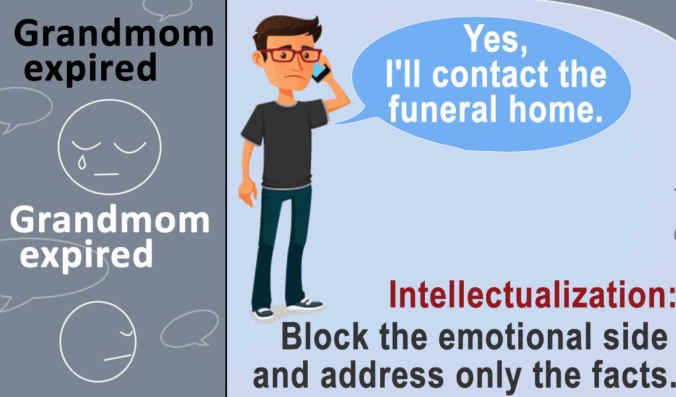










 This blog is published in
 This blog is published in


